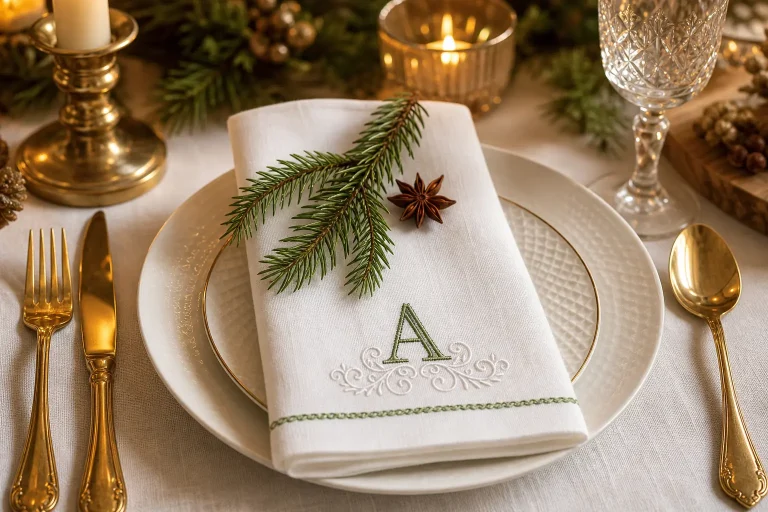
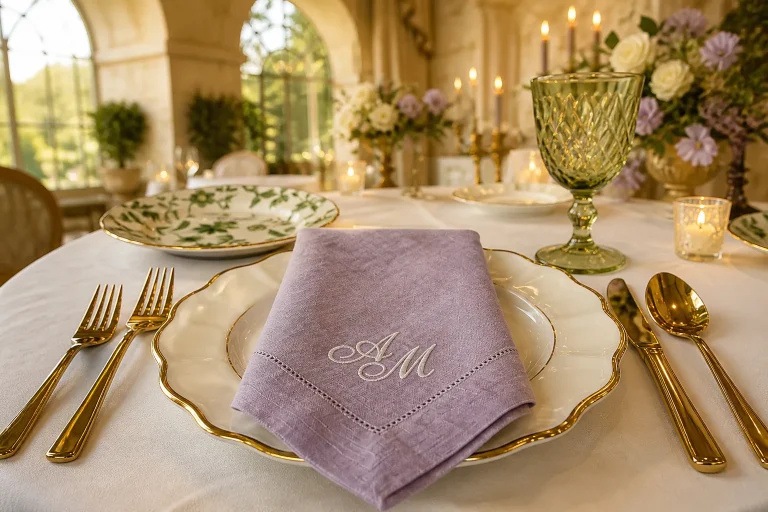
A name embroidered on a napkin is a small thing. Putting it on a hemstitched edge that was drawn by hand is what turns it into a Christmas present.
| اسم المنتج | Personalized Linen Christmas Napkins – Custom Name, Monogram Embroidered, Holiday Table Decor Gift Set |
| اسم العلامة التجارية | شهادة الثانوية العامة |
| مادة | الكتان |
| قماش | الكتان |
| التقنيات | Handmade |
| نمط | مصبوغ سادة |
| شكل | المستطيل |
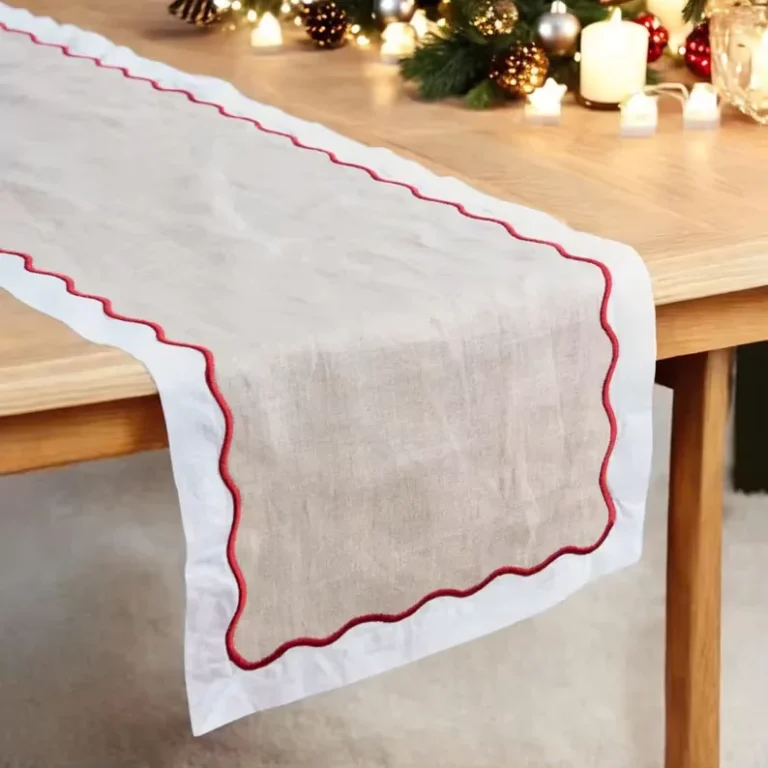
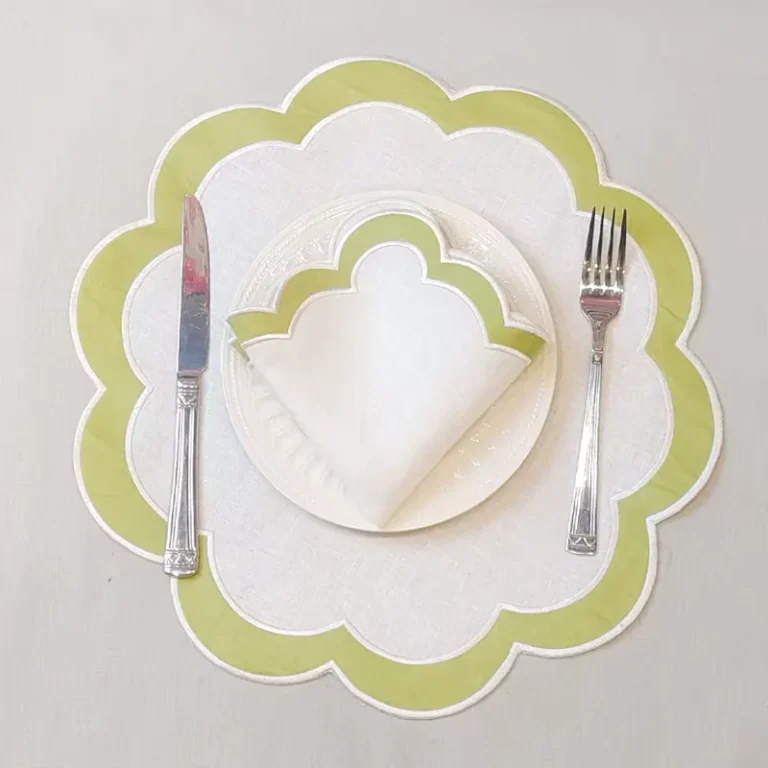
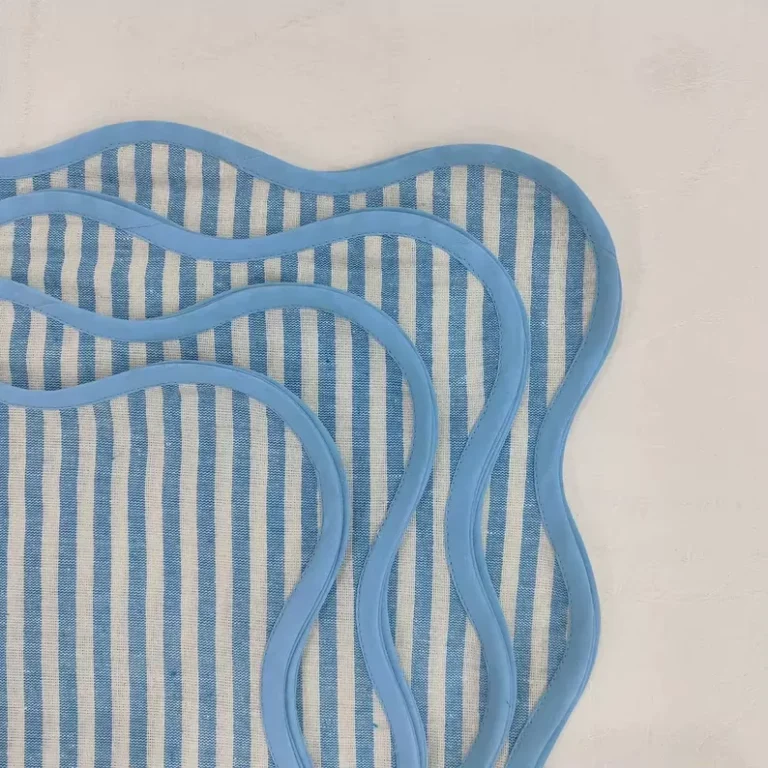
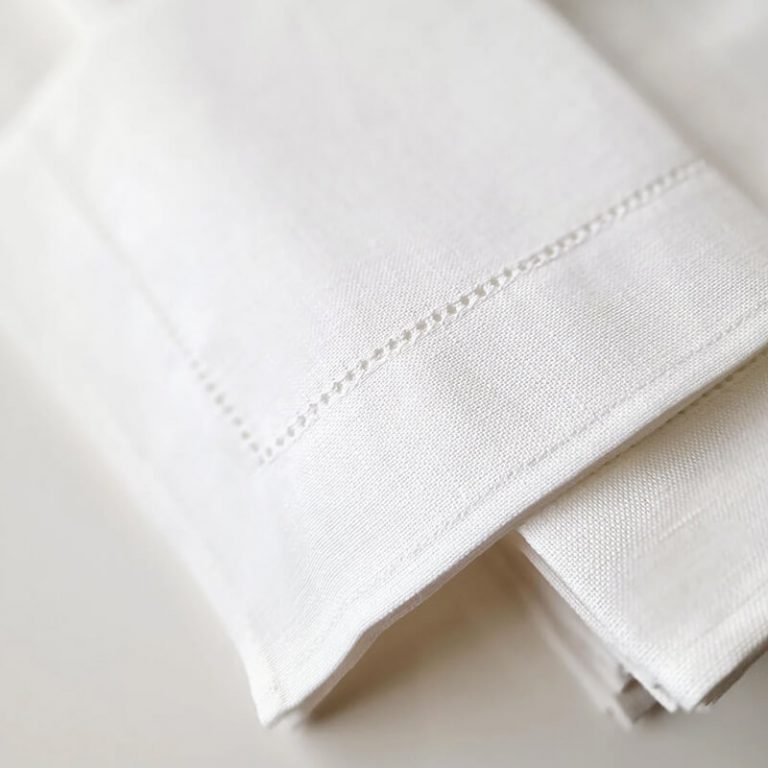
| Edge Finish | Shaped Edges | Classic Hemstitch |
| ميزة | Eco-Friendly, Organic, Reusable, Machine Washable |
| طلب | Home, Airplane, Restaurant, Party; table decoration, wedding, home decor |
| الاستخدام | Dinner Table, Banquet, Wedding, Home |
| أسلوب | Europe |
| مقاس | 42 x 42 cm | 40 x 40 cm | custom size |
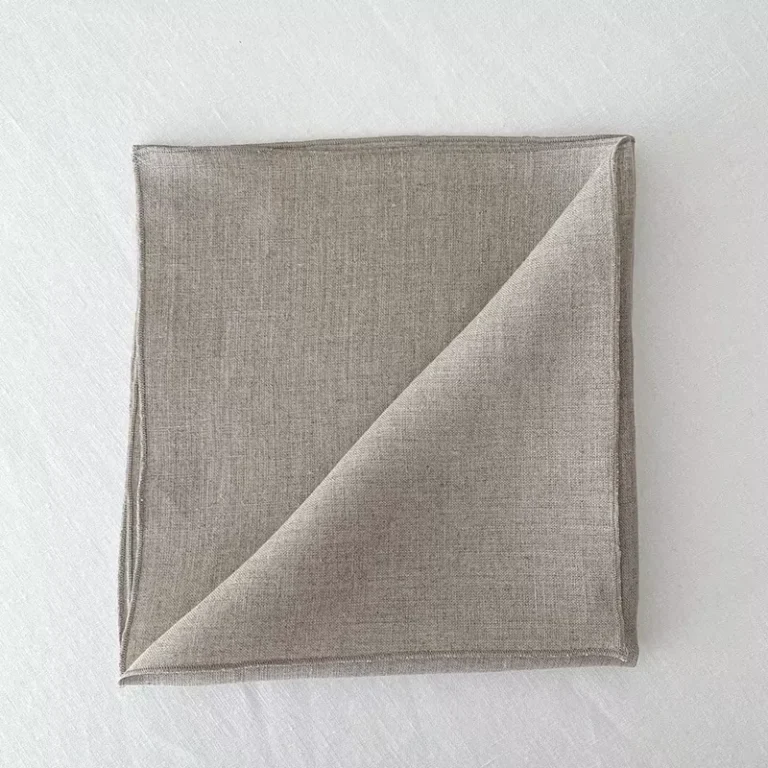
| لون | More than 50 stock colours | white held most consistently |
| التخصيص | Custom name / monogram, embroidered (stitched, not printed); customer logo accepted |
| الحد الأدنى للطلب | 100 قطعة |
| القدرة على التوريد | 100,000 قطعة شهرياً |
| شهادة | Oeko-Tex 100 – Safe & Sustainable Textiles |
| مكان المنشأ | الصين |
| التعبئة والتغليف | PVC bag or linen fabric bag + insert card + cardboard; single item 10 x 10 x 2 cm, 0.3 kg |
| مهلة | 31 days for 1-500 pieces; over 500 pieces to be negotiated |
Embroidery is the bottleneck in holiday table linen, so HSC plans capacity around December rather than around the calendar year.
– Monthly output reaches 100,000 pieces, so a seasonal programme is not limited by what one line can turn out in a short window.
– Orders are booked into a production plan ahead of the season, which is why a December date does not depend on a slot appearing.
– Monogramming runs alongside cloth finishing rather than after it, so the two stages do not queue behind each other.
– An order placed early keeps its agreed date even as the season’s volume rises.
– Larger volumes are scheduled individually instead of being forced into one standard window.
What separates this from a plain linen square is the edge, and it is worth understanding why. Hemstitching is drawn by hand, thread by thread, to leave a band of openwork along the border – a finish that takes time, cannot be printed, and reads as traditional on a table laid for a celebration. The same hand-drawing is what keeps the corner square through washing, where a plain overlocked corner drifts. Personalisation is stitched rather than printed, so a name or an initial keeps a defined edge after repeated laundering; a print on a cloth that moves will crack along the letterforms inside a season. Two sizes are held – 42 x 42 cm and 40 x 40 cm – with custom sizing made to order, and more than fifty stock colours are available so a holiday table can follow a scheme rather than default to white.
| Napkin – 42 x 42 cm | Held size |
| Napkin – 40 x 40 cm | Held size |
| مقاس مخصص | Produced to order |
| Edge Finish | Shaped edges | Classic hemstitch |
| التخصيص | Name or monogram, embroidered |
| عبوة واحدة | 10 x 10 x 2 cm | 0.3 kg |
Bought for Christmas and holiday tables, for weddings and banquets, and as a gift where the name is the point rather than the product. The custom element is an embroidered monogram, which is what makes a set work as a present: it carries a person’s name without carrying a date, so it is still correct the following December, and it stays legible while the linen around it softens with use. Fifty-plus stock colours mean a table can follow its own scheme – white is held most consistently, because that is the shade that photographs and matches whatever china is already owned – and the edge is offered either shaped or as a classic hemstitch depending on how traditional the setting is meant to look.
– Wash cool, 30℃ or below, and put the napkins inside a mesh bag. The openwork band is the part that catches on anything else in the drum.
– Wash the napkins from one table together, so the embroidered and plain pieces age at the same rate and still match at the end of the season.
– A mild liquid detergent, never powder. Powder settles into the open thread band dries there as a white line.
– No bleach and no optical brighteners, which yellow a natural white linen and weaken the very threads the hemstitch depends on.
– No fabric softener. It coats the fibre and takes away the crispness a drawn-thread edge is meant to show.
– Tumble dry low or line dry. High heat shrinks linen, and a shrunken napkin pulls the openwork band out of line.
– Press on the reverse while still damp, and press the hemstitch flat rather than stretching it. Never iron directly onto the embroidery.
– Store flat and stacked rather than compressed. A drawn-thread edge crushed under a heavy pile will not recover its line.
– Wash before first use if the napkins are going onto a Christmas table that will be photographed.
Three decisions shape the order. The first is the edge: a drawn-thread hemstitch is the traditional choice and the one that shows craftsmanship, while a shaped edge is faster and cheaper if the napkin is going onto a table that will not be inspected closely. The second is size: 42 x 42 cm is the larger of the two held, and it is the one to take for a Christmas setting, where the napkin has to cover a lap under a full plate; 40 x 40 cm is the everyday size. The third is the shade, and the honest guidance is that white is the default for a reason – it survives repeated washing better than any dyed shade, and a dyed linen will show its age sooner. If the napkin is a gift, order the monogram in a thread that contrasts with the cloth rather than matching it; a match disappears in candlelight.