Table linens are one of the few wedding choices that appear in every photo and in every guest’s hands, yet they usually get decided last — after the venue, the dress and the flowers. That order is backwards, and it is why so many couples and planners end up choosing in a rush two weeks before the date.
This guide follows the sequence that actually works: fix the table plan first, choose the fabric second, settle the details third, then work out quantities and timing. It is written for couples planning their own wedding, planners building a linen list, and buyers sourcing table linens for venues, rental stock and retail collections.
Start With the Tables, Not the Fabric
Before you compare linen with cotton, write down what you are covering.
‑ How many tables, and what shapes — round, square, long banquet, cocktail, cake, buffet, guest book. Each one needs its own finished size.
‑ Which tables will be photographed most — usually the head table and the first two rows of guest tables. Spend your best fabric there.
‑ Where the linen will live that day — open garden, barn, ballroom or terrace. Wind, damp grass and strong air conditioning all change how a cloth hangs and how quickly it creases.
Once that list exists, the fabric decision gets much smaller. If you need the measurement method in detail, our tablecloth size and drop guide covers round, square and banquet tables shape by shape.
Match the Drop to the Moment
The formula is simple: cloth length = table length + 2 × drop, and the same for width. What matters more is picking the drop on purpose.
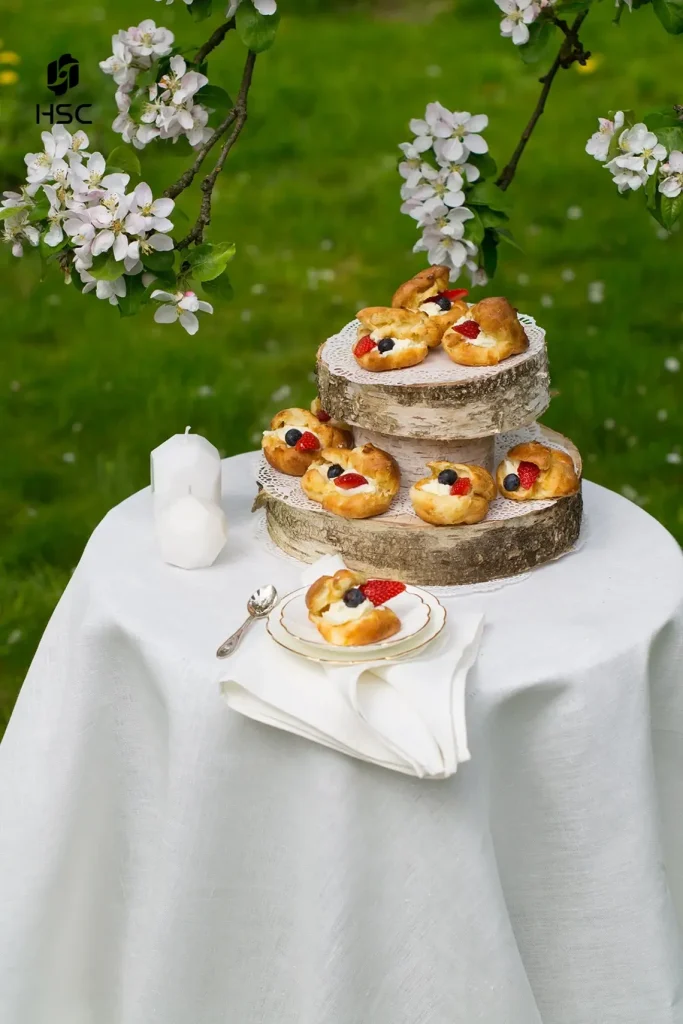
‑ 8–10 in (20–25 cm): welcome tables, garden lunches and cocktail stations. Shows the table legs and keeps the look light.
‑ 12–15 in (30–15 in(30‑38 cm): the standard for receptions. Formal enough for centerpieces, charger plates and folded napkins, still easy for guests to pull a chair in and out.
‑ Floor‑length: ballrooms, sweetheart tables and premium banquet setups. Check two things before you commit — a clean floor, and enough space between chairs.
Choose the Fabric by Wedding Style and Season
Fabric has to do two jobs at once: match how the wedding looks, and survive how the linen will actually be handled on the day.
Pure Linen: Garden, Barn and Destination Weddings
Pure linen is woven from flax, and it behaves differently from anything synthetic. The surface is matte, slightly uneven, cool to the touch. It breathes well under warm reception lighting and softens with every wash. It also creases — genuinely, visibly creases — and that natural break is part of the look at a garden, barn, coastal or destination wedding. If you want a glossy, pressed‑flat surface, this is the wrong fiber and no amount of ironing will change it.
The colors ordered most often for weddings are white, cream, sage, dusty pink, terracotta and black. A good example of the direction is this custom‑size linen wedding tablecloth, which is cut to round, square or banquet sizes with a minimum of 100 pcs.
Cotton‑Linen Blends: Long Guest Lists and Mixed Venues
A cotton‑linen blend — most commonly around 45% cotton to 55% linen — keeps linen’s texture but adds cotton’s easy handling. It feels soft from the first use rather than after five washes, holds its shape better, wrinkles less between seatings and tolerates warmer washing. That matters at weddings with 150 guests or more, where cloths are swapped mid‑day, and for venues laundering dozens of covers every week. Worth reading side by side with our linen vs cotton‑linen comparison before you lock the brief.
Cotton and Washed Cotton: Relaxed and Budget‑Friendly
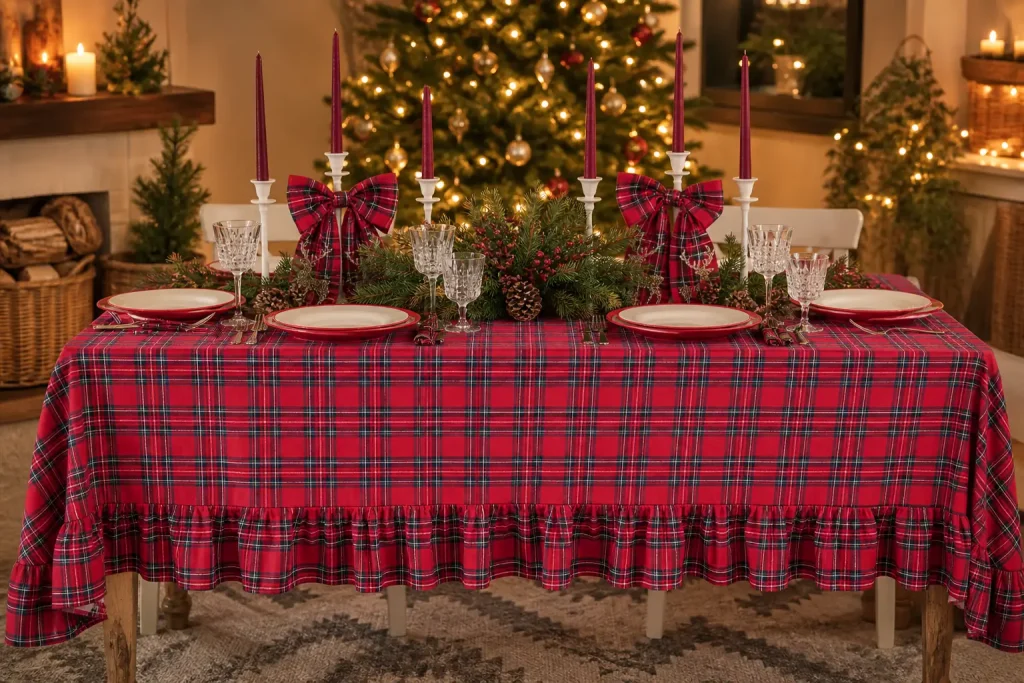
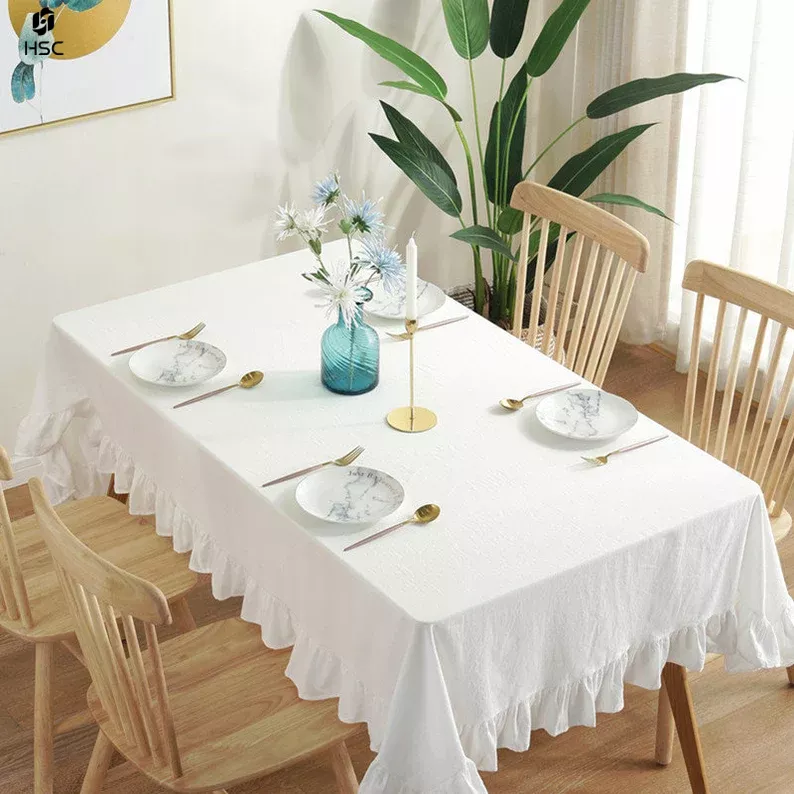
Cotton napkins and tablecloths are the easiest to care for and the most forgiving on price. A washed or stonewashed finish arrives already soft, which suits country, cottage and casual daytime weddings, and it takes dye and print cleanly if you want a specific palette. Ruffled and ruffle‑edged cotton versions are the ones planners order most for rustic tables.
Wedding Style, Fabric and Finish at a Glance
| Wedding style and venue | Fabric direction | Edge or finish | Why it works |
|---|---|---|---|
| Garden, barn, destination | 100 % Leinen | Plain hem, relaxed drape | Texture photographs well; creases read as intentional |
| Hotel ballroom, 150+ guests | Cotton‑linen blend | Straight hem or slim contrast border | Survives volume laundering; less ironing between seatings |
| Country or rustic | Washed cotton or blend | Ruffle, tassel or corner patch | Soft edges warm up long tables |
| Modern minimal | Linen, or cotton sateen | Overlocked or hemstitch edge | Clean lines without visual noise |
| Coastal or summer | Leinen | Cocktail napkins layered with a runner | Airy fabric that stays cool to the touch |
One practical note: do not approve a color from a screen. Ask for a lab dip or a finished sample and look at it under the venue’s lighting — warm banquet lighting shifts sage, dusty pink and terracotta noticeably, and that is the light your guests and your photographer will be working in.
Get the Details Right: Hem, Edge and Embroidery
Edges That Hold Up After Washing
Edge treatments are where a cheap linen and a good linen separate — not on the first setting, but on the fiftieth.
‑ Straight hem (2‑4 cm): the cleanest option, presses flat, and the easiest to keep consistent across a large order.
‑ Hemstitch: small decorative openwork stitched along the hem. Hand‑finished look without added bulk.
‑ Overlocked edge: light and casual, common on cotton napkins and cocktail napkins.
‑ Ruffled or scalloped: a statement on the table. Expect more care when pressing, and keep irons off the ruffle itself.
‑ Corner patch or contrast border: adds a second color without dyeing the whole cloth. Check that border width stays even across the batch — this is the first thing guests notice when cloths sit side by side.
Monograms, Menus and Printed Details
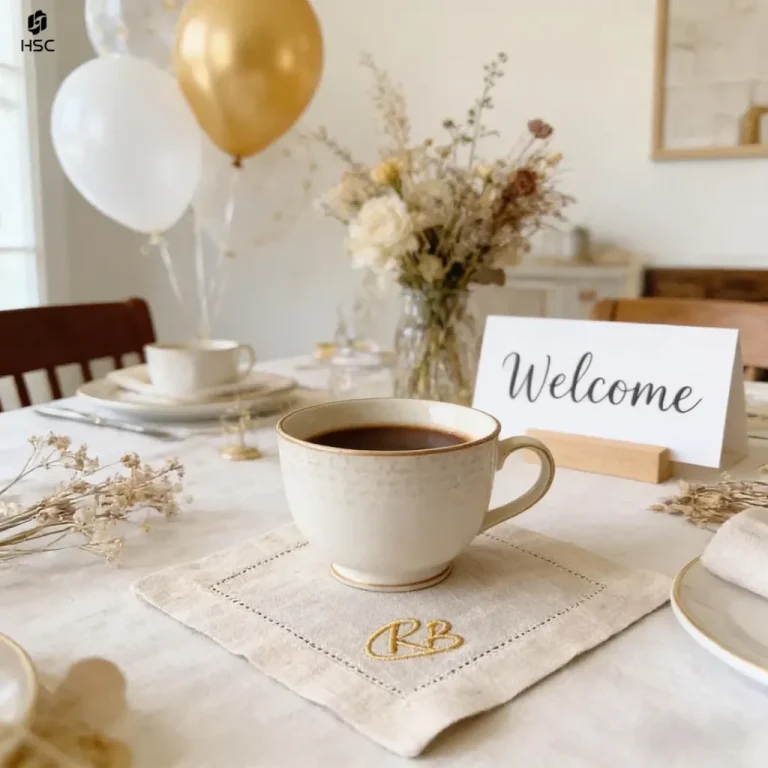
Embroidery is what turns a napkin into a keepsake. Napkin monograms, table numbers, menus and welcome signs can all be produced in matching thread, and thread color cards make it easier to match a palette than describing it in words. Two things to specify in writing: exact placement, and whether the item touches food directly, because print and embroidery choices differ for food‑contact textiles.
Build the Full Table Story With Coordinating Pieces
Cloth, Runner, Napkin: One Palette, Different Jobs
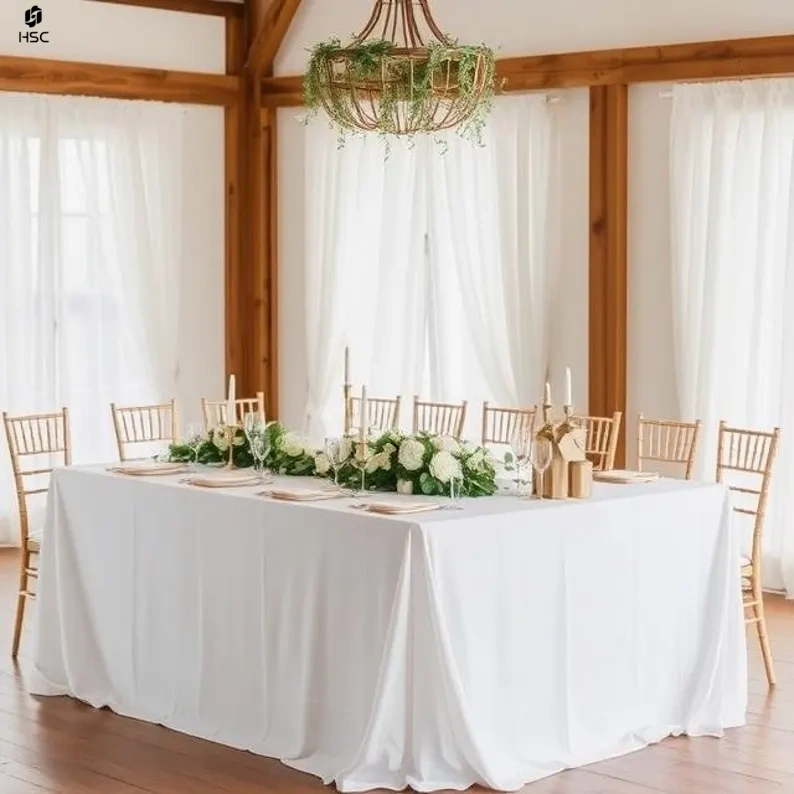
‑ The tablecloth sets the room. It carries the base color and covers the most surface area.
‑ The runner adds direction on long tables and is the easiest way to introduce a second color without replacing the cloth.
‑ The napkin is the piece guests actually touch, so material quality shows up here fastest.
A simple rule for a cohesive look: repeat two or three colors across the cloth, runner and napkin, and keep one of the three plain. Three busy patterns rarely work — two plain pieces and one detail piece almost always do.
Finishing Pieces That Pull the Room Together
Linens read as a set when the smaller pieces share the same fabric language. The wedding custom collection covers most of what sits on and around the table: linen menu cards, fabric welcome signs, washed linen chair cushions and embroidered linen coasters that double as favors.
| Artikel | What it does | What to coordinate |
|---|---|---|
| Tischdecke | Base color and drape | Drop, hem style, laundering plan |
| Runner | Direction and contrast | Width against the table, second color |
| Serviette | Guest‑level detail | Size, fold, edge, monogram |
| Chair cushion | Comfort and color pull | Tie or no tie, fabric weight |
| Menu and place card | Ties stationery to linen | Same fabric or matching card |
| Cocktail napkin | Cocktail hour and detail shots | Smaller size, same palette |
How Many Napkins and Cloths Do You Actually Need?
Quantity is the most common linen mistake, and the most expensive one to fix late. Count from the guest list, then add a buffer for folds, spills and mid‑event changes.
| Artikel | Planning rule | Why the buffer |
|---|---|---|
| Dinner napkins | One per guest, plus 10% | Folds, spills, last‑minute place setting changes |
| Cocktail napkins | 2‑3 per guest for a full cocktail hour | Guests take two, one gets dropped |
| Tablecloths | One per table, plus one spare per five tables | Replaces a torn or stained cloth during the event |
| Runners | One per long table, plus 1‑2 spares | Ceremony‑to‑dinner styling changes |
For a 100‑guest reception at twelve round tables of eight, that means twelve cloths plus three spares, 100 dinner napkins plus about ten extra, and 200‑300 cocktail napkins if you are hosting a proper cocktail hour. Venues and rental buyers usually keep a reserve pool and replace items individually rather than reordering full sets, which is why consistent finished sizes and a recorded color reference matter so much on repeat orders.
Ordering Timeline and Checks Before Bulk Production
Work backwards from the wedding date. The sequence is sample approval first, bulk production second, shipping last — and shipping is the part buyers underestimate.
| Shipping method | Typical transit time | Best for |
|---|---|---|
| Express | 7‑10 days | Small custom orders and late additions |
| Air | 15‑20 days | Mid‑size orders with a fixed date |
| Sea | 30‑45 days | Large orders planned months ahead |
Production and sample approval time sit on top of that, so confirm both with your supplier before you fix the installation date. During peak wedding months, earlier is always safer.
Sample Checklist Before Bulk Production
Before approving a sample, ask for:
‑ A flat measurement photo showing finished length and width
‑ A close‑up of a corner seam and the hem
‑ A short drape video on the same table shape you will use
‑ A laundered sample with the care instructions you plan to print
‑ The color checked under the venue’s lighting
What to Confirm in Writing
Put these on the spec sheet: item and finished size, fiber composition, color reference, edge treatment, care label text, logo or monogram placement, packaging method, minimum order quantity and reorder terms. HSC’s custom linen table linen programs start at 100 pcs, and packaging options include PVC bags or linen pouches with product cards. A written spec sheet is what makes a second order match the first one.
Care and Storage Notes That Keep Linens Event‑Ready
‑ Machine wash cold or at 40°C on a gentle cycle.
‑ Skip chlorine bleach; use an oxygen‑based whitener if you need one.
‑ Tumble dry low, or hang while slightly damp.
‑ Iron damp for a crisp finish — or store the natural crease if that is the look you chose.
‑ Store flat or rolled in a dry place, out of direct sun.
‑ Linen softens every time it is washed, which is an advantage if you are dressing the same tables season after season.
Wedding Table Linens From HSC Textile
HSC Textile is a group company integrating manufacturing and trade with 20‑year home‑textile experience, operating a 3,200‑square‑meter factory with 55 staff members. It serves over 3,000 clients across more than 30 countries with a 99% order fulfillment rate. It passes SGS on‑site inspection and manufactures products complying with OEKO‑TEX® Standard 100, offering more than 400 available colors.
Three main wedding‑oriented product lines are available:
‑ 100% linen wedding tablecloth in custom sizes — for round, square and banquet tables, MOQ 100 pcs, customizable colors and logos.
‑ Embroidered linen tablecloth, runner and napkin sets — coordinated one‑stop solutions for unified table styling.
‑ Ruffled washed cotton‑linen tablecloth — ideal for rustic and country‑themed events, where the cloth itself serves as decor.
For napkins, customers can select custom‑sized, custom‑colored cotton styles or ruffled linen options; standard dinner napkin dimension is 38 × 38 cm. Smaller embroidered cocktail napkins work well for cocktail‑hour scenarios. For multi‑table bulk purchasing or rental‑stock restocking, browse the tablecloth and napkin collections for ready‑made sizes and color choices. Customization of dimensions, edge finishes, embroidery, labels and packaging is supported via ODM/OEM projects. Send sample inquiries to [email protected] or reach out via WhatsApp +86 13563566701.
Häufig gestellte Fragen
Q1: How much table linen do I need for 100 guests? A: At twelve round tables of eight, order twelve tablecloths plus two or three spares, 100 dinner napkins plus about 10% extra, and 200‑300 cocktail napkins for a full cocktail hour. Runners are only necessary for long banquet‑style tables.
Q2: Is linen or a cotton‑linen blend better for a wedding? A: Pure linen excels in visual presentation, texture, drape and photographic performance, perfect for head tables, garden and destination weddings. Cotton‑linen blends deliver easier maintenance and better shape retention, fitting large‑guest‑count weddings and fixed‑venue businesses. Many couples use pure linen for the head table and blend fabrics for remaining tables.
Q3: What is the standard napkin size for a wedding? A: 38 × 38 cm is the most‑used dinner‑napkin dimension; cocktail napkins are smaller. Both can be customized according to tableware specifications and folding styles.
Q4: How early should we order custom wedding table linens? A: Complete sample confirmation first, reserve production lead‑time, then account for shipping transit: Express 7‑10 days, Air 15‑20 days, Sea 30‑45 days. Confirm full timelines with suppliers before locking event dates; place orders earlier in peak wedding seasons.
Q5: Can napkins and tablecloths be monogrammed or branded? A: Yes. Embroidery supports monograms, table numbers, logos and dates on napkins, tablecloths, menu cards and welcome signs. Color‑matching is available with reference color cards. Custom table‑linen programs start at 100 pieces.
Über HSC Textiles
HSC Textiles liefert Textilprodukte für Bettwäsche, Nachtwäsche, Bademäntel, Tischdekoration und verwandte Heimtextilien. Käufer können den Onlineshop besuchen. offizielle Website um Stofftrends, aufeinander abgestimmte Produkte, Eigenmarken, Muster und Großhandelsanforderungen zu besprechen. Abstimmung von Nachtwäsche oder Bademanteloptionen kann auch dazu beitragen, eine Herbstkollektion für das Wohnen zu erweitern.