The 2026 wedding season has settled into a look that is easier to buy for than the maximalist years. Couples are choosing fewer colours, more texture, and details that photograph well in natural light. For event suppliers, rental companies and retailers, that shift is useful: a tight palette and a small number of finishes can cover most of the season without a heavy inventory bet.
This roundup covers the trends showing up in real wedding orders this year — and, for each one, what it means for buying: which colours and sizes to stock, and where the risk usually hides.
1. Muted, Earth‑Led Palettes With Tonal Layering
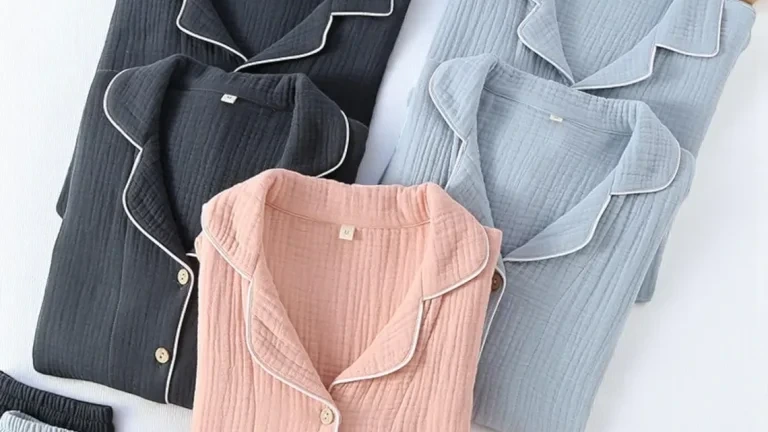
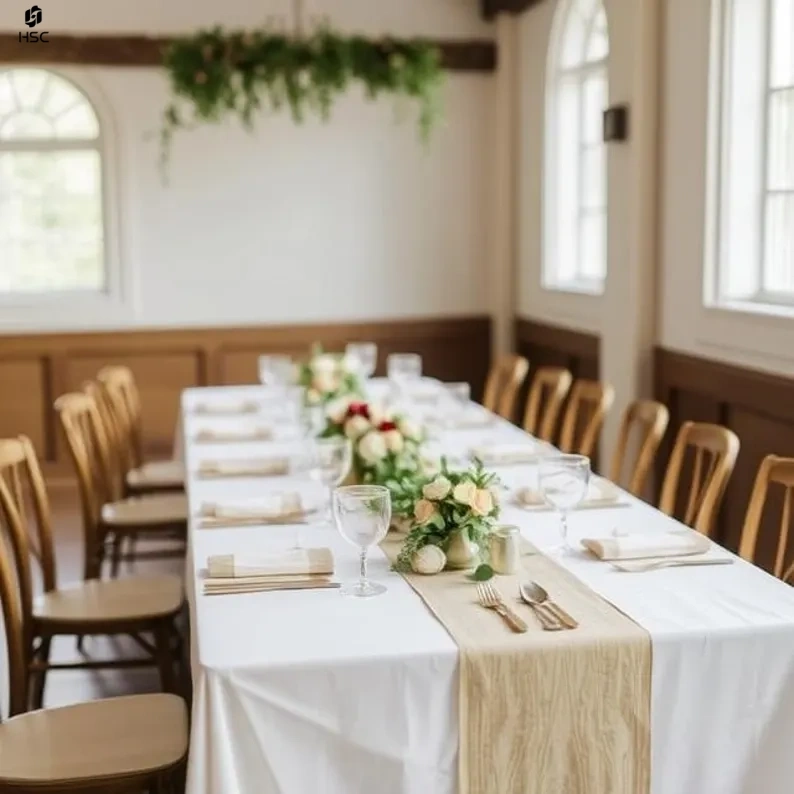
The strongest colour story of 2026 is restraint. Sage and eucalyptus greens, terracotta, dusty pink, charcoal, cream and off‑white are carrying most wedding tables, and the newest version of the trend is layering two shades from the same family rather than adding a third colour.
For buyers, that changes the assortment decision. A useful collection is built as two or three colour families plus a neutral base, not twelve unrelated single colours. Tonal layering also increases the value of contrast edge options — a slim border in a darker shade of the same family lets a planner create the layered look with one cloth instead of two.
2. Washed Linen Texture Over Glossy Surfaces
Glossy satin looks are fading at weddings. Washed and stone‑washed linen, and washed cotton‑linen blends, are what couples are choosing instead, and the natural crease is treated as part of the design rather than a defect to iron out.
This is good news operationally. Washed finishes arrive soft, photograph with depth in daylight, and reduce the pressing work a venue has to do between events. If your catalogue lists both a crisp finish and a washed finish, the washed one is usually the safer stock position for wedding clients — and it pairs naturally with the ruffled and hemstitched edges covered below.
3. Mix‑and‑Match Napkin Sets
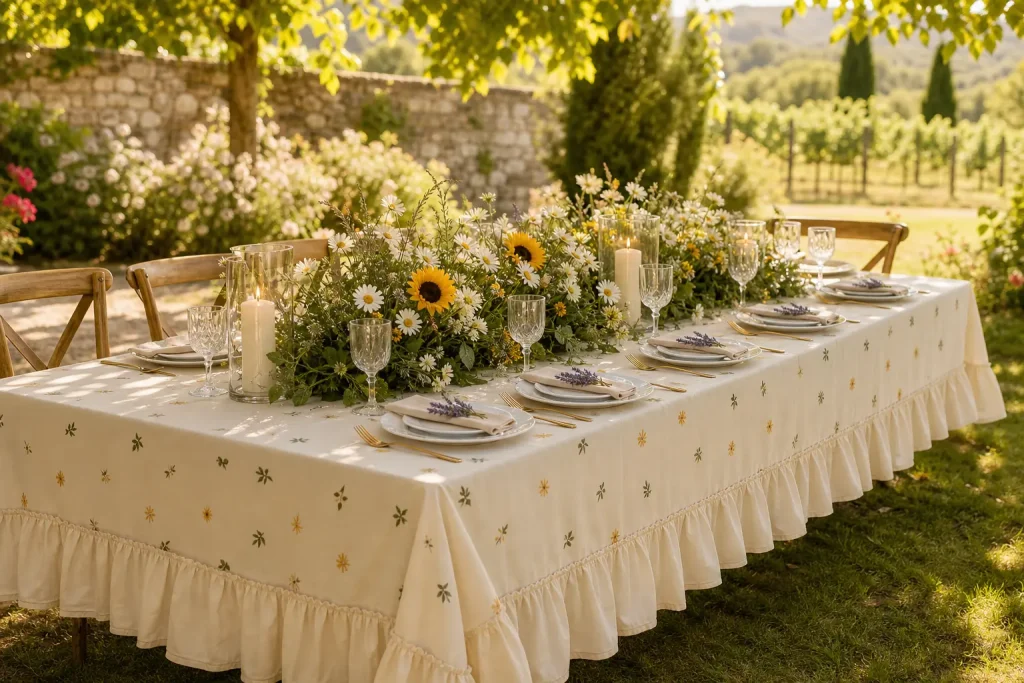
Mismatched napkins have moved from a styling trick to a standard request: two or three napkin colours across the same table, with the cloth kept plain. The napkin has become the flexible colour layer that lets a planner change the look without re‑ordering cloths.
For stock planning, this means napkins should be bought in colour families rather than single shades, and sold in small mixed packs as well as uniform boxes. The classic dinner napkin size sits at 38 × 38 cm, with cocktail napkins in smaller formats for the drinks hour — see our ruffled linen napkins and custom cotton napkins in custom sizes and colours for the two ends of that range.
4. Statement Runners and Layered Place Settings
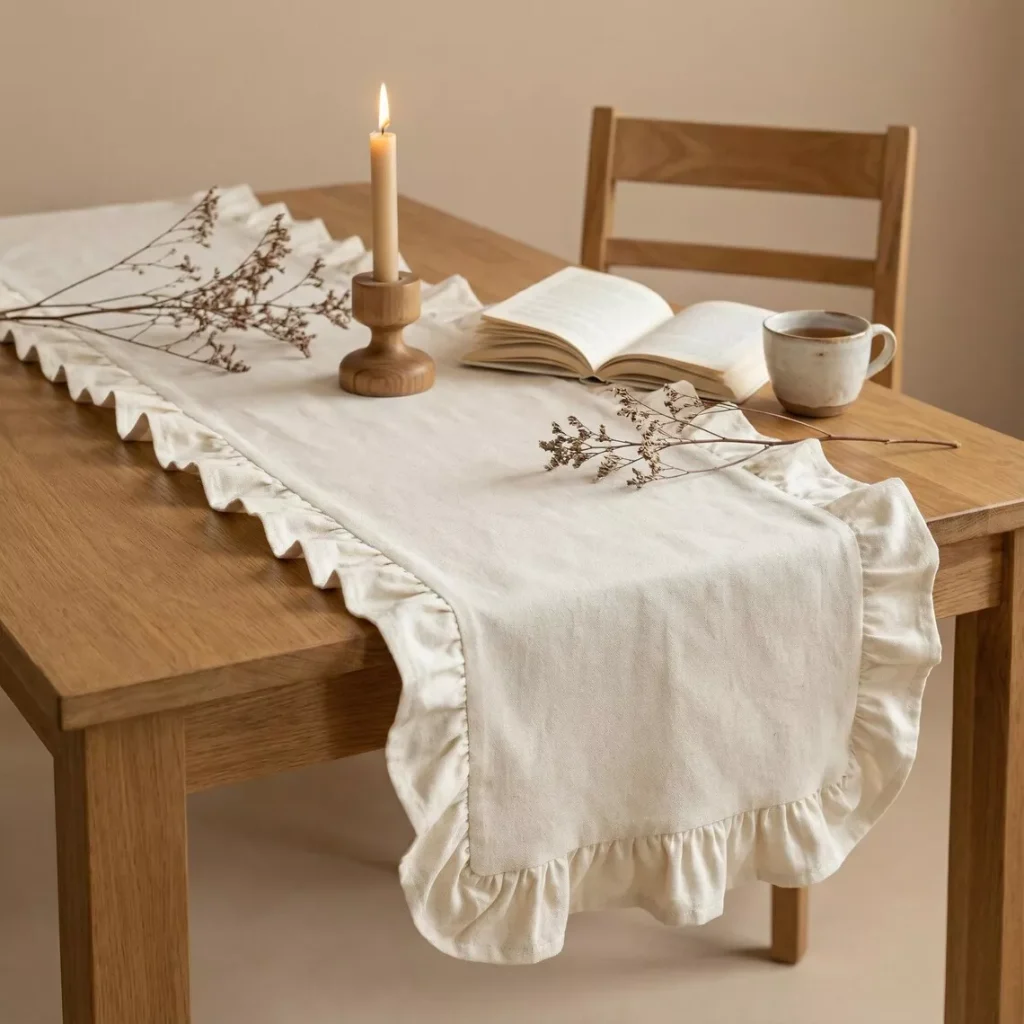
Long banquet tables continue to dominate reception layouts, and the runner is doing the visual work: a contrasting runner down the centre, with placemats and folded napkins layered on top. At the bar, broderade cocktailservetter carry the same palette in a smaller format.
Practical buying notes: confirm runner width against the table before ordering, and treat placemats as a set rather than an add‑on. The gingham ruffle placemat and heart‑shaped placemat and napkin sets are two 2026 directions that sell as coordinated pairs.
5. Personalisation: Monograms, Printed Menus and Named Napkins
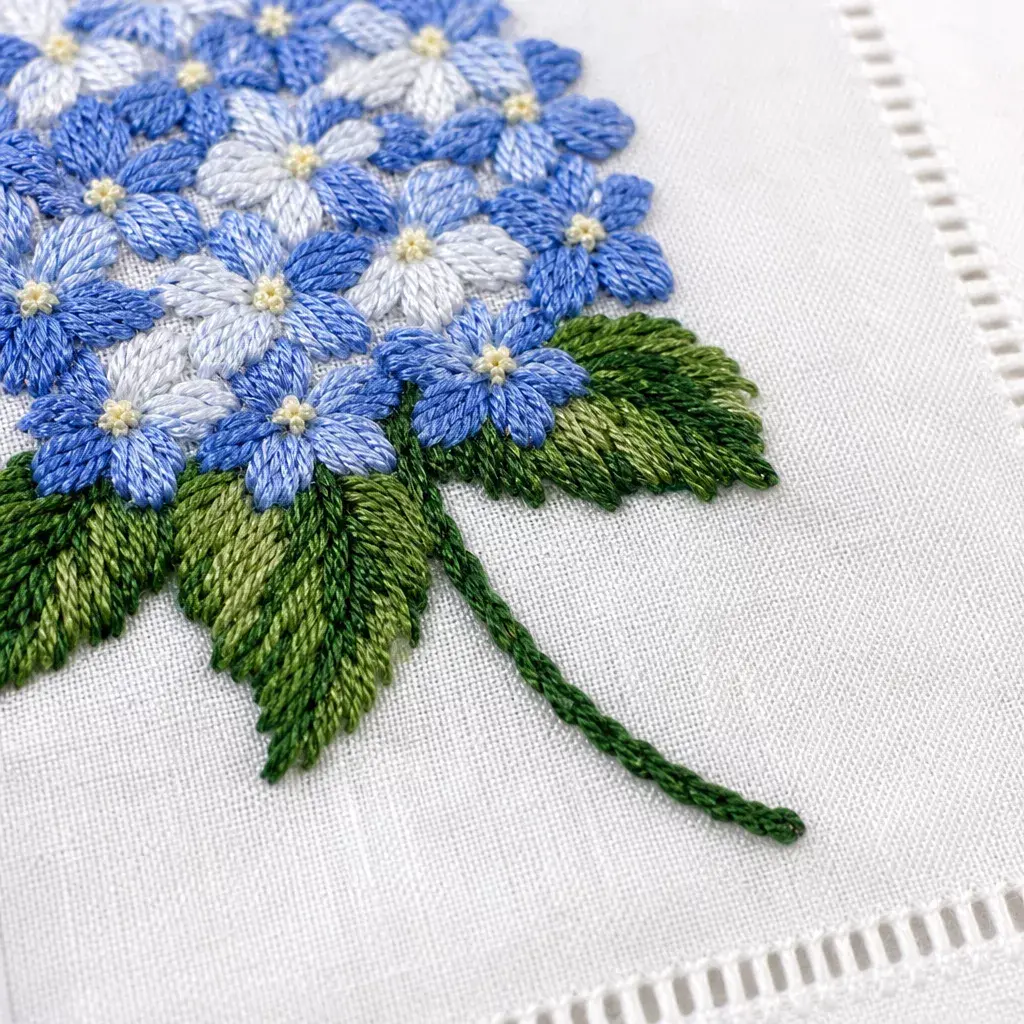
Personalised detail is the trend with the longest shelf life. Monogrammed napkins, printed menus, named place cards and fabric welcome signs all belong to the same buying conversation, and they are what guests photograph and keep.
The commercial value sits in offering the service rather than a single product. Thread colour cards make monogram matching practical, and embroidered linen table linens can be ordered as a coordinated set with the cloth and runner. The supporting pieces — linen menu cards, fabric welcome signs and embroidered linen coasters — extend the same fabric into the rest of the room.
6. Artisanal Edges: Ruffles, Scallops and Tassels
Edge treatments are doing more work in 2026 than embroidery alone. Ruffled cotton‑linen cloths, scalloped and hemstitched napkins, corner patches and tassel finishes all read as hand‑finished in photographs, and they let a plain fabric carry a premium price.
One caution for buyers: edges are where batch consistency fails. Ask for close‑up photos of corners and hem lines from the production sample, and confirm the treatment survives laundering before committing to a large order. The ruffled washed cotton‑linen tablecloth and corner patch linen napkins show two different price points built on the same idea.
7. Comfort‑Led Styling: Cushions and Texture Mixing
The last visible trend is comfort. Washed linen cushions on dining chairs, lighter fabric weights, and mixed texture — linen cloth with cotton napkins, for example — are being treated as part of the table design rather than as separate hire items. The washed linen quilted chair cushion is the clearest example of a functional piece that now appears in the styling brief.
What to Order First: A Priority View
| Trend | Demand driver | Order priority | Watch‑outs |
|---|---|---|---|
| Muted palettes, tonal layering | Colour decisions made early by couples | High — build 2‑3 families plus neutral | Colour drift across dye lots |
| Washed linen texture | Photographs well, less pressing | High — widest size coverage | Confirm shrinkage and crease expectations |
| Mixed napkin sets | Cheapest way to change a table’s look | High — colour families, not single shades | Size consistency across colours |
| Runners and layered placemats | Long banquet layouts | Medium — width‑specific | Runner width vs table width |
| Personalisering | Keepsake value, high margin | Medium — service‑led | Approve placement and thread colour |
| Artisanal edges | Premium positioning | Medium — higher price tier | Batch consistency at corners and hems |
Colour and Size Planning for the Season
Two rules save most of the ordering pain. First, ask for lab dips or finished samples before approving colour — natural fibres shift under banquet lighting, and sage, terracotta and dusty pink move more than white or charcoal. Record the approved reference so repeat orders match.
Second, treat size as a specification, not a guess. Cloths are cut to the table plus twice the drop, so a planner ordering for a venue needs the drop decision made in advance; our tablecloth size and drop guide covers every common table shape. Napkins are simpler — 38 × 38 cm covers dinner service, with smaller cocktail formats for the bar. If you want the full selection framework behind these choices, our guide to choosing table linens for your wedding walks through fabric, drop, quantities and timing in one place.
Ordering Timeline and Quality Checks
Wedding orders are deadline‑driven, so the practical sequence is sample approval first, bulk production second, shipping last. Express transit runs about 7‑10 days, air 15‑20 days and sea 30‑45 days, plus production and sample approval time — confirm the full schedule with your supplier before the season, not during it.
Four checks before a bulk wedding order ships:
‑ Dimensional stability after washing, measured against the agreed tolerance ‑ Corner and hem consistency across the batch, not just on the sample ‑ Colour consistency across dye lots, especially for muted greens and terracotta ‑ Packing method and carton marks, so pieces arrive ready to count and hire out.
Bröllopsdukar från HSC Textile
HSC Textile has 20 years in home textiles, a 3,200‑square‑meter factory and 55 employees. The company has served more than 3,000 clients across 30+ countries with a 99% order fulfillment rate, works with SGS onsite verification, and produces OEKO‑TEX® Standard 100 certified products in 400+ colours.
For the 2026 wedding season, three starting points cover most briefs:
- Linen wedding tablecloth, custom size — round, square and banquet sizes, cut to your drop, from 100 pcs.
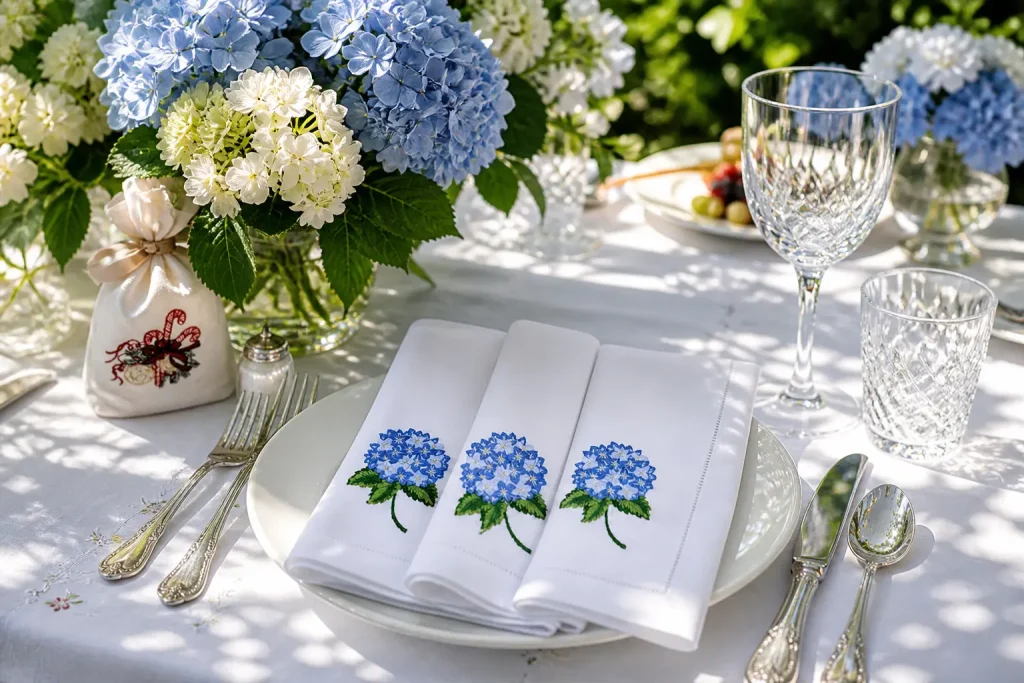
- Embroidered linen table linens and napkin set — cloth, runner and napkin designed as one coordinated program.
- Washed ruffled cotton-linen tablecloth — the artisanal-edge direction at a mid price point.
The wider tablecloth and napkin collections cover finished sizes and colour options, and the wedding custom range carries the supporting pieces — menus, signs, cushions and favours. Custom sizes, edge details, embroidery, labels and packaging run through the ODM/OEM-program. Sample requests: [email protected] or WhatsApp +86 13563566701.
Vanliga frågor
Q1: What table linen colours are trending for 2026 weddings? A: Sage and eucalyptus green, terracotta, dusty pink, charcoal, cream and off‑white, usually layered two shades deep within one family rather than mixed across three. A neutral base plus two colour families covers most of the season.
Q2: Which fabric should we stock for 2026 wedding tables? A: Washed linen for the premium tier and washed cotton‑linen blends for volume. Both handle natural creasing as part of the look, which cuts pressing work. Our linen vs cotton‑linen comparison covers the performance differences in detail.
Q3: How many napkin colours should a wedding collection include? A: Two or three colour families plus a white or cream base. Mismatched napkins are a 2026 staple, so the ability to supply mixed colour packs matters as much as the total colour count.
Q4: What napkin size should we order? A: 38 × 38 cm is the standard dinner napkin. Cocktail napkins are smaller, and both can be produced in custom sizes — useful when the venue’s glassware or folding style calls for something different.
Q5: How early should wedding table linens be ordered for the 2026 season? A: Approve the sample first, then allow production time, then shipping — express runs 7‑10 days, air 15‑20 days and sea 30‑45 days. During peak wedding months, earlier is always safer, and repeat orders should reference the approved colour and construction.
Om HSC Textiles
We are a group company integrating manufacturing and trade — ULAND GROUP. Our subsidiaries include HSC, Liaocheng Shanlian Textile Co., Ltd., Zhongfei. For 2026 wedding table linen programs, share your table shapes, target drop, colour references and quantities, and the team will come back with fabric options, colour cards and a sample plan.