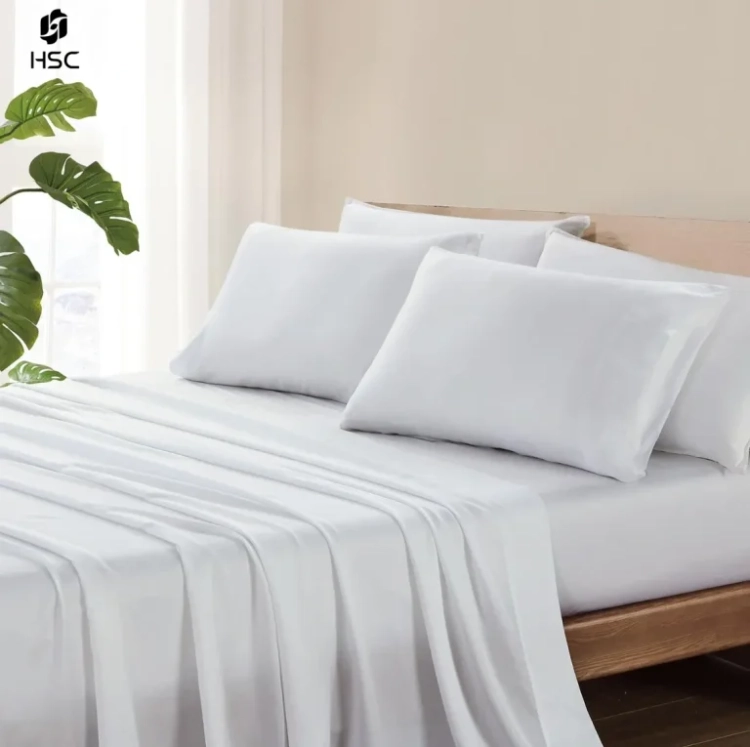
Hotel bedding has to work for two people at once. There’s the guest. They drop their bag, fall back on the bed, and within minutes they know if it feels good or cheap. Then there’s the housekeeping crew, making the same bed maybe four hundred times before the sheet gives out. A supplier that wows the guest but drives your laundry team nuts isn’t really a supplier. It’s a showroom sample.
So what does a good one actually look like? Not the lowest price, and not the fattest catalog either. It’s the supplier whose fifth shipment looks just like the first. The fitted sheet that’s still gripping the corners after fifty laundry cycles. The white that’s still the same white, order after order.
If you run a hotel chain or a serviced apartment, or you do the buying for one, this is for you. We’ll go through what hotel bedding really has to survive, the four basic types of supplier, and how to tell a real partner from a suspiciously cheap quote.

What Hotel Bedding Has to Survive
Nobody buys bedding once. It gets reordered again and again, and every batch has to take real abuse. So put the thread count hype aside. The only thing that counts is whether the cloth survives commercial laundry.
| What it is | Why you should care | What to pin down with the supplier |
| Same feel every time | Guests notice when one room sleeps rougher than the next | Get the finish and construction nailed down in a signed sample |
| Whether the color stays put | Commercial laundry will pull weak dye right out | Ask for wash and rub fastness results. A color chip is not proof |
| انكماش | A sheet that shrinks won’t stay on the corners | Ask for residual shrinkage after pre-wash. Under 5% is what you want |
| Pocket depth | Most hotels run deep mattresses, usually with a topper | Match the pocket to the real mattress, and keep a spare size set |
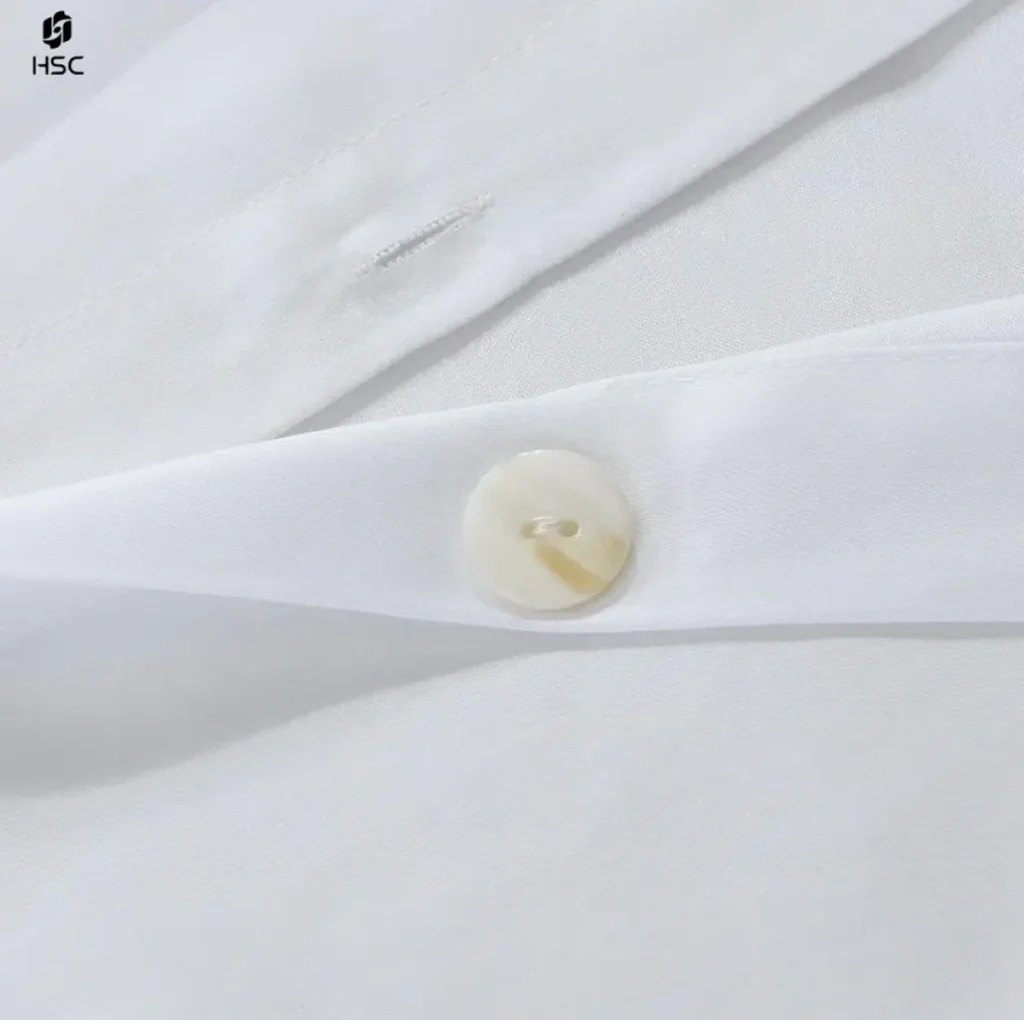
| Stitching and seams | Seams are the first thing to go, at corners and closures | Put stitch density and seam type in writing on the PO |
| Single pieces you can match | One destroyed piece shouldn’t kill the whole set | Order cases and fitted sheets separately, not just bundles |
| الشهادات | Your procurement rules, and guest safety | OEKO-TEX STANDARD 100 minimum, third-party inspection if your rules ask |
| Packing that behaves | Housekeeping and your storeroom both need things handled clean | Poly bag, fabric bag or carton, with proper labels and carton marks |
Thread count isn’t useless, but it’s just the starting line. A well-finished 300T long-staple cotton sateen will beat a flimsy 400T any day. Don’t just look at the number on the label—ask about the yarn quality too.
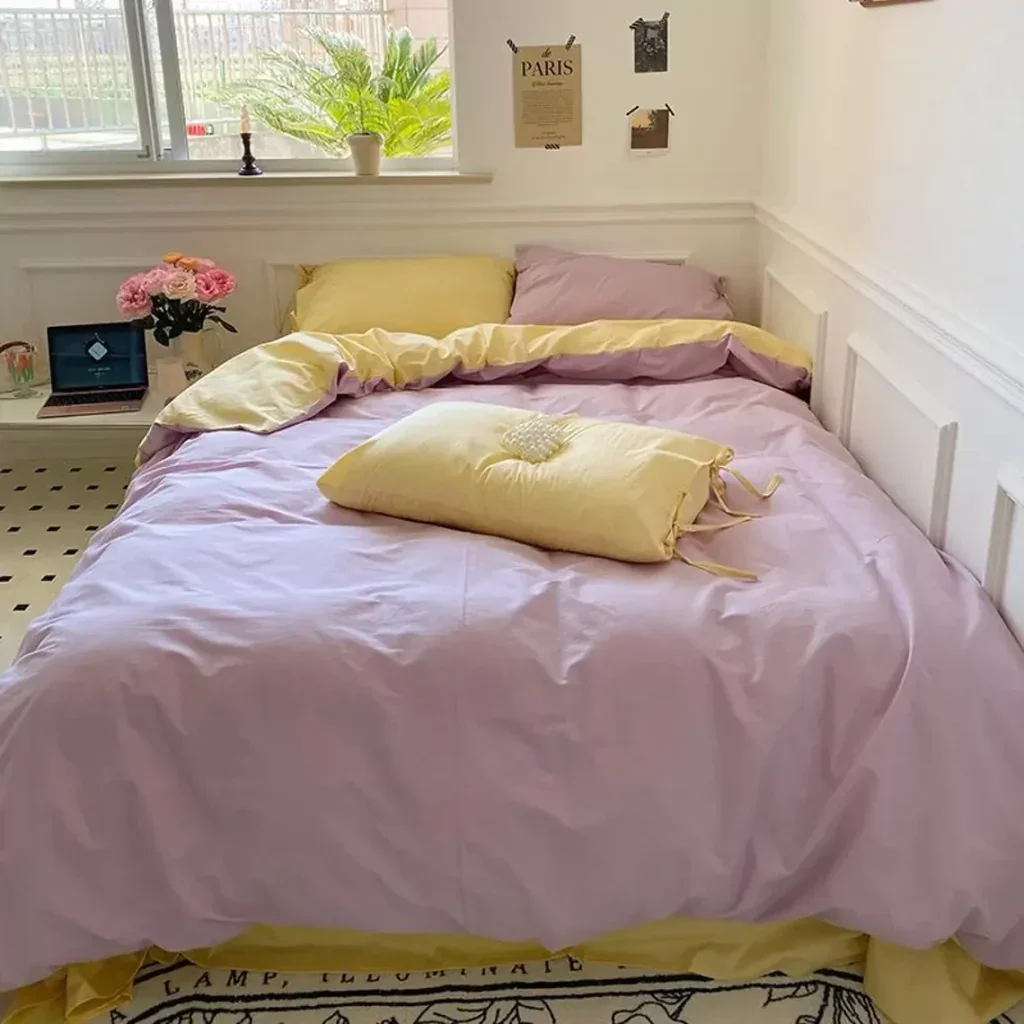
The Four Types of Supplier, and Where Each One Fits
Who you buy from decides what you’re on the hook for. All four can be perfectly honest. The trouble starts when you hire someone brilliant at something you don’t actually need.
| Type of supplier | What they’re good at | The catch | Who it fits |
| Trading company | Big catalog, easy to deal with, can mix products in one container | They never touch the product themselves. You are only as good as the factory behind them | Smaller hotels trying things out, or orders across a few categories |
| Little workshop | Happy to run small batches and odd sizes | Not much capacity, not much QC. Double the order and they wobble | Boutique properties, one-off custom jobs |
| Manufacturer that does it all | Fabric, cutting, sewing, packing under one roof, so the spec holds steady | There is an MOQ. Tiny mixed orders are not their thing | Chains, serviced apartments, anyone doing private label |
| Brand agent or importer | Stock sits in a local warehouse, ships fast, recognizable brands | You pay more per piece, and you cannot change much | Last-minute restocks, single-property buyers |
Run a chain with standard rooms and reorders you could set a clock by? A manufacturer that does everything in-house is the safe call. It all happens under one roof, so they hit your signed sample again and again. But a 20-room boutique that changes its look every season? A workshop or a trading company will suit it better.
Seven Ways to Tell a Real Supplier from a Cheap One
- Ask for the same item in two sizes. Feel them. Look at them. If one is softer or a different shade, their line isn’t holding its inputs steady.
- How do they match a repeat order? A kept sample, a lab dip, or a shrug and a “close enough”? For hotel work, only the first two count.
- Does their output fit your reorder rhythm? If it takes six weeks to simply repeat an order, they can’t keep up with a place that turns linen monthly.
- A QC process you can actually describe. Pre-production sample, mid-production check, final inspection—ask who signs off and what gets measured.
- Check that the certificates cover your order. An OEKO-TEX STANDARD 100 on the wall does nothing if it doesn’t name the materials and processes you’re buying.
- Look at the packing. Carton marks, size labels, clean poly bags. Sloppy packing is just extra unpaid work for housekeeping.
- How fast they respond. A supplier who answers spec questions in hours—not days—is probably the same one who’ll handle a quality complaint just as fast.
Signs You Should Walk Away
- Long-staple cotton at a price that makes you laugh, and no breakdown of what the yarn or finish costs.
- A gorgeous sample with no size set behind it, no wash test, no lab dip, nothing to back it up.
- “Any color you like,” said without a Pantone number and without a dip approval step.
- Lead times in weeks, not a word about the Chinese New Year shutdown or shipping cut-off dates.
- Silence on shrinkage, colourfastness, or stitch density—the three numbers that determine how the bedding holds up after a month.
- The care label names a different fabric than the one on the quote.
A single flag doesn’t have to sink them. But stack a few and you’re looking at a supplier who sells samples, not one who solves problems.

How Hotels Actually Split Up Their Bedding
Most chains don’t put the same sheets in every room. They split it into tiers:
- Standard rooms: hard-wearing, easy-care cloth, swapped out one piece at a time.
- Suites and signature rooms: higher thread count, or a hand feel distinctive enough to earn the higher rate.
- Spa and public areas: robes, towels, cushions, bought on a separate schedule.
Two habits keep everything running smoothly. First, maintain a sample library with dye lots saved for every spec. Second, order replacements—pillowcases and fitted sheets wear out first—instead of waiting for an entire set to fall apart. Either way, you need a supplier who can remake a single item months down the line.
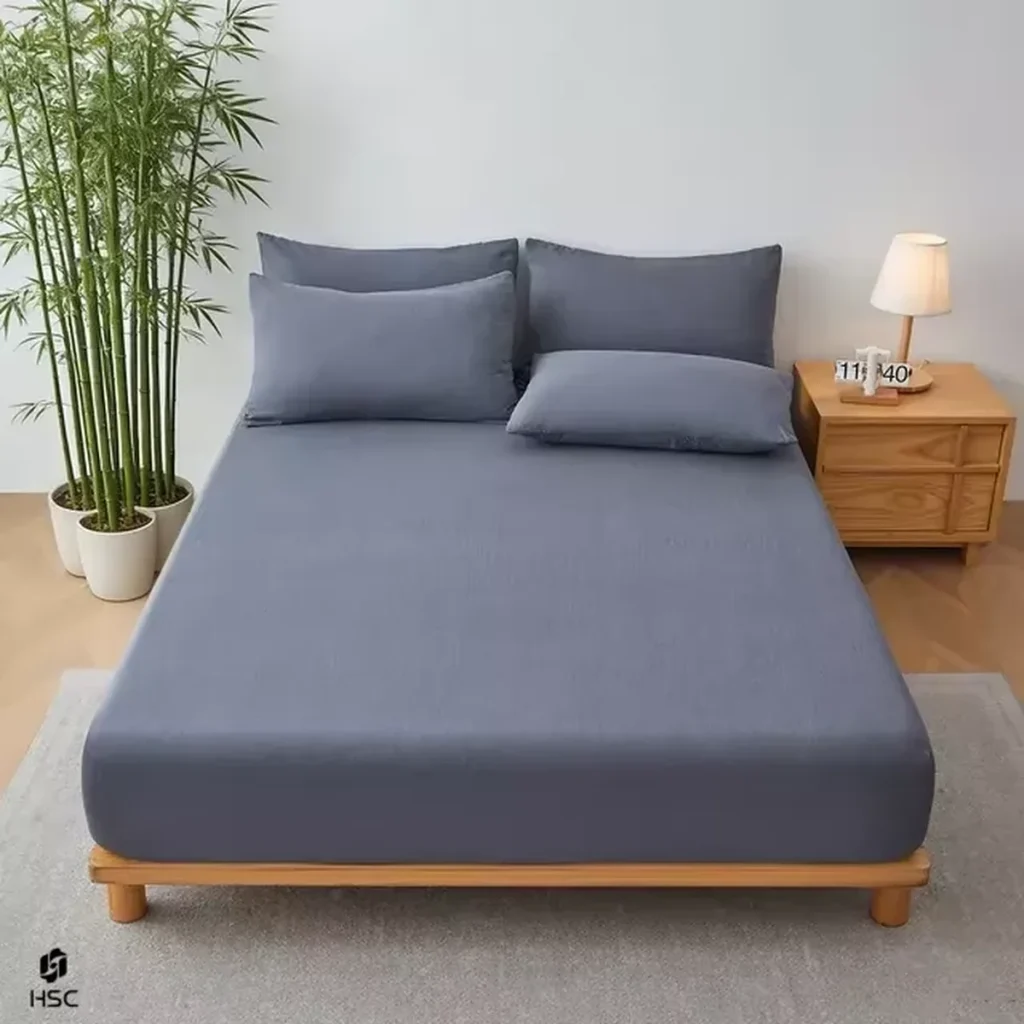
Where HSC Textile Fits In
HSC Textile manufactures everything in-house: fabric sourcing, cutting, stitching, embroidery, packing—all under one roof. Twenty years in home textiles, a 3,200 sqm factory, clients in 30+ countries. Certs on file include OEKO-TEX STANDARD 100, SGS, BSCI, and FSC. MOQ starts at 100 pieces or sets per style—low enough to test a room type, high enough to keep unit prices steady.
A few pieces worth a look:
- Bamboo lyocell duvet cover set— suits humid climates and air-conditioned rooms.
- Organic cotton sateen bedding set— crisp hand, colors and prints that stay bright.
- Cotton muslin fitted sheet set— soft and breathable, well suited to serviced apartments and warm weather.
- Bamboo sheet set with fitted and flat sheets— custom sizing, for hotel beds that don’t fit the standard boxes.
- Organic bamboo bed sheet set for hotels— a cooler change from sateen come summer.
The wholeأغطية الفراشevaluating a bedding supplierpicking the right bedding supplier collection is here, or look at the OEM/ODM programme for private-label specs. Our write-ups on evaluating and picking a bedding supplier are worth a read too.
Want to feel some samples, or talk through a whole-property programme? Write to [email protected], or find us on WhatsApp at +86 13563566701.
Questions We Get a Lot
Q1: What thread count do hotel sheets need?
A: For most properties, long-staple cotton in the 300T to 400T range does the job. Past that you gain very little. Yarn quality, the finish and the laundry routine matter more than the number.
Q2: What’s a fair way to compare two suppliers?
A: Compare the same spec across suppliers—fabric composition, yarn, thread count, shrinkage, colourfastness, stitch density, packing. Ask each one for a full size set and a washed swatch, then compare apples to apples.
Q3: What MOQ is normal for a first hotel order?
A: 100 pieces or sets per style is a typical place to start. That’s enough to outfit a room type and put it through your laundry cycle without betting the whole property.
Q4: Can we order single replacement pieces?
A: Yes, and they should. Fitted sheets and pillowcases wear thin first, so ordering singles matters. Just confirm the supplier can rebuild a piece from the sample and dye lot they kept.
Q5: Which certificates should the supplier actually have?
A: OEKO-TEX STANDARD 100 is the floor on textile safety. SGS or an equivalent third-party inspection backs up the quality talk. BSCI or FSC come in depending on what your procurement policy insists on.
نبذة عن شركة HSC للمنسوجات
We’re ULAND GROUP—a manufacturing and trading company. Our family includes HSC, Liaocheng Shanlian Textile, Zhongfei, and DDL. Ready to start a hotel bedding project? Send over your room types, mattress sizes, fabric preferences, color references, replacement schedule, and when you need them. We’ll get back to you with a spec sheet and sample plan.