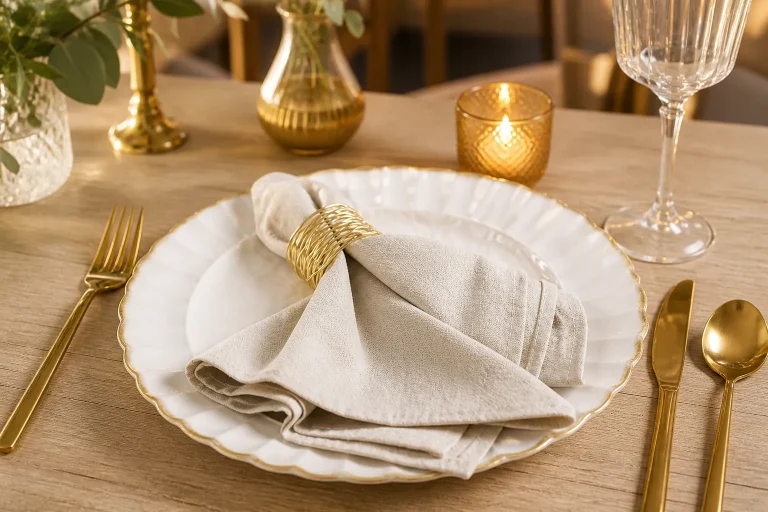
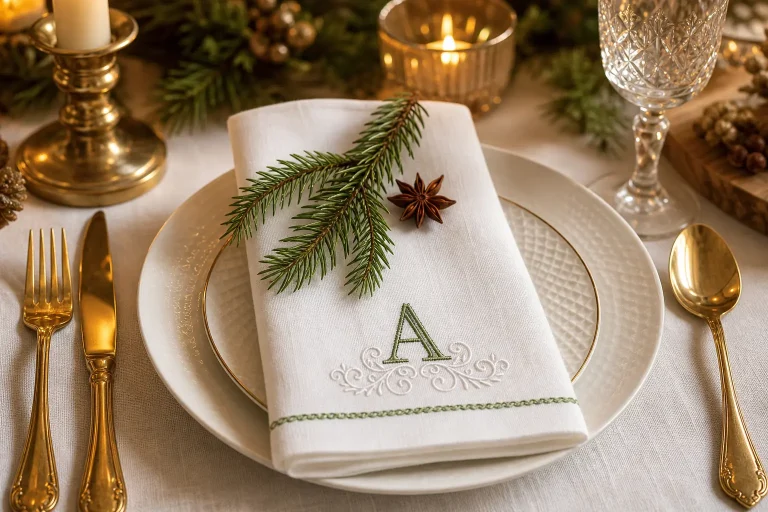
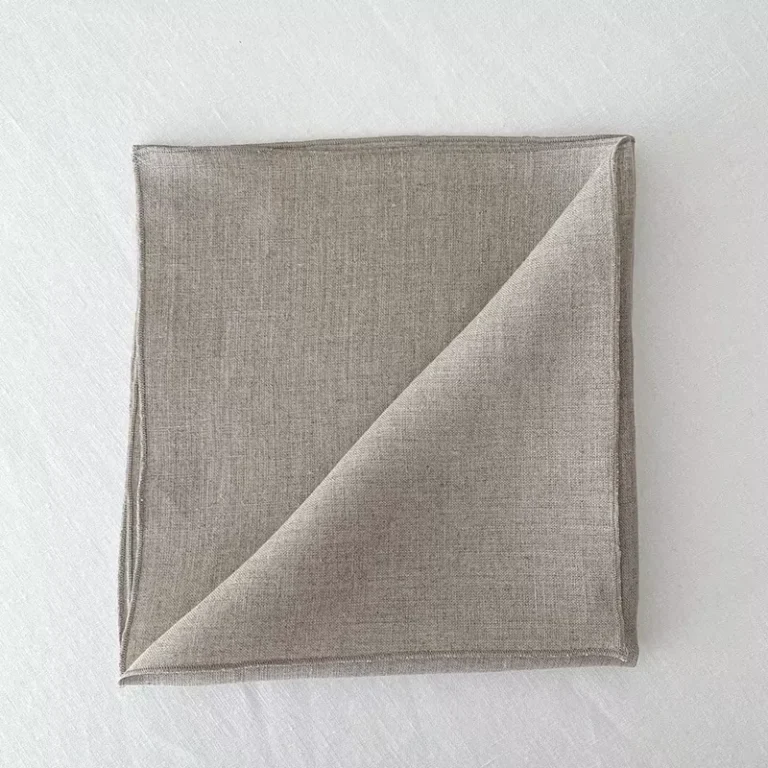
Staff notice a bad napkin long before a guest does – usually because it will not hold a fold. This one is a cotton-linen blend, and it does.
| اسم المنتج | Wholesale Customizable Square Linen Cotton Napkins – 40 x 40 cm, Plain Colours, Durable & Reusable |
| اسم العلامة التجارية | شهادة الثانوية العامة |
| مادة | قطن كتان |
| عدد القطع | 1 piece |
| شكل | مربع |
| مواصفة | 40 x 40 cm |
| نمط | مصبوغ سادة |
| أسلوب | حديث |
| التقنيات | آخر |
| ميزة | Reusable, Durable |
| طلب | Home, Restaurant, Airplane |
| لون | 21 shades (17 named on the page: Yellow, Olive Green, Red, Coffee, Apricot, Dark Green, Light Purple, White, Gray, Grass Green, Navy Blue, Light Blue, Bean Green, Wine Red, Black, Hazy Blue, Flaxen; plus 4 more shown as an overflow indicator) | custom colour |
| التخصيص | Colour from 100 pieces | minor, drawing-based, sample-based and full customization |
| ضبط الجودة | In-house quality control: raw material inspection on arrival, in-line checks during production, and a finished-piece inspection before packing |
| الحد الأدنى للطلب | 100 قطعة |
| مكان المنشأ | شاندونغ، الصين |
| التعبئة والتغليف | Single item; 40 x 50 x 6 cm; 0.9 kg |
| مهلة | 31 days for 1-300 pieces; 50 days for 301-1,000 pieces; over 1,000 to be negotiated |
A napkin spends its life under food and in a guest’s hand, so HSC leads with what the cloth is certified to rather than what it can be called.
– Oeko-Tex 100 covers the substances that can migrate out of the fabric, and it is tested at the fibre and dye stage rather than assumed at the end.
– The range also carries the Safe and Sustainable Textiles mark, which is assessed on the mill’s process as well as on the cloth.
– Both certificates are held on file and can be sent before an order is placed, not only attached to the shipping documents.
– The fibre and the dye sit inside one certification scope, so a custom shade does not fall outside the coverage.
– Because the same paperwork covers repeat runs, a buyer who has cleared it once does not have to clear it again each season.
The blend is the whole design argument, and it is worth explaining rather than listing. Cotton on its own presses into a hard, starched line that looks cheap on a set table. Linen on its own will not hold a fold by the end of a long service. Mixed, the cloth takes a fold that reads as soft and then falls back out of it, which is the behaviour a restaurant notices long before a guest does. Plain dyed rather than printed, so a solid shade sits with any china pattern and any menu, and there is no design to date and no print to wear off the weave in the wash. The format is one square at 40 x 40 cm, chosen because it folds three ways from a single size: down into a rectangle for a cutlery pocket, across into a triangle for a bread basket, and flat as a lap napkin.
| منديل | 40 x 40 cm (square) |
| مقاس مخصص | Produced to order |
| Shades | 21 in total (17 named on the page plus 4 more) |
| حدد الكمية | 1 piece |
| عبوة واحدة | 40 x 50 x 6 cm | 0.9 kg |
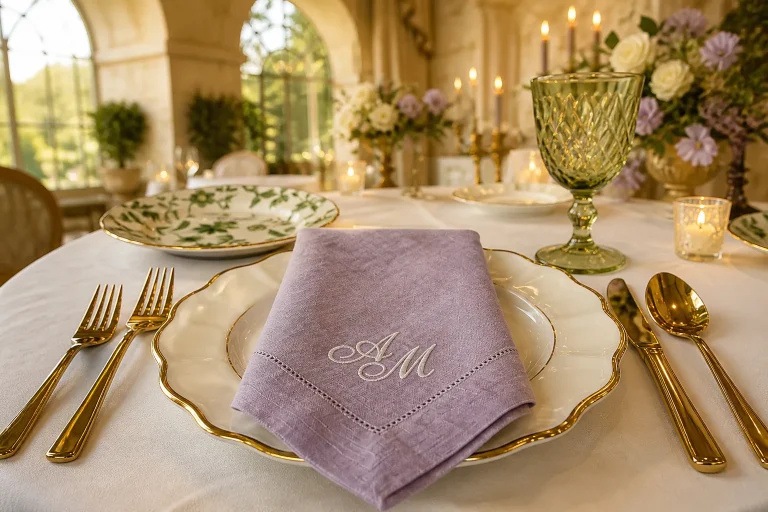
Bought for restaurants, hotels and the home, and for airline service where a napkin has to be light, hard-wearing and identical from one flight to the next. What those buyers have in common is that the cloth is judged after thirty washes rather than in a photograph, so it is chosen for how it behaves in a laundry instead of how it looks when new. More than twenty shades are held, from white and black through apricot, hazy blue, bean green and wine red, which lets a venue follow its own tablecloth or brand palette instead of settling for the nearest neutral. A first order of one hundred pieces is enough to test a shade on a real service before a full set is committed.
– A warm machine wash is fine, up to 40℃. The blend takes it, and a service kitchen has no time for a cold hand wash.
– Keep the first cycles to one shade family. A saturated red or navy will bleed a little, and it will find a white napkin.
– Bleach is the one thing to keep away from a coloured blend – it takes the dye first and the fibre second.
– Tumble dry low, or line dry. High heat is where a blend starts to shrink unevenly, because the two fibres move at different rates.
– Fold while slightly damp if the napkins are going straight to a table; that sets the fold without an iron.
– A warm iron on the reverse if a crisp finish is wanted for a formal setting – the blend presses well, which linen alone does not.
– No fabric softener. It stops the cloth taking up a spill and leaves a film that shows on a dark shade.
– Sort by shade rather than by fabric when laundering a mixed set, so a light napkin does not pick up a dark one’s loose dye.
– In restaurant stock, wash and fold in rotation so every napkin in a set wears at the same rate and the shades stay matched.
Two questions decide the napkin. The first is blend, or linen on its own: if the service is long and the fold has to survive it, the cotton-linen mix is the safer buy, because linen gives up its fold within the hour and cotton reads as starched. The second is size and fold: a 40 x 40 cm square covers cutlery pocket, bread basket and lap napkin, so one SKU can serve a whole service instead of three. On arrival, check the fold recovery rather than the finish – press a fold in, leave it an hour, and see whether the cloth falls back out. Then check the edge: a corner that has been turned and stitched twice will outlast one that has simply been overlocked. If a shade has to match existing stock, ask for the piece in the hand rather than on a screen.