Nachricht

How to Specify Custom Fitted Sheets for Commercial Mattresses

A fitted sheet for a commercial mattress is cut to the outline and depth of that mattress and held in position by its lower edge.

The outline of the base determines the cut outline of the sheet with the addition of an allowance for ease of fit and for seam(s).

Mattress outline and core measurement

The outline of a commercial mattress consists of a rectangular deck and four vertical side walls. The core depth must be measured with a rigid rule while the mattress rests uncompressed on a flat support deck.

Mattresses on commercial sites can have depths of many dimensions. In most instances the sheet is cut to the known depth of the mattress. The mattress required to be fitted will be of a known depth, with the addition of any topper or protective pad which is to remain on the bed.
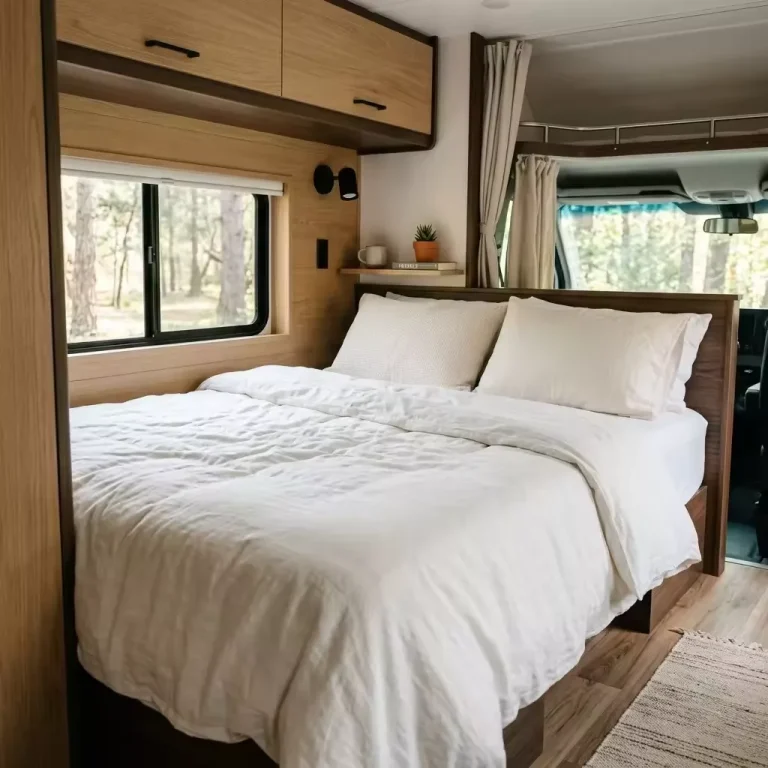
Measuring vertical mattress core depth and uncompressed topper crown on a flat support deck.

Pocket depth calculation

The depth of the sheet is the distance from the top surface to the bottom elasticated edge.

The mattress depth, plus an allowance for tuck-under and for hemming, determines the cut depth of the pocket border:

  • a tuck-under allowance of 7 cm to 8 cm is standard for mattresses up to 25 cm depth
  • a tuck-under allowance of 10 cm is required for deep commercial mattresses to ensure the lower edge is not lifted off the bottom of the mattress when the crown is compressed in use.

HSC Textile commercial bedsheet manufacturing options for custom hospitality orders.

Elastic and hem construction

The fitted sheet is secured by elasticated tape along the whole or parts of the lower edge.

At the lower edge, where the fabric is gathered, allowance must be made for the reduction in depth due to gathering. The allowance along the lower edge will vary with:

  • whether the elastic is applied all round the hem or only at the corners
  • the depth of the mattress and
  • the tension of the elastic.

The elastic should be securely attached. The tunnel hem is closed with lockstitch or chain stitch. Joining of the elastic ends must overlap by not less than 30 mm with multi-step zig-zag stitching.
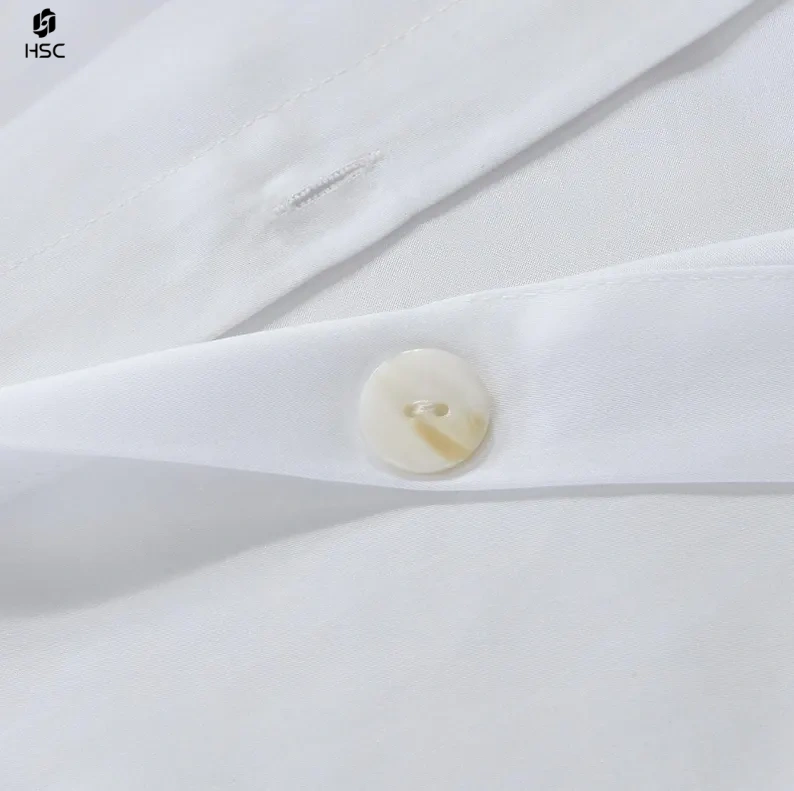
Continuous perimeter elastication enclosed within a double-folded tunnel hem with reinforced chain stitching.

Fabric selection

The type of fabric determines the durability of the sheet and its behavior in laundering.

The fabric may be cut from combed cotton in a sateen weave or in a percale weave. The choice of weave will vary according to the required surface texture and the laundering routine. Combed cotton yarn and bamboo viscose options give balanced tensile strength and a smooth finish.

The fabric measure should be sufficient to prevent the sheet being transparent over dark mattress ticking, while allowing water extraction during washing.

Schwundzulage

Allowance must be made for the reduction in dimensions due to laundering.

Cotton weaves exhibit between 3% and 5% shrinkage in length and 2% to 3% in width during commercial hot-water washing. The cut dimensions of the deck panel and the pocket border must be enlarged by this percentage.

Where pre-shrunk fabric is specified, dimensional change after washing is held within 2%.

Corner seams

The vertical corner seams take the strain when the sheet is fitted to the mattress:

  • the seams should not be puckered at the corners
  • the corner seam must be closed with a four-thread overlock or a reinforced French seam to enclose raw edges
  • the junction between the vertical corner seam and the deck panel must be back-tacked for not less than 15 mm.

Fitting and laundering trials

It is essential that the correct fit of the sheet be verified prior to final making up. A fitting trial will reveal any discrepancies in the cut dimensions and in the position of the seam line.

The sheet has to cover the top surface and sides of the mattress completely and, after being fitted in position, has to be free from creases.

Launder the trial sample according to commercial care instructions and compare before and after measurements. Fit the laundered sample to the same mattress and check that the lower edge of the sheet does not rise above the base of the mattress when the mattress is occupied.

Order records

The following details appear to be necessary for the proper execution of an order:

(a) The cut size which the customer requires or the mattress measurements on which this is based, from which the cut size is calculated by the maker.

(b) The tuck-under allowance required.

(c) The type of fabric with thread count and basis weight.

(d) The type of elasticized edge required, including whether elastic is sewn round the whole of the hem or only part, and if only part, the length over which the elastic is to be applied, and its position in the hem.

(e) The make up details where these differ from standard, for example a stitch type other than lockstitch.

(f) The method of packing if other than standard.

Preparing an enquiry

HSC Textile lists commercial bedding and fitted sheets in its product range. A dimensioned sketch and the mattress model number may be forwarded when discussing an order.

HSC Textil custom fitted sheet production line for hotel and healthcare clients.

Über HSC Textiles

We are a group company integrating manufacturing and trade – ULAND GROUP. Our subsidiaries include HSC Textiles, Liaocheng Shanlian Textile Co., Ltd., Zhongfei.

Facebook
Twitter
LinkedIn

Inhaltsverzeichnis

    Verwandte Nachrichten

    Elegant formal wedding reception table setting with custom embroidered cloth napkins
    How to Specify Custom Linen Napkins for Hospitality and Event Rental An embroidered linen napkin for event hire is a reusable piece of table linen with a stitched motif or lettering that must remain presentable through repeated use. The presentation of the table determines the cut dimension of the napkin with the addition of an allowance for ease of folding and for hem(s). Table placement and styling references are outlined in the event napkin placement and styling guide. Figure 1: High-standing architectural folds require finished square dimensions of 50-55cm and balanced fabric weight. Cloth and finished dimensions The cloth should be a plain or twill weave of linen or of cotton, or of a mixture of linen and cotton, of sufficient weight and closeness of weave to receive the embroidery and to withstand laundering. The cloth shall be hemmed on all four sides. Opposite sides shall be parallel and the corners square, so that a napkin folded in half along either axis lies flat without puckering. The finished size of the napkin will vary with the fold style: • a finished square of 50 cm to 55 cm is standard for high standing folds • a finished square of 45 cm is standard for flat folds and menu pockets • a finished square of 15 cm to 20 cm is standard for cocktail service. Corner finish and hems A cloth napkin may be cut with plain folded corners or with mitred corners. At the corners, where the fabric is gathered, allowance must be made for the reduction in bulk due to mitreing. The allowance at a corner will vary with: • whether the corner is mitred at 45 degrees or folded square • the depth of the hem and • the elasticity of the fabric. Folded square corners produce quadruple fabric layers at the corner tips. These lumps lift off the table surface and can cause jams in flatwork ironers. A 45-degree mitred corner is produced by trimming the inner seam allowance and folding the hem inward. The depth of the hem will vary with the fabric weight: • narrow hems of 5 mm to 8 mm are suited to lightweight casual linens • wide hems of 15 mm to 25 mm are suited to formal banquet tables where edge weight is required. Grain alignment and seams A square napkin must be cut on the straight grain of the fabric: - The yarns should run parallel to the cut edges. - The cut tolerance between opposing diagonals should not exceed 3 mm. - The panel should remain square when pressed flat after washing. Cutting panels off the straight grain will cause diagonal twisting during commercial laundering. Panels are cut by thread-drawn alignment or on an optical cutting table. Artwork and stitching The characteristic properties of embroidery, such as minor variation in stitch density, are not considered defects. A motif that is visibly unravelled, disproportionately distorted or torn is cosmetically damaged. A motif that is incorrectly positioned on a napkin, such as a frame located off-centre, is a defect. Embroidery that is not sewn securely enough to remain intact during use and laundry is a defect. The design of a motif must not cause it to self-destruct in use. Examples include long floating threads that snag or densely packed stitching that punches holes in the napkin. A motif must retain its colour through laundering. A motif that bleeds onto the napkin is a defect. Stabilizer backing must be washed clear prior to dispatch. Fitting and laundering trials It is essential that the correct fit of the napkin be verified prior to final making up. A fitting trial will reveal any discrepancies in the cut dimensions and in the position of the hem line. A trial fitting also allows the hem line to be adjusted so that the contour is smooth and firm. The napkin has to cover the place setting completely and, after being pressed in position, has to be free from creases. Launder the trial sample according to commercial care instructions and compare before and after measurements. Fit the laundered sample into the designated fold style and check that the lower edge of the napkin does not lift off the table when the fold is completed. Dye lots and shade Banquet settings require uniform shade across all place settings on a table. Natural flax fibers absorb dyes with minor variations between harvests. Cloth dyed in separate production lots will display visible shade differences when placed on the same banquet table. It is essential that all napkins for an event be dyed in a single continuous dye lot. The standard for shade acceptance is a physical swatch examined under D65 daylight illuminants. Production batches for wholesale custom embroidered napkins are matched directly to signed reference swatches. Order records The following details appear to be necessary for the proper execution of an order: (a) The cut size which the customer requires or the fold style on which this is based, from which the cut size is calculated by the maker. (b) The type of fabric with thread count and basis weight. (c) The position of the embroidery or monogram where specified. (d) The type of hem required, including whether the corners are mitred at 45 degrees. (e) The make up details where these differ from standard. (f) The method of packing if other than standard. Preparing an enquiry HSC Textile lists banquet table linen and cloth napkins in its product range. A dimensioned sketch and the target fold style may be forwarded when discussing an order. HSC Textile custom embroidered napkins for hospitality and event hire. About HSC Textiles We are a group company integrating manufacturing and trade - ULAND GROUP. Our subsidiaries include HSC Textiles, Liaocheng Shanlian Textile Co., Ltd., Zhongfei, and DDL.
    An embroidered linen napkin for...
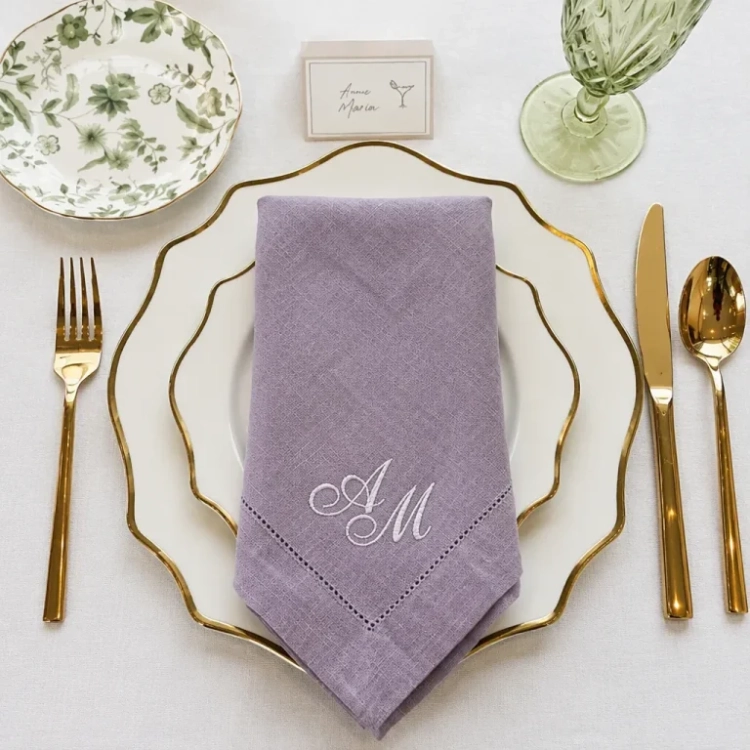
    A lavender monogram napkin folded on a formal place setting with gold cutlery
    How to Specify Embroidered Linen Napkins for Event Rental
    How to Specify Embroidered Linen...
    A fitted caravan bedding set shown on an RV bed in green and checked fabric
    How to Specify Custom RV Fitted Sheets for Shaped Mattresses
    How to Specify Custom RV Fitted...
    Stuhlhussen für Hochzeiten 2027 – Ein praktischer Einkaufsleitfaden für Event-Einkäufer
    Stuhlhussen für Hochzeiten 2027 – Ein praktischer Einkaufsleitfaden für Event-Einkäufer
    Der Stuhlbezug passte perfekt...