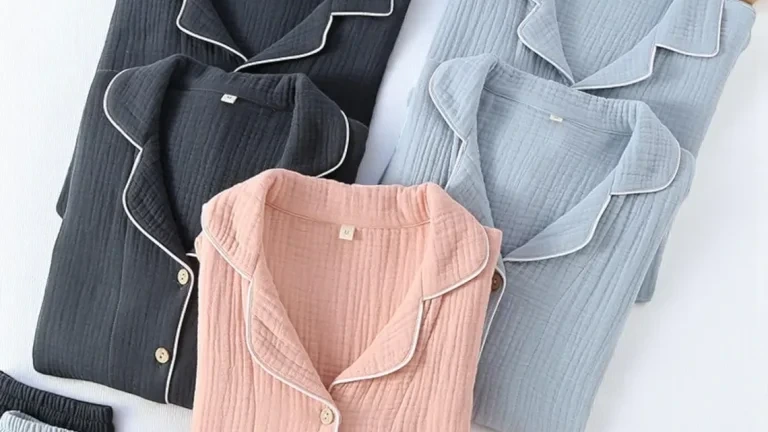
A pajama size chart is useful only when every measurement has a fixed method, the base size has been fitted, and the full size range has been checked after washing. Private label buyers should control body assumptions, garment measurements, ease, grading, fabric behavior, and tolerance before approving bulk production. This process reduces returns caused by inconsistent fit rather than visible sewing defects.

Conclusiones clave
- Separate body measurements from finished garment measurements.
- Define each point of measure with a diagram.
- Fit the base size on the intended customer profile.
- Review grade rules across the full size range.
- Confirm measurements after the agreed care cycle.
Start with the Target Customer
We cannot judge fit without a customer profile. Region, age group, body range, styling, fabric stretch, and desired ease all affect the chart.
Define Body and Garment Data
Body measurements describe the wearer. Garment measurements describe the product laid flat or measured by an agreed method. Label both clearly. A chest body range should not be confused with half-chest garment width.
State the Fit Intent
Write whether the style is relaxed, regular, fitted, oversized, maternity, unisex, or plus size. Define intended ease at the chest, waist, hip, thigh, and other critical areas. The HSC Textiles customization service can support private label development, but the buyer should approve the fit intent in writing.
Build a Point-of-Measure Manual
Different teams may measure the same garment differently. A diagram and written method make sample review and inspection repeatable.
Define the Top Measurements
Common points include chest width, shoulder, front and back length, sleeve length, cuff opening, armhole, neck opening, and collar width. State the garment position, reference seam, and whether fabric is relaxed or stretched.
Define the Bottom Measurements
Typical points include relaxed waist, extended waist, hip, front rise, back rise, thigh, inseam, outseam, knee, and leg opening. Elastic extension and recovery should have a test method rather than a vague comfort description.
HSC Textiles offers a custom knit lounge set that can serve as a concrete reference for reviewing knit fit, stretch, and size grading. Ask for current construction, fabric, available sizes, and sample options for the intended market.

Validate the Base Size on a Real Sample
The base size anchors the grade. Review it before multiplying an error across every size.
Check Balance and Mobility
Assess shoulder position, neckline, arm movement, torso length, waist comfort, crotch depth, sitting comfort, knee movement, and trouser length. Record the wearer’s relevant body measurements and every approved adjustment. Do not rely only on a fit comment such as “too tight.”
Test the Care Cycle
Measure the sample before and after washing under the proposed label instructions. Fabric relaxation or shrinkage can change sleeve, body, inseam, rise, and width. The final size chart should specify whether production measurements are prewash or postwash.
Audit the Grade Rules
Grading is not simply adding the same number everywhere. Each measurement needs an increment that supports body growth, styling, and movement.
Review Every Size, Not Only the Ends
Create a grade table that shows the change from one size to the next. Check for sudden jumps, flat measurements, and rounding errors. Pay special attention to shoulder, armhole, rise, thigh, and elastic dimensions because poor interaction between these points can distort fit.
Sew a Size Set
A size set should include enough sizes to expose grading behavior, commonly the base size plus selected smaller and larger sizes. For broad or plus-size ranges, additional samples may be necessary. The Preguntas frecuentes sobre textiles de HSC can support early sourcing questions, while the approved size-set record should govern the order.
Write Tolerances That Match Function
Tolerance is the permitted production variation around the specification. It should reflect measurement importance, fabric behavior, sewing process, and customer risk.
Tighten Critical Fit Points
Chest, waist, hip, rise, inseam, and elastic extension often affect comfort and returns directly. Decorative or low-risk measurements may accept a different tolerance. Avoid one general tolerance for the entire garment.
Inspect Measurements Across the Shipment
Sample different sizes, colors, production dates, and cartons. Measure garments on the same surface with the same method. Record actual values rather than only pass or fail. A trend toward one tolerance limit can reveal a cutting or sewing problem before it becomes widespread.
Connect the Size Chart to Customer Communication
The production chart and consumer-facing chart serve different purposes. The retail chart should help the customer select a size without exposing confusing factory measurements.
Translate Fit into Clear Guidance
Use body ranges, fit notes, garment ease, model information where available, and a consistent unit system. Explain whether the style is designed to fit loosely and how buyers should choose between sizes. Keep claims consistent with the approved sample.
Keep Revisions Traceable
Put a version number and date on the chart. When fit changes, update patterns, size tables, labels, ecommerce content, inspection documents, and retained samples together. HSC Textiles provides project cases that can inform development discussions, but each private label chart remains order-specific.
Two cautions matter. First, never copy a competitor’s size chart without checking the pattern and target customer. Second, do not approve grading from spreadsheet values alone; sew and measure representative sizes.
Send the target market, fit reference, body range, fabric, style drawing, size range, order quantity, and care method to Textiles HSC when requesting a fit-development plan.
Add a Measurement Decision Gate
Before approving the full chart, run a short decision gate that links fit, grading, and production risk. First confirm the base-size wearer profile and the garment ease at the chest, waist, hip, thigh, and rise. Next check whether the fabric is stable, stretchable, or likely to relax. Finally confirm that the intended care label matches the wash trial. If any one of these inputs changes, the chart is not yet ready for bulk approval.
Use a Size-Set Review Sheet
A practical review sheet lists each size down the left side and each point of measure across the top. Add the approved value, actual sample value, tolerance, and reviewer comment. This makes a grading problem visible as a pattern instead of a collection of isolated comments. Mark measurements that are intentionally non-linear, such as an elastic waist or a plus-size adjustment, so a checker does not “correct” a deliberate design choice.
Separate Fit, Label, and Inspection Charts
The fit-development chart can contain construction notes that are not suitable for a consumer label. Keep three linked records: the technical measurement chart, the retail body-size guide, and the inspection sheet. Each should carry the same style code and revision number. When the base pattern or fabric changes, update all three records and retain the superseded version for traceability.
Make Care and Tolerance Decisions Explicit
Care instructions should be selected from the tested process and expressed with recognised care symbols where required by the destination market, such as the ISO 3758 symbol system. A symbol cannot compensate for an untested fabric. Record whether the tolerance is measured before or after washing, how elastic is extended, and how knitted fabric is relaxed on the table. For a repeat order, compare the new lot with the retained sample before releasing a new chart.
A useful approval question is: “Could another inspector reproduce this result without asking the developer what they meant?” If the answer is no, add a diagram, reference point, fixture, or measurement condition. That small clarification often prevents disputes over fit and reduces rework across the range.
Preguntas frecuentes
What is the difference between a body chart and a garment chart?
HSC Textiles uses body ranges for wearer selection and garment measurements to control the manufactured pajama.
Which size should be fitted first?
HSC Textiles normally starts with the agreed base size, then validates selected smaller and larger sizes.
Why does a pajama size chart need measurement diagrams?
HSC Textiles diagrams fix the garment position and reference points so sampling and inspection use the same method.
Should measurements be checked after washing?
Yes. HSC Textiles recommends remeasuring after the approved care cycle because shrinkage and relaxation can alter fit.
How should size-chart revisions be controlled?
HSC Textiles recommends a dated revision number linked to patterns, samples, labels, ecommerce guidance, and inspection records.
Acerca de HSC Textiles
Somos un grupo empresarial que integra fabricación y comercio: ULAND GROUP. Nuestras filiales incluyen HSC, Liaocheng Shanlian Textile Co., Ltd., Zhongfei y DDL.