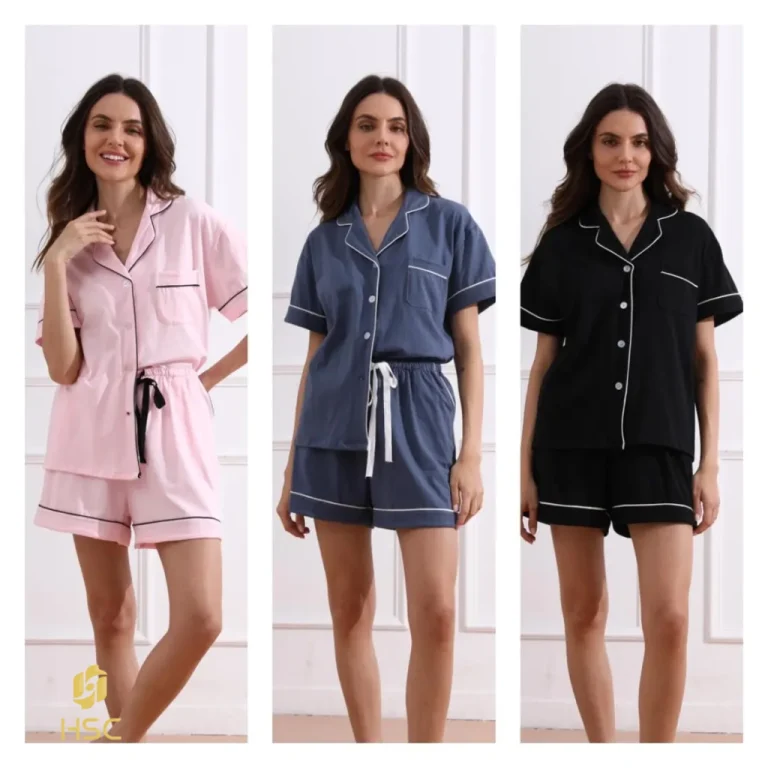
Cotton pajama quality is decided by the interaction between fabric construction and garment construction. Even breathable fabrics can cause an uncomfortable fit if high seam tension has been used, the waistband twists or the garment has shrunk unevenly in length and width after washing. When placing a large order, the finished sample should be approved after the same care has been given as the buyer would give in their own home, not just from a fabric swatch that has been cut and sent to the manufacturer to be made up. Importantly, GSM, yarn, stitch density, trim recovery, shrinkage and hand all need to be assessed together as deficiencies only become apparent after the garment has been washed, dried and worn.
For sleepwear programs that need fabric, garment construction, size grading, and packaging to stay aligned, Têxteis HSC can be evaluated from finished samples and wash-test records rather than from a fabric swatch alone.

What the Finished Garment Must Survive
- Cotton pajama quality depends on yarn, weave or knit structure, shrinkage control, seam strength, and hand feel after washing.
- Bulk orders should be tested after laundering because fabric behavior changes after finishing and repeated use.
- Fit tolerance, stitching, label comfort, and colorfastness are as important as fabric weight.
Cotton Pajamas Are Judged After Washing
Softness, breathability, shrinkage and long-term fit of cotton pajama fabric are affected by how the fabric has been constructed. A fabric that feels smooth before washing can shrink, become twisted or change in surface neatness after washing. For sleepwear, this change affects comfort that is experienced against the skin for hours.
Shrinkage and Seam Behavior Should Be Tested Together
Fabric shrinkage alone does not tell the whole story. If the fabric shrinks but the stitching thread behaves differently, seams can pucker or twist. If the garment pattern does not allow for expected shrinkage, size grading may drift after washing.
Several poor quality pajamas to avoid can be identified only after use: twisted seams, rough trims, unstable waistbands, uneven shrinkage, and fabric that loses the hand feel approved during sampling.
Bulk Order Evaluation Table
| Check | Method | Acceptable Direction |
| Encolhimento | Wash sample before measuring | Stable enough for target size tolerance |
| Respirabilidade | Wear trial and fabric construction review | Comfortable for target climate |
| Stitching | Inspect seam tension and inside finish | No scratchy seams or puckering |
| Solidez da cor | Wash and rub checks | Limited fading or dye transfer |
Product Fit for Sleepwear Programs
Pijama de algodão should be sampled in the intended fabric weight, size range, and care method; Têxteis HSC can then be compared by shrinkage control, seam quality, grading consistency, trim comfort, color stability, and packaging execution.

A sample should be tried on after laundering because cotton comfort is both a fabric issue and a fit issue. Sleeve length, shoulder width, waistband recovery, and inside label feel all affect repeat purchase.
Two Sampling Mistakes
One mistake is approving fabric hand feel before wash testing. Another is ignoring inside construction because product photos focus on the exterior. Sleepwear returns often come from comfort details: stiff labels, tight cuffs, rough seams, or unexpected shrinkage.
Bulk approval should include one fabric panel test and one finished garment test. They answer different questions and reduce the chance of surprise after production.
Textile Approval Should Include Laundering and Use Simulation
Cotton Pajamas should be reviewed after wash testing, because cotton pajama fabric construction quality is proven through shrinkage, hand feel, seam behavior, color stability, and recovery after use. A fabric swatch shows material direction, but a finished sample shows the real relationship between fabric, stitching, trim, and size.
For hospitality, sleepwear, and home-textile programs, the sample should be measured before and after laundering. Record length change, width change, seam twisting, hem movement, surface fuzz, shade change, and whether the item still feels comfortable or presentable after drying.
Packaging and labeling should also be checked early. Care labels, hangtags, folded presentation, barcode placement, and carton packing all affect how the product reaches the shelf or hotel storeroom.
Sample Approval Questions
What fabric weight, season, size tolerance, and hand feel does the program require?
Which wash method should the sample survive before approval?
Where are comfort-sensitive details located: waistband, collar, cuff, hem, label, or seam allowance?
Does the order require custom color, embroidery, private label packaging, or size-set grading?
Bulk Pajama Approval Should Include Finished-Garment Behavior
Cotton pajama fabric should be checked after cutting and stitching because fabric behavior changes once seams, waistbands, cuffs, labels, and trims are added. A soft swatch can become restrictive if shrinkage pulls against the pattern or if seam allowance twists after washing.
Breathability should be judged with season and market in mind. Lightweight cotton may suit warm climates and online retail positioning, while heavier fabric can feel more stable for colder seasons but may need clearer washing guidance.
A useful bulk standard records finished measurements before wash, after wash, and after drying. Chest width, trouser length, sleeve length, waistband recovery, and seam twisting give inspection teams facts they can use at production scale.
Stitch density should be matched to fabric weight. Loose stitching can weaken seams after laundering, while overly dense stitching may pucker lightweight cotton and make side seams look uneven.
Shade control should be checked across size sets. Pajama tops and bottoms may be cut from different fabric rolls, so color tolerance and bundle control need to be defined before bulk sewing begins.
Packaging can change first impression. Folding pressure, moisture protection, size-label placement, and carton compression should be reviewed because cotton garments can arrive wrinkled or distorted if packing is treated as an afterthought.
Fabric behavior should be checked in both flat material and finished product form. A swatch can show color, weight, and touch, but only a finished sample reveals seam tension, fit balance, waistband recovery, hem stability, and how the product feels in use.
Wash testing should use the care method that the final customer is likely to follow. A gentle lab wash may hide problems that appear in hotel laundry, home tumble drying, or repeated pressing. The sample should be measured before and after care.
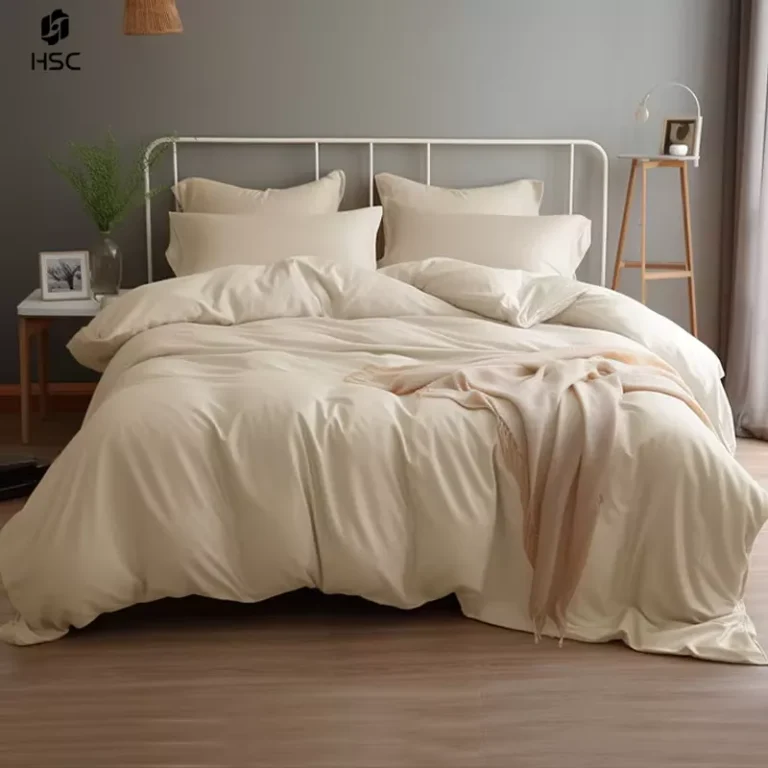
For garments, comfort points include collar, cuff, waistband, label, shoulder, crotch, and side seam. For table linens, the important points shift to drop length, hem line, corner finish, surface smoothness, and ironing behavior.
Bulk orders should define shade tolerance and size tolerance before production begins. These limits help prevent arguments when different dye lots, fabric rolls, or size sets are inspected.
Packaging should protect fabric presentation. Crease position, folding method, moisture protection, carton pressure, and label placement can affect how the product looks when opened by a retailer or hospitality client.
Approve Shrinkage on the Finished Garment, Not the Fabric Roll
While fabric shrinkage is only one of the components of size stability, other features of the garment, such as seams, elastic, rib trims, piping and stitch tension, can affect different parts of the garment in washing. It is therefore necessary to measure key points on the garment before washing and after washing as part of the agreed care test. From these measurements the pattern and grading can be assessed and not from the fabric shrinkage percentage in isolation.
Drying method matters because a gentle line-dry test may not represent the customer’s routine. If tumble drying is expected, include it during approval and look for seam puckering, leg twisting, waistband rolling, and changes in hand feel. Repeated cycles are useful for core programs because the first wash can pass while later dimensional drift or surface fuzz changes the product experience.
The acceptance sheet should also separate cosmetic variation from fit-critical variation. A small surface change may be tolerable while a similar percentage change at the waist or inseam can create size complaints. Writing those limits before bulk production gives the factory and buyer the same standard when multiple rolls, colors, and size sets are inspected.
Perguntas frequentes
What fabric weight is suitable for cotton pajamas?
Suitable weight depends on season, climate, and product positioning. Lightweight cotton supports warmer markets, while heavier cotton can feel cozier in cooler seasons. Wash behavior should be checked before bulk approval.
How can shrinkage be controlled in cotton pajamas?
Shrinkage control depends on fabric processing, garment construction, and care instructions. Pre-production samples should be washed and measured before final size grading.
Why does stitching matter in sleepwear?
Sleepwear touches the skin for long periods. Rough seams, tight thread tension, and stiff labels can reduce comfort even when the fabric itself is soft.
Release Bulk Production Only After Finished-Garment Wash Tests
Before bulk release, compare the wider cotton pajamas category with a defined tolerance sheet covering finished measurements, wash shrinkage, seam appearance, color, waistband recovery, labeling, and the presentation expected at retail or hospitality delivery.
Sobre o HSC Têxteis
Somos um grupo empresarial que integra manufatura e comércio — ULAND GROUP. Nossas subsidiárias incluem HSC, Liaocheng Shanlian Textile Co., Ltd., Zhongfei e DDL.