“Eid fabric” is not one product. It is a tablecloth. A duvet cover. A robe in a gift box. Each one fails for different reasons.
Short version: table linen gets linen or a linen-cotton blend. Guest bedding gets bamboo lyocell, or cotton if the AC runs cold all night. Gifts get washed linen or cotton muslin. Hotel floors get blends. Pure linen on three hundred covers means someone is ironing until midnight.
Long version below.
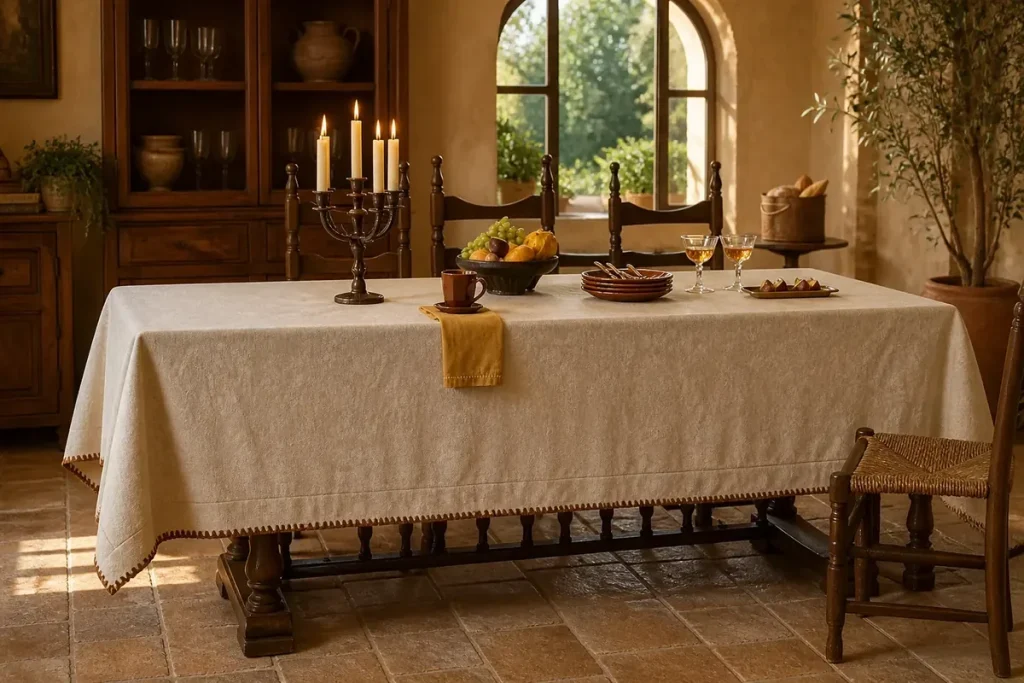
Table linen: pick by light, not by swatch
Linen photographs better than cotton. Matte surface. Soft weight. No shine under warm lamps.
It also creases. If you plan to iron on site, fine. If housekeeping has twenty minutes per table, buy a blend.
Weight matters more than the label. A 160 gsm linen and a 220 gsm linen both say “100% linen”. The heavy one drapes. The light one shows every fold.
Ask for the weight in writing.
Cotton: the workhorse
Cotton is cheaper. It takes dye evenly. It presses flat. Hotels reorder it because it survives.
The downside is hand feel. Standard cotton can feel flat next to linen. For iftar service, nobody notices. For a photographed head table, they do.
Spills are easier on cotton. So is stain removal. That matters when thirty people eat lamb and rice at the same table.
Blends: what most hotels end up buying
55% linen, 45% cotton. Some texture. Less wrinkling. Better in an industrial laundry.
Test for pilling before you commit. Some blends pill after ten washes. Others go limp. A wash test costs less than a reorder.
If you need one fabric for a whole property, this is the safe one. Pure linen for suites. Blend for everything else.
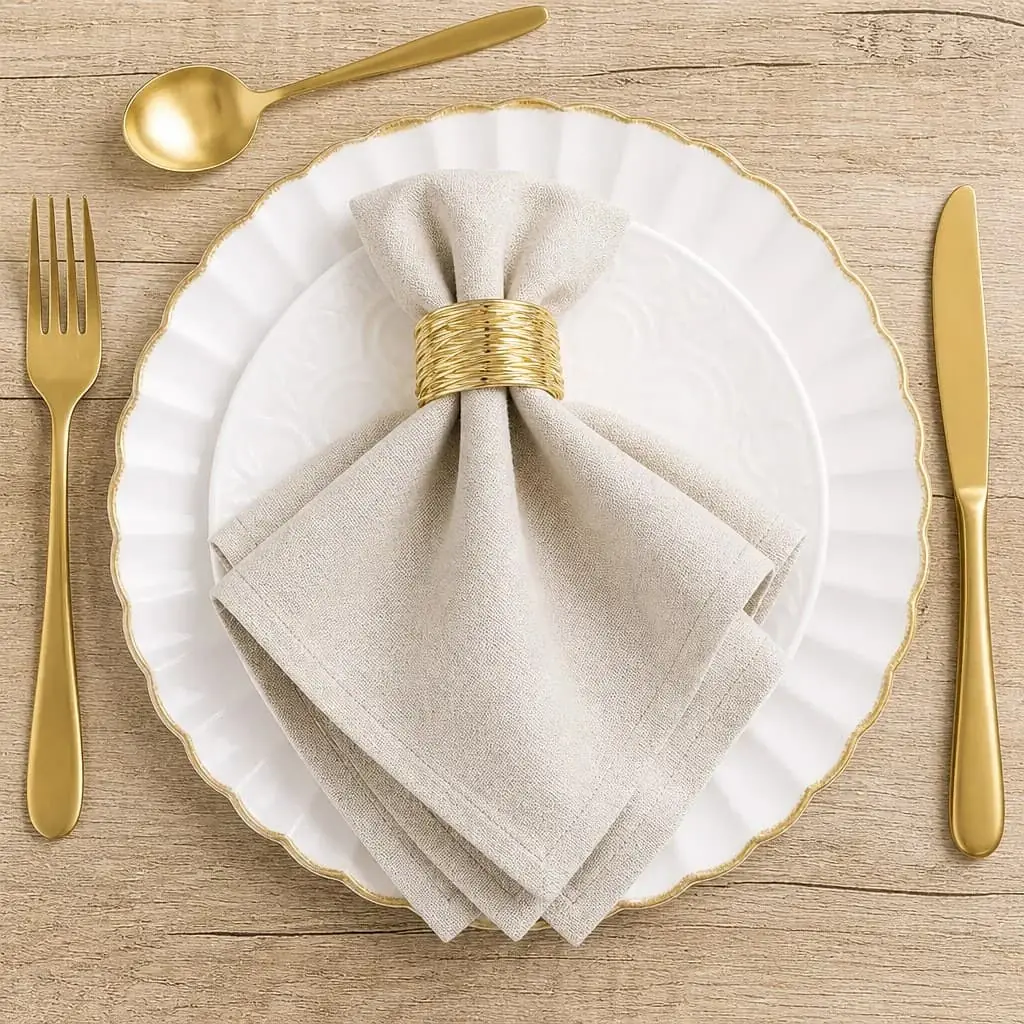
Bedding: cool first, fancy second
Guests notice heat before they notice thread count.
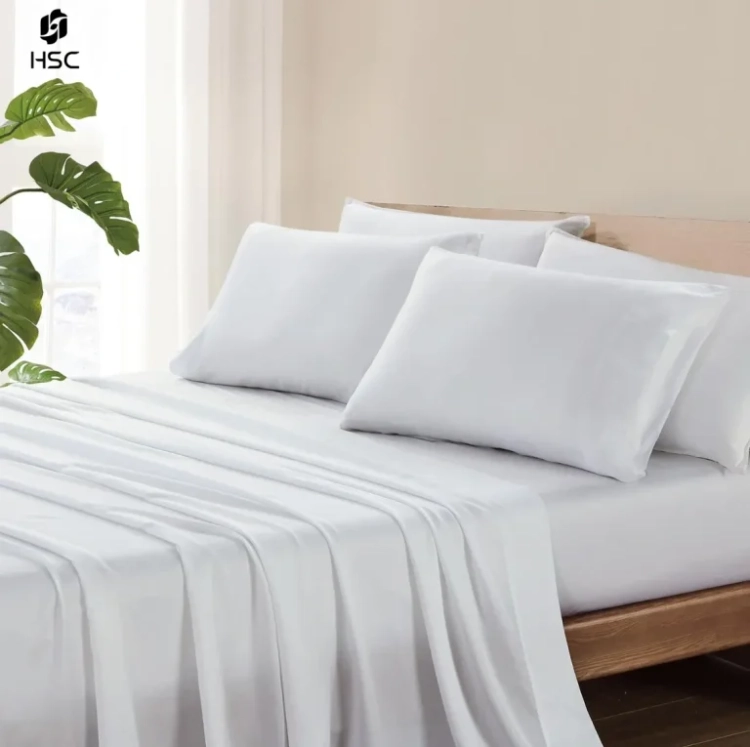
Bamboo lyocell feels cool when someone sits down. It hangs softly. It photographs like silk but washes like cotton. In a Gulf summer, that is the sensible choice.
Cotton sateen looks rich. Prints sharply. Heavy sateen in a hot room is a mistake. Your guest will push it off at two in the morning.
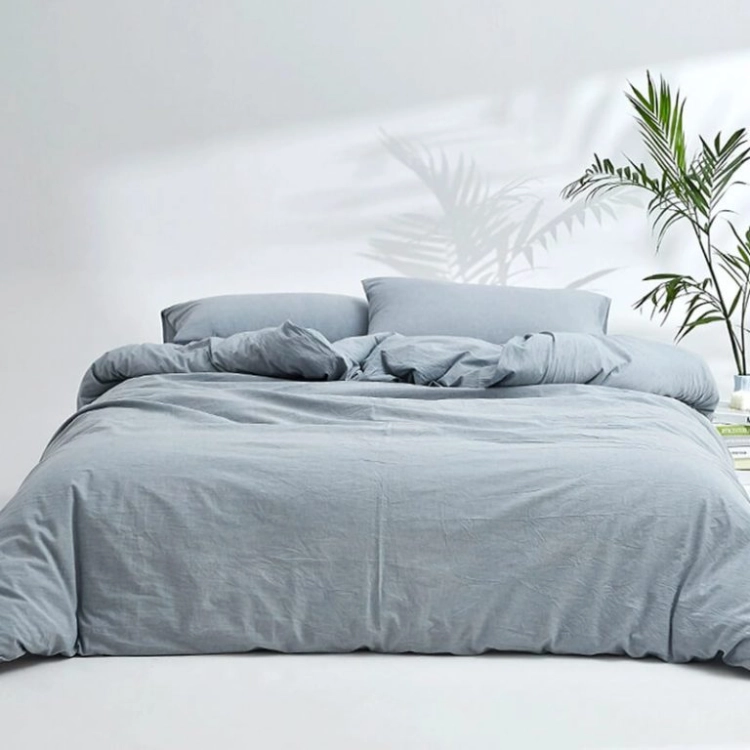
Stonewashed cotton is soft out of the bag. It hides creases. Rental villas and serviced apartments should buy it for that reason alone.
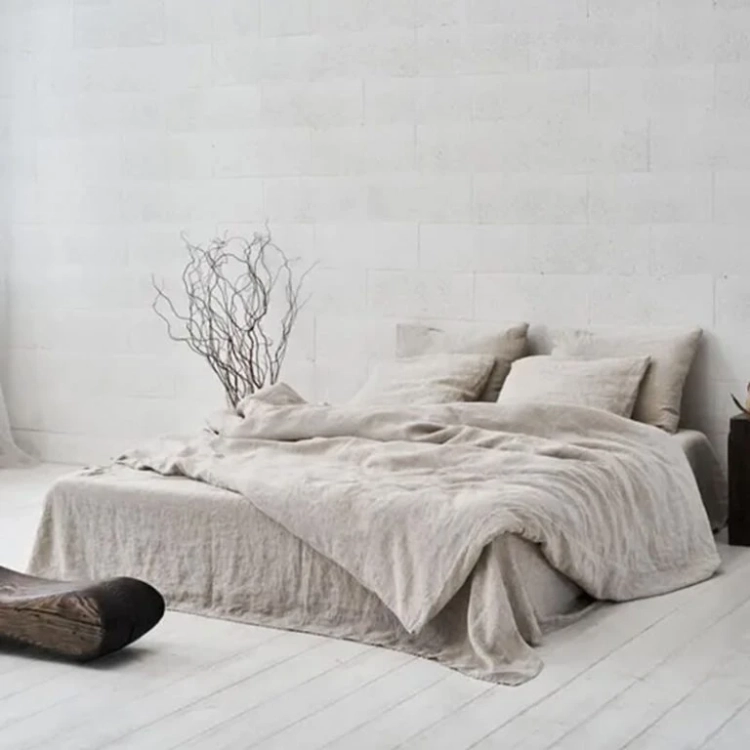
Linen bedding wrinkles. Hard. Beautiful in a bare room, painful in a rental. Sell it to the customer who wants the look, not the one who wants hotel smoothness.
Order a size set. Wash it. A 3% shrink is fine. A 7% shrink means the duvet no longer fits.
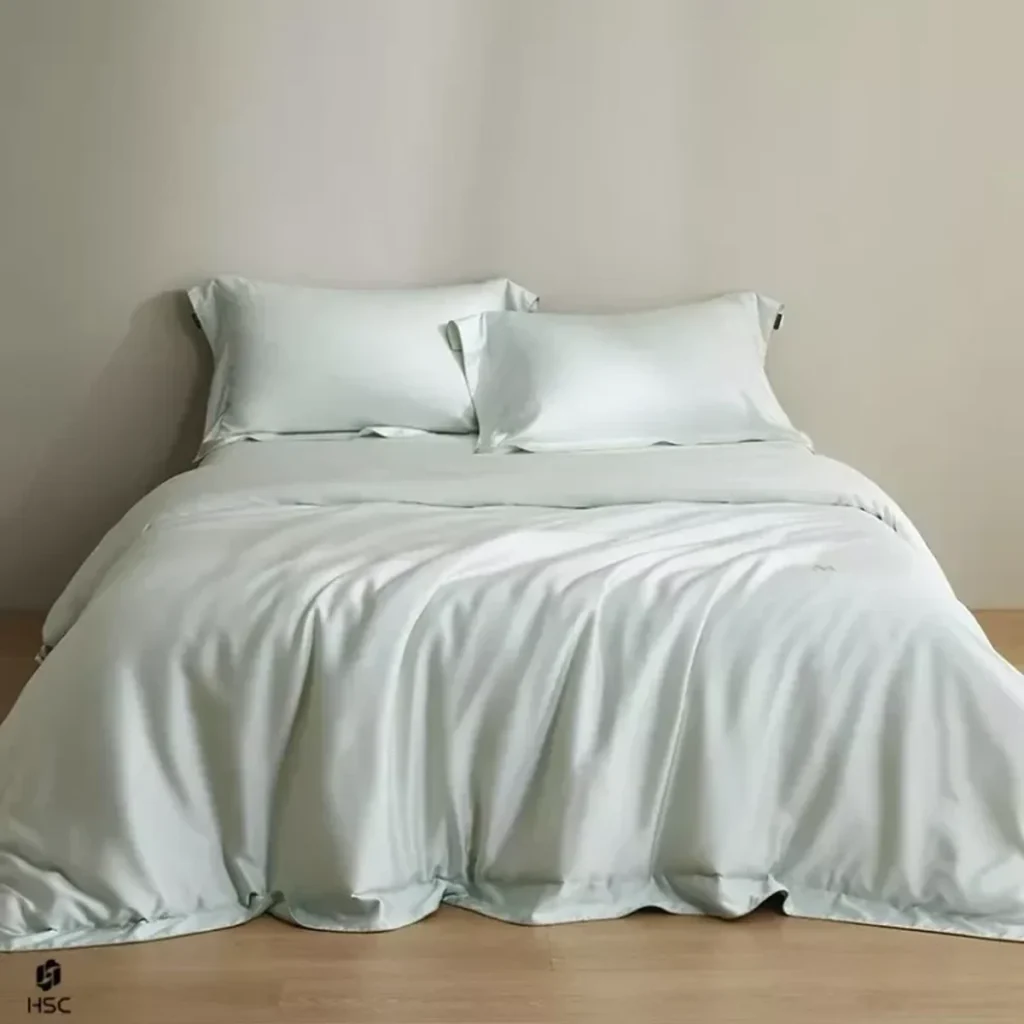
Gifts: hands before labels
A robe is touched before it is read. Stiff fabric kills the box.
Washed linen works in dry heat. Cool, relaxed, softer after each wash. Cotton muslin is cheaper and softer, with a crinkle that suits casual gifting. Bamboo blends drape well in photos but need gentle care wording.
Packaging matters. Linen pouch. Paper band. Printed card. Get a photo of the packed unit before bulk. Re-packing five hundred robes in February is a bad week.
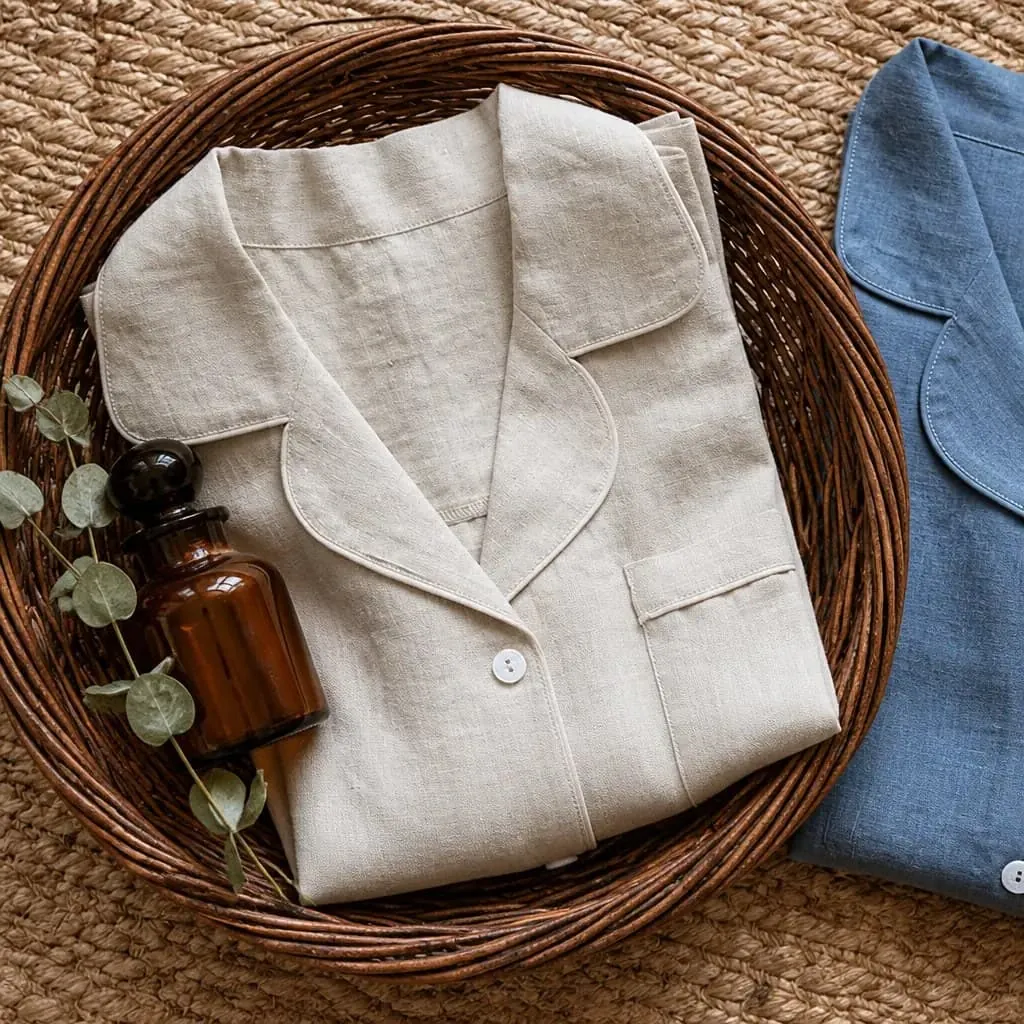
Colour: three checks
Deep green, sand, ivory, muted gold. Every Eid. Same colours, same problem.
- Dye method. Reactive dye on cotton holds. Pigment print sits on the surface and can rub off. Test dark napkins against a white cloth.
- Light. Sage looks right in daylight and grey under warm bulbs. Approve the lab dip under venue lighting.
- Batch. Two runs of one Pantone will not match exactly. Put a tolerance in writing. Keep a sealed swatch.
One more thing. Religious motifs and calligraphy come from the client’s artwork, with written approval. A factory should not invent them.
What to write in the PO
“Premium feel” cannot be measured. Use numbers.
- Composition and weight: 100% linen, 190 gsm. Or 55/45, 180 gsm.
- Size and tolerance: 40 × 40 cm ± 1 cm napkins. Tablecloth length, width, drop.
- Shrinkage: under 5% after three washes.
- Colourfastness: to washing, rubbing, light.
- A sealed hand-feel sample. Not words.
- OEKO-TEX Standard 100 where it applies.
- Care label text and language.
Attach a photo of the approved sample. It settles disputes faster than email.
Order timing
Eid 2027 is around 9–10 March. Ramadan starts in early February.
Sea freight leaves before the end of 2026. Air freight is expensive for cloth. Work backwards from delivery.
Sampling takes 7–10 days for custom colour or size. Bulk starts after approval. MOQ is 100 pieces or sets.
Before a deposit, ask for a lab dip per colour, a size set in the real fabric, and a wash test report. No reports, no order. For the wider calendar — sampling cut-offs, packing, shipping — see our Ramadan and Eid home textile sourcing guide.
What we make
Enkelfärgad linneduk. Custom sizes. Wide colour card. Optional oil-resistant finish.
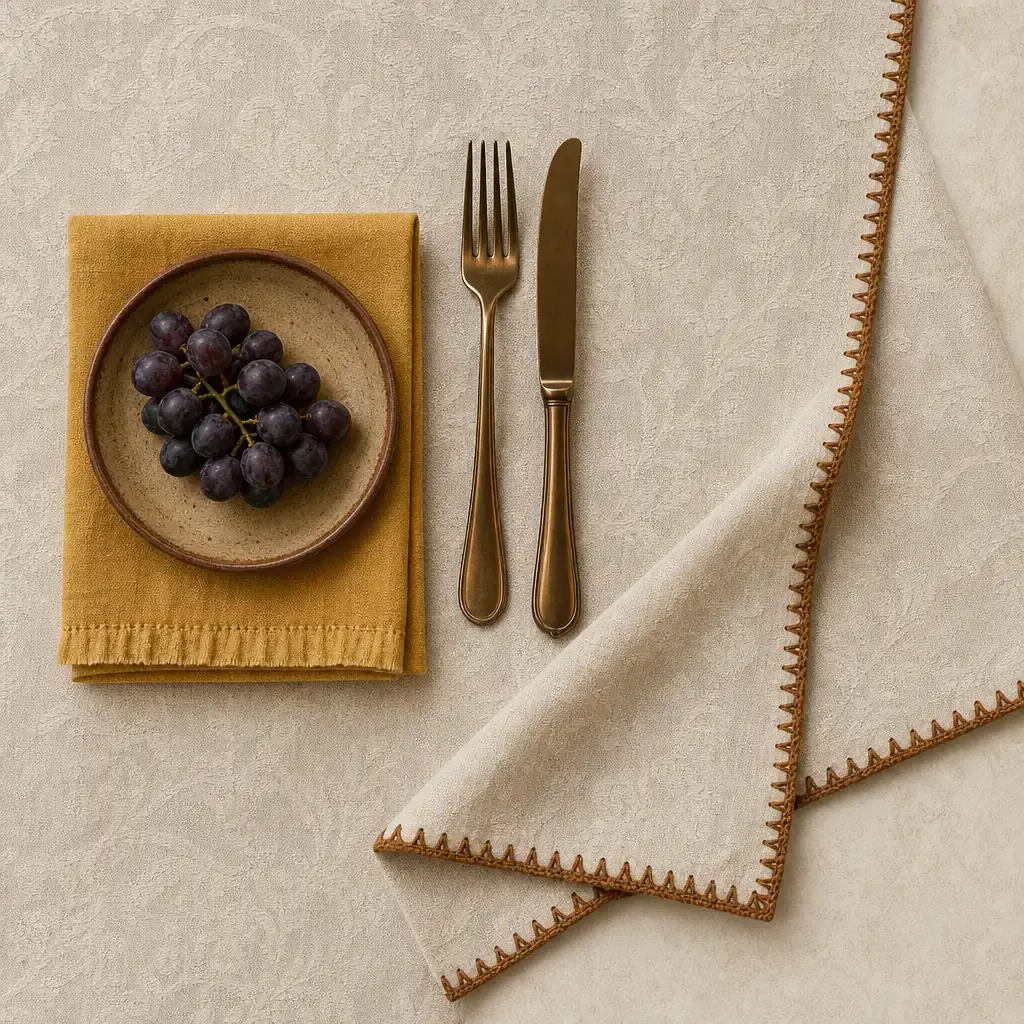
Linen-cotton napkins. 40 × 40 cm standard. Plain or contrast stitch.
Bamboo lyocell duvet set. The coolest thing we make.
Organic cotton sateen set. The one hotels reorder.
Pre-washed linen robe. Kuddfodral i linne. Both photograph well in a hamper.
Private label, woven tags, custom packaging. All in-house. OEM/ODM-tjänster.
Vanliga frågor
Linen or cotton? Linen for looks. Cotton or blend for volume. Hotels usually buy the blend.
Napkin size? 40 × 40 cm dinner. 25 × 25 cm cocktail. Check the fold first.
Shrinkage? Under 5% after three washes. More than that and fitted sheets fail.
Pantone match? Yes, with a lab dip. Small tolerance between lots.
MOQ? 100 pieces or sets. Your label and packaging are fine.
Om HSC Textiles
HSC Textil. Part of ULAND GROUP. Twenty years in home textiles. 3,200 m² factory. Fifty-five staff.
3,000+ clients. 30+ countries. OEKO-TEX Standard 100 on relevant lines. SGS, BSCI, FSC.
Sizes, colours, embroidery, packaging. All handled in-house.
Eid 2027 range? Send your fabric, size and colour list. We will reply with a lab dip plan and a sampling schedule.