September is a useful planning point for table linen because hospitality venues and home-living retailers begin moving from summer presentation toward autumn dining, seasonal events, and year-end entertaining. The most reliable assortment is not necessarily the heaviest or darkest one. It is a coordinated collection with the right fabric behavior, repeatable sizes, practical care instructions, and enough color flexibility to serve several settings.
For export buyers, the decision should start with the table environment rather than a trend image. A cloth used for a restaurant service, a hotel banquet, and a retail gift collection will face different washing, ironing, packing, and replacement demands. Defining those conditions first makes it easier to choose linen, cotton, or a blended direction and to set specifications that a manufacturer can reproduce.
What changes in an autumn table linen collection?
Autumn collections often need to look warmer while remaining operationally practical. Color can create that change without requiring a completely new construction: muted green, rust, blue, natural, charcoal, and off-white can work with existing dinnerware and furniture. Buyers should assess colors under the lighting used in the venue because warm restaurant lighting can make a sample appear significantly different from its appearance in daylight.
Texture also influences the seasonal impression. Linen introduces a natural surface and relaxed drape, while cotton can offer a familiar hand feel and straightforward care. A textured fabric may support a premium setting, but it can also require more careful folding and pressing. The correct choice depends on how the product will be used, laundered, displayed, and replenished.
Linen, cotton, or a coordinated mix?
| Buying factor | Linen | Cotton | Check before approval |
| Appearance | Natural texture and relaxed drape | Clean, familiar surface | Review color and texture in final size |
| Service use | Suited to elevated dining and event styling | Practical for frequent table turnover | Match construction to wash routine |
| Care | May show creasing as part of its character | Often easier to standardize for teams | Confirm ironing and folding expectations |
| Merchandising | Supports premium and seasonal stories | Broad everyday appeal | Plan coordinated sizes and colors |
A mixed collection can reduce risk. Linen tablecloths or runners can carry the visual story for premium dining, while cotton napkins provide a practical coordinating item for larger quantities. The products do not need to be identical in construction to look intentional, but their colors, border treatments, and finished dimensions should be planned together.
Start with the table setting and finished dimensions
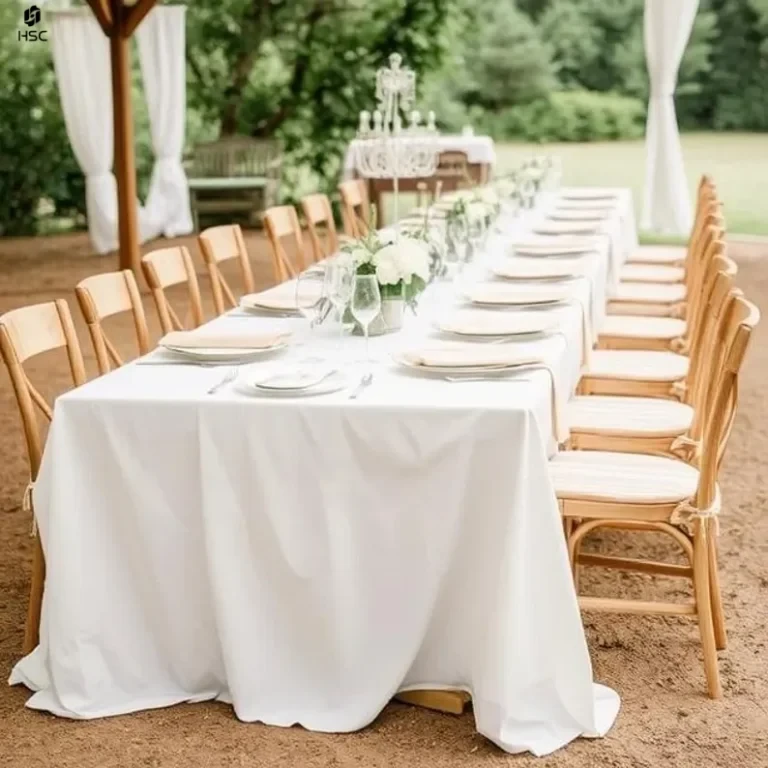
A tablecloth is judged by how it hangs, not only by its cut size. Buyers should define the table dimensions, preferred drop, and intended use before requesting a quotation. A banquet table, restaurant table, and home dining table may require different finished lengths even when the fabric story is the same. Runners and napkins should be measured as finished products, with tolerances agreed in advance.
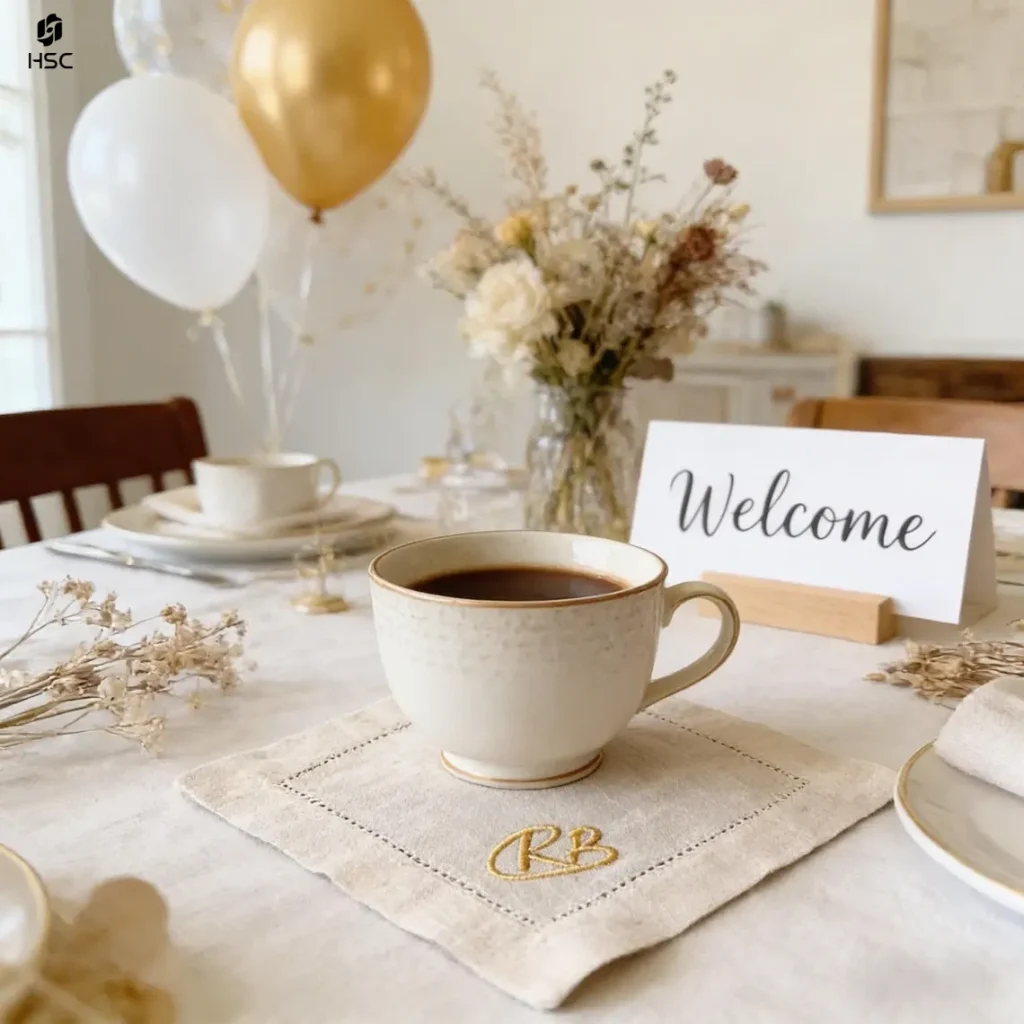
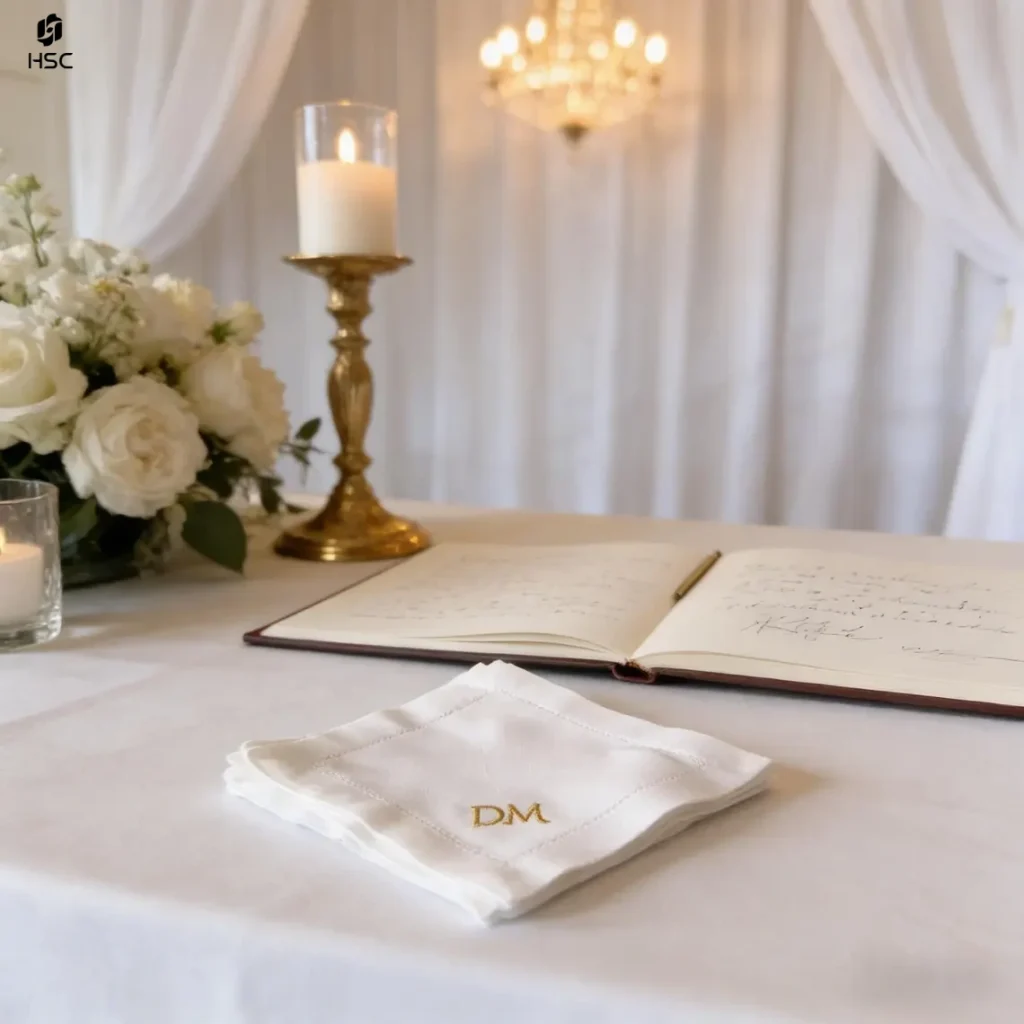
Border placement deserves attention on patterned or contrast-color styles. If the border is not square to the cloth, the defect becomes obvious when the fabric is placed on a table. Ask for a full-size or representative sample that shows corners, hems, label placement, and any embroidery. A small swatch cannot prove how the edge behaves after laundering.
For private-label collections, confirm the brand label, care label, folding method, and packaging artwork before bulk production. Retail packaging may need barcode space and material information, while hospitality deliveries may prioritize carton identification and fast counting. These requirements should be included in the product brief so the finished goods arrive ready for the intended channel.
Four quality checks for an export table linen order
- Dimensional stability: Wash and dry the approved sample using the planned care process, then remeasure length and width. Compare the result with the agreed tolerance instead of relying on visual judgment.
- Seam and hem control: Inspect straightness, corner construction, loose threads, and stitch consistency. A small hem defect can become a visible failure when several cloths are placed side by side.
- Color consistency: Compare the approved standard with production samples under consistent lighting. Check separate dye lots if the order will be shipped in more than one batch.
- Packing protection: Confirm folding, moisture protection, carton marks, assortment ratios, and compression. Natural fabrics can arrive heavily creased if the package is too tight or stored in humid conditions.
How buyers can build a flexible September assortment
Begin with a small number of table formats and repeat the strongest colors across cloths, runners, and napkins. This creates a coordinated look without forcing every buyer to purchase a full matching set. For hospitality, keep replacement items easy to identify. For retail, consider bundles that make the styling decision simple, such as a runner with matching napkins or a tablecloth with a clearly described care profile.
Do not choose colors only from a digital screen. Request physical lab dips or finished samples, especially for natural, rust, green, and blue shades that can shift with fiber content and finishing. Record the approved color reference and use it for later replenishment. This protects the collection from gradual color drift as new lots are developed.
The order conversation should also cover minimum order quantity, sample approval, customization, production documentation, and repeat-order conditions. If the first shipment is intended to test a new autumn story, agree how the next order can expand successful colors or add sizes. A supplier who can communicate those options clearly is more useful than one who only provides a low initial quote.
For hospitality programs, replacement planning should be part of the first quotation. Ask how the supplier records the approved construction and color, whether the same finished dimensions can be repeated, and how cartons will identify different sizes or styles. A replacement item that looks close but uses a different border width or shade can disrupt the appearance of an entire dining room. Written specifications make later purchasing faster and reduce arguments over whether a new batch matches the original.
Retail buyers should consider how the collection will be explained after it leaves the factory. Product names, composition statements, care instructions, and finished measurements need to remain consistent across packaging, line sheets, ecommerce pages, and distributor materials. Clear information supports returns management and gives customers a realistic expectation of natural texture, normal creasing, and wash behavior. It also makes a small collection look deliberate rather than assembled from unrelated stock items.
The best first order is therefore a controlled test with a clear learning goal. A buyer may be testing whether linen attracts premium customers, whether a runner-and-napkin bundle improves average order value, or whether a darker autumn palette performs better in a particular region. Define the goal before sampling, then keep the construction and presentation stable enough for sales feedback to mean something. This approach gives the next order a stronger foundation than simply adding more colors.
Why product range breadth matters
HSC Textiles works across several textile categories, including tablecloths and napkins. That range is useful when a buyer wants one coordinated sourcing conversation for the main cloth and supporting table pieces. Buyers can also review the broader home textile collection when an autumn dining story needs to connect with other home-living products.
A coordinated product brief should list each item, finished size, fabric composition, color reference, edge treatment, care instruction, logo or label requirement, packaging method, and inspection point. This format makes supplier quotations easier to compare and reduces the chance that a minor detail is lost between sampling and production.
It also gives the purchasing team a stable reference when different departments review the same order, from merchandising and quality control to warehouse receiving and customer service.
Frequently Asked Questions
Is linen table linen suitable for restaurant use?
It can be suitable when the construction and care routine match the service environment. Buyers should test laundering, dimensional stability, crease expectations, and replacement availability before selecting linen for frequent turnover.
What table linen should be ordered first for an autumn collection?
Start with the formats that match the existing tables or strongest sales channel, then repeat a controlled color palette across tablecloths, runners, and napkins. This gives the collection a coherent look while keeping the first order manageable.
How can an importer reduce problems with customized table linen?
Approve physical samples, finished measurements, color references, labels, packaging, and care instructions in writing. Confirm how production will be inspected and how repeat orders will use the approved standard.
About HSC Textiles
HSC Textiles supplies textile products for bedding, sleepwear, robes, table settings, and related home textile programs. Buyers can visit the official website to discuss fabric direction, coordinated products, private labeling, sampling, and wholesale requirements. Coordinating sleepwear or robe options may also help extend an autumn home-living collection.