
It’s surprisingly easy to get a bad deal on organic cotton bedding. Two products might show identical label descriptions, yet feel totally different once you hop into bed. This gap rarely comes down to the “organic” label itself. It all hinges on fabric weaving techniques, post‑production finishing work, and whether the cotton went through pre‑shrinking before being cut into pieces.
This guide walks you through key choices that directly impact how your organic cotton bedding feels and holds up over time. You’ll also learn a simple washing routine to keep items soft, instead of letting them turn thin and stiff. This piece is made for retail buyers, hotel and homestay operators, plus anyone putting together a long‑term bedroom setup.
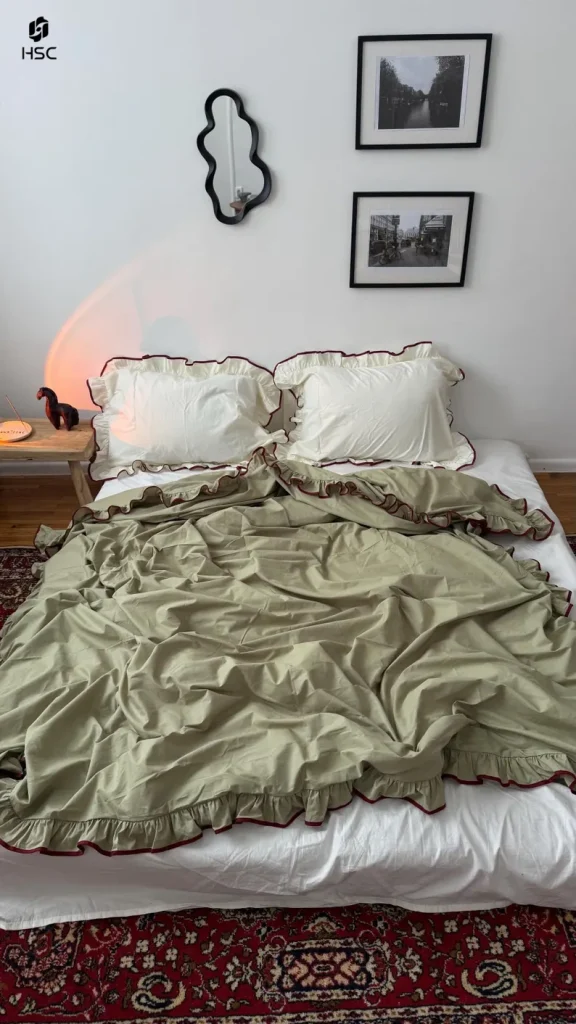
What Organic Cotton Actually Means For Your Bed
Organic cotton only refers to the way raw cotton is farmed. Farmers skip synthetic pesticides, herbicides, and genetically modified seeds — that’s the full definition.
This label tells you nothing about weave type, thread count, finishing touches or sizing fit. That explains why some organic bedding still feels rough. A well‑made set is worth spending extra on, no matter how the cotton was grown.
Where organic growing really helps is giving you a cleaner base material. Organic cotton usually gets processed with fewer harsh chemicals. It acts exactly as good cotton should: it lets air flow, soaks up moisture, and gets softer with use instead of forming annoying fabric pills.
Finishing work is the critical step turning plain organic fiber into comfy bedding. Washed or stone‑washed organic cotton bedding removes that stiff, papery new‑fabric texture before it reaches customers. This is why hotels and homestays often pick this finish — brand‑new stock can go straight onto beds right out of packaging.
Key Specs That Shape The Real‑World Feel
Two duvet covers can both read “100% organic cotton, 300 thread count”, but feel nothing alike for sleeping. These five specifications create most of that difference.
Weave: Sateen vs Percale Sateen uses a tighter weave; more threads sit on the fabric surface. This creates a smooth touch and subtle soft matte shine. Percale uses a simple over‑under weave pattern. It feels crisper and gives a slight cooling effect against skin. Neither option beats the other. Grab sateen if you want silky smooth sheets. Go for percale for that classic crisp hotel‑bed vibe.
Thread Count & Fabric Weight Thread count counts threads packed into one square inch. It is not a mark of cotton quality. Long‑staple cotton fiber, smooth spinning and solid weave do far more for long‑lasting bedding than a bigger thread‑count number. Real‑world use shows 300T and 400T work great for most retail and hotel bedding lines, and both come in organic cotton options.
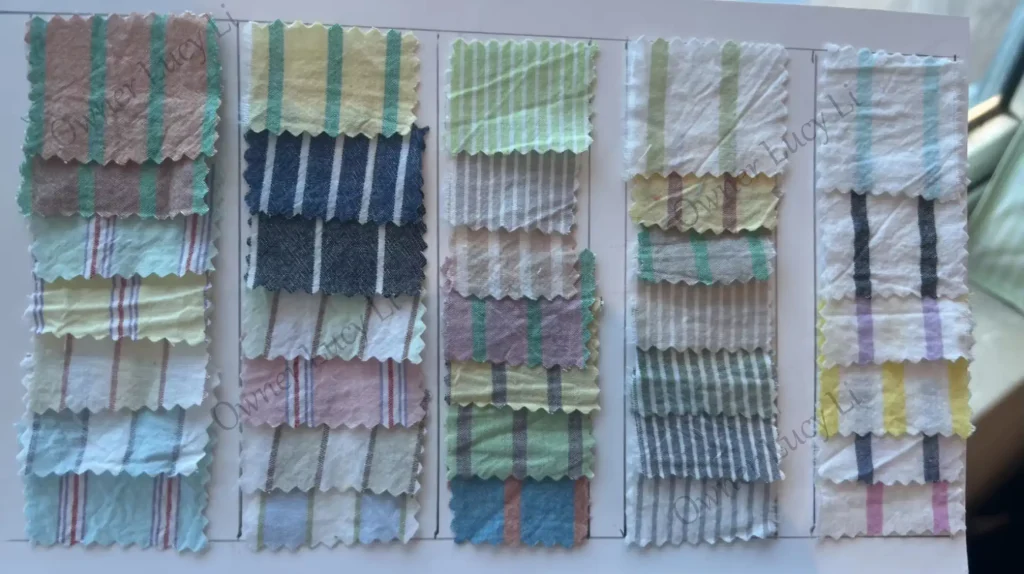
Finish: Washed, Stonewashed and Muslin Stonewashed or washed treatments soften fabric before you buy it, getting rid of the harsh stiffness of brand‑new cloth. Muslin works differently. It’s a light gauze‑style weave with natural wrinkling; no ironing required. It grows softer after every wash. These finishing options are the easiest way to make budget‑friendly organic cotton bedding feel high‑end.
Fit Details: Elastic Bands, Corner Ties and Pocket Depth Poor fit is the biggest giveaway of low‑quality bedding. Seek out sheets with elastic running fully around edges, not elastic only at four corners. Confirm fitted‑sheet depth matches your mattress. Australian sizes commonly use 40 cm depth; US versions use 14‑inch depth. Look for inner corner ties or fasteners inside duvet covers so your inner quilt stays put overnight.
Pre‑Shrinking & Size Retention Pre‑production treatments decide if bedding still fits months later. Fabric pre‑shrunk before cutting keeps its dimensions through many washes. This stops fitted sheets from popping loose at mattress corners. Aim for bedding with under 5% leftover shrinkage after washing.
| مواصفة | What it changes | Typical options |
|---|---|---|
| Weave | Hand feel and surface shine | Sateen (smooth, matte glow), percale (crisp feel) |
| Thread count | Fabric density and even surface | 300T, 400T |
| Finish | Softness straight out of packaging | Stonewashed, washed, muslin gauze, standard finish |
| Fitted depth | Whether sheets stay snug on mattresses | 14 in (US), 40 cm (AU) |
| Elastic and ties | Keeps bedding secured through sleep | Full‑perimeter elastic, inner duvet corner ties |
| Pre‑shrinking | Size stability after repeated washes | Remaining shrinkage below 5% |
How Organic Cotton Bedding Changes As You Use It
Organic cotton ages differently compared to synthetic‑blend fabrics over its first year. ‑ It softens instead of wearing out. Each wash eases initial rigidness from fibers. Washed and muslin bedding keep getting nicer to use for the first several months. ‑ Tight weaves stop pilling. Good resistance against pilling, fading and everyday wear comes from weave structure and fiber length, not marketing labels. ‑ Pre‑shrunk fabric holds its size. Without pre‑treatment, bedding that fits perfectly at first can shrink after one warm‑temperature wash. ‑ Wrinkles are totally normal. Organic cotton creases easily, especially percale and muslin types. Stone‑washed finishes reduce most wrinkles once you make up the bed. ‑ Great breathability shines in rooms with little airflow. Cotton pulls moisture away from skin. This matters a lot for insulated bedrooms and guest rooms with limited fresh‑air circulation.
Care Tips To Keep Bedding Feeling Soft
| Step | Do this | Avoid this |
|---|---|---|
| Washing | Gentle machine cycle at 30‑40°C, use mild liquid laundry detergent | Chlorine bleach, heavy powdered detergent, over‑stuffing your washing machine drum |
| Sorting | Wash bedding items together | Toss in clothes with zippers, hooks or rough trims; these scratch fabric surfaces |
| Fabric softener | Skip entirely — cotton naturally turns soft over time | Fabric softeners or scent boosters; they coat fibers and cut down moisture‑absorbing ability |
| تجفيف | Tumble dry using low heat, or hang‑dry; take items out while slightly damp | High‑heat drying; it triggers shrinkage and shortens fiber lifespan |
| كي الملابس | Iron damp fabric on medium heat setting, or leave natural wrinkles as‑is | Iron over deep set creases using very high heat |
| Muslin pieces | Wash below 30°C, no softener, ironing unnecessary | High‑heat tumble drying |
| Storage | Store fully‑dry folded bedding inside dry cabinets; rotate between two bedding sets | Seal slightly‑damp bedding inside plastic bags for long‑term storage |
Rotating between two bedding sets makes them last longer than using three sets one after another. Each set gets time to recover fully between wash cycles. For guesthouses and rental apartments, rotating stock also keeps spare bedding matching the look of what’s already placed in rooms.
Buying Organic Cotton Bedding In Large Orders
For bulk purchasers, specification sheets make all the difference. Put these details right onto your purchase order, and you’ll prevent most disagreements down the line:
- Fiber and build: organic cotton, plus the weave and fabric weight you approved
- Full sizing range plus fitted‑sheet pocket depth
- Finish type: stonewashed, washed or muslin gauze; must match your approved physical sample
- Color reference: real physical swatches or lab‑dyed samples, never judge only from screen photos
- Labels & packaging: care‑label wording, brand‑label placement, choose PVC bags, fabric pouches or custom retail packaging
- Re‑order reference: archive your approved sample document and record every product specification
HSC Textile creates organic cotton bedding lines from its in‑house factory. Cutting, sewing and packing all happen under one facility. Custom orders start from 100 sets. Fabric swatches ship free, but finished sample sets carry a small charge. Their quality check covers three key points: pre‑production sample sign‑off, random checks during cutting and sewing work, plus final batch checks covering stitching quality, consistent coloring and packaging. Logo embroidery, custom dye jobs, modified sizing and made‑to‑order packaging are all standard خدمة التصميم والتصنيع الأصليين (ODM/OEM).
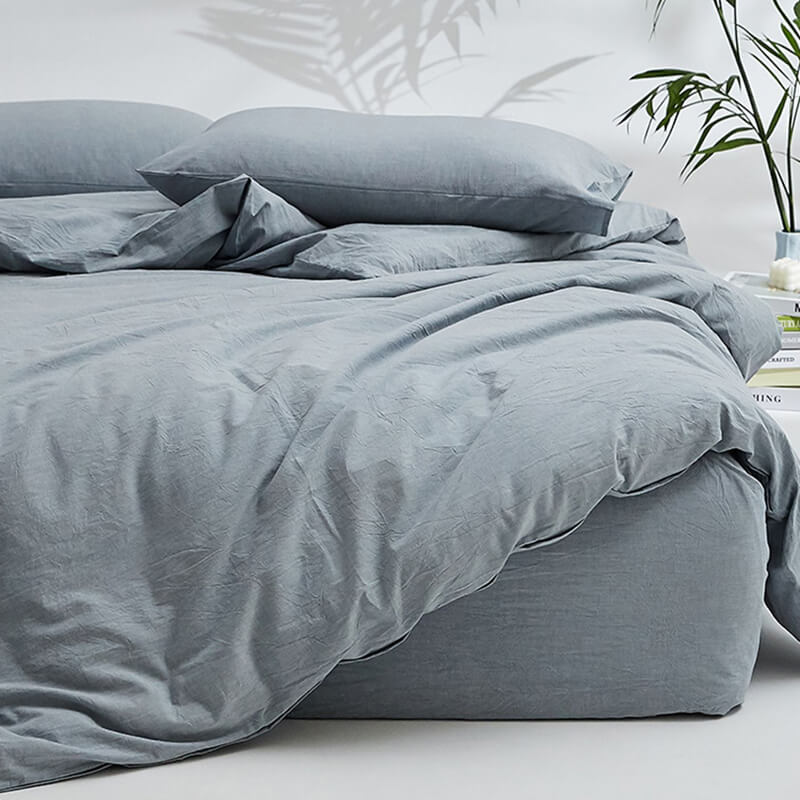
Organic Cotton Bedding Options From HSC Textile
- Organic cotton sateen duvet cover set, stonewashed: 300T / 400T sateen with pre‑stonewash treatment. Package includes duvet cover plus either fitted or flat sheet, paired with two pillowcases.
- Organic stonewashed cotton bedding set: feels broken‑in and comfy from your very first night sleeping in it.
- Cotton muslin fitted sheet in organic gauze: light, breathable, naturally wrinkled finish, fitted with full‑edge elastic.
- Ruffled 100% organic cotton duvet cover set: perfect for homestays and boutique accommodation, where bedding forms part of room decoration.
You can find their full product range within the bedding category. They run dedicated collections for stone‑washed organic cotton sheets and pillowcases. If you compare fabric choices across product ranges, their sustainable‑fiber comparison contrasts organic cotton alongside bamboo, linen and lyocell.
Request samples or send wholesale inquiries via [email protected] or WhatsApp +86 13563566701.
الأسئلة الشائعة
Q1: Is organic cotton bedding really different from regular cotton bedding? A: Farming practices are different. Organic cotton skips synthetic pesticides, herbicides and GMO seeds. When talking about how sheets feel, weave, yarn quality and finishing create most differences. Two organic‑labeled sets can still feel worlds apart. Always judge bedding based on build quality and finish first.
Q2: Will organic cotton bedding shrink? A: Untreated cotton absolutely can shrink. This is exactly why pre‑shrinking matters. Bedding keeping residual shrinkage under 5% maintains its size. Washing on low temperature and drying with low heat helps preserve this result.
Q3: Does higher thread count always equal better bedding? A: No. Fiber length, yarn spinning quality and weave affect comfort far more than thread‑count numbers. 300T and 400T fit most retail and hotel use cases, and both are available in organic cotton.
Q4: What’s the correct way to wash organic cotton bedding? A: Machine‑wash at 30‑40°C on gentle cycle with mild detergent. Avoid chlorine bleach and fabric softeners. Dry with low tumble heat or air‑dry. Iron damp fabric if you want smooth pressed bedding. Muslin items should wash below 30°C and need zero ironing.
Q5: What’s the minimum order size, and can I add my own brand logo? A: Custom organic cotton bedding orders start from 100 sets. Logo embroidery, custom dyeing, adjusted sizing and custom‑made packaging are supported. You receive free fabric swatches to sign‑off on before mass‑production begins.
نبذة عن شركة HSC للمنسوجات
We sit under ULAND GROUP, a combined manufacturing and trading enterprise. Our subsidiaries cover HSC, Liaocheng Shanlian Textile Co., Ltd., and Zhongfei. If you want to start an organic‑cotton bedding project, share your needed sizes, weave style, finish preference, color references and order quantity. Our team will send over detailed specs, fabric swatches and sample‑production timelines.