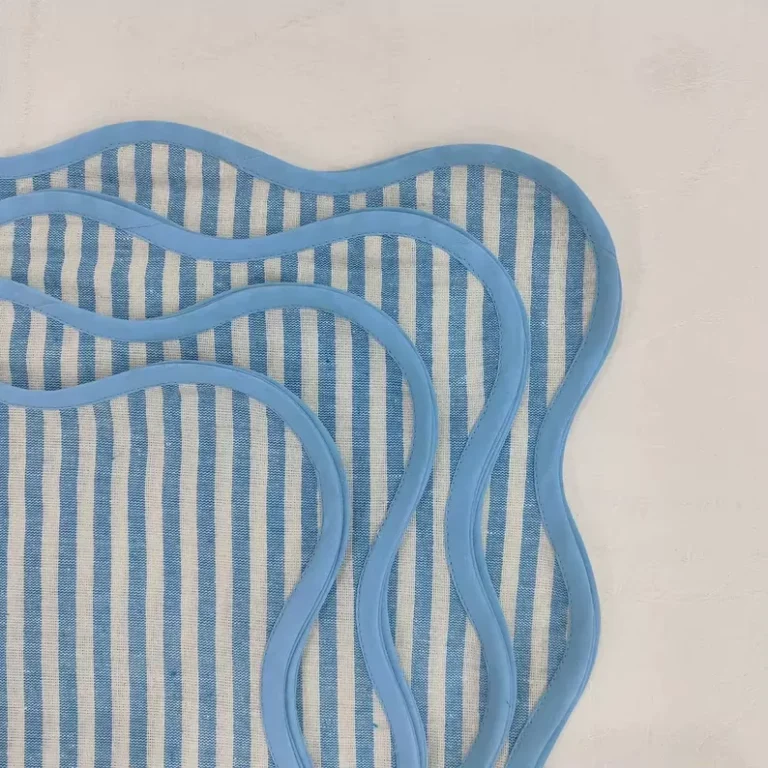
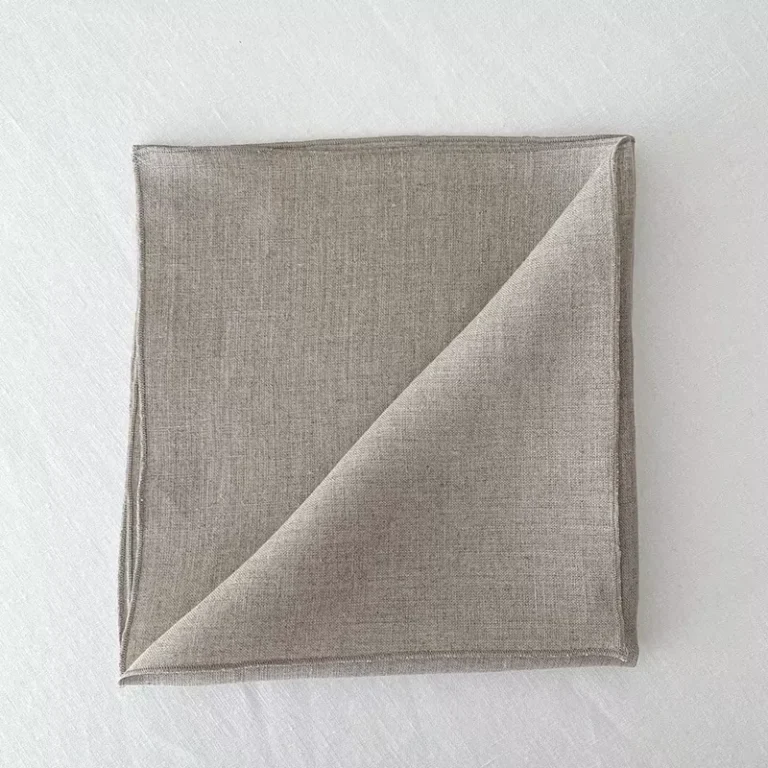
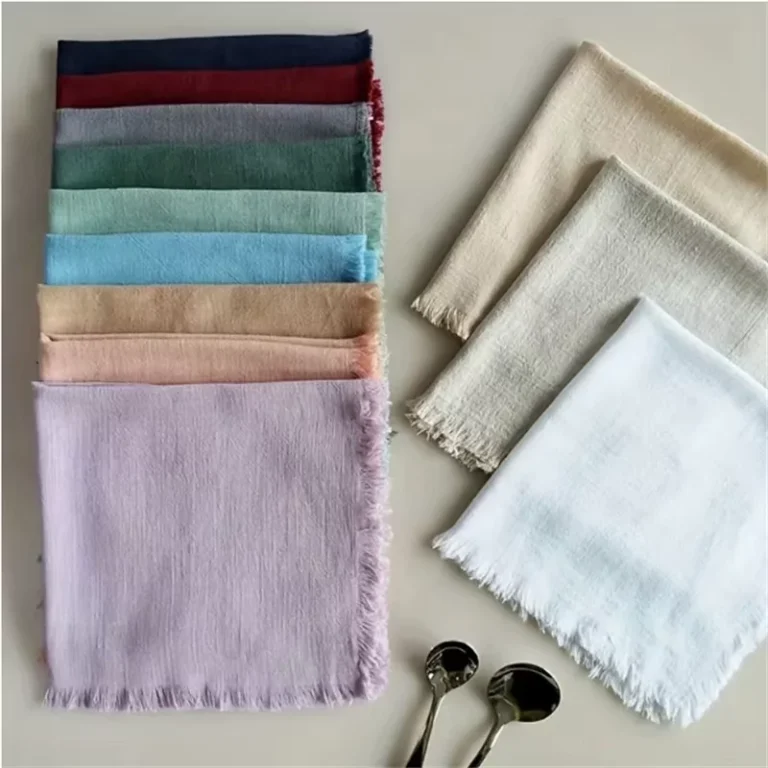
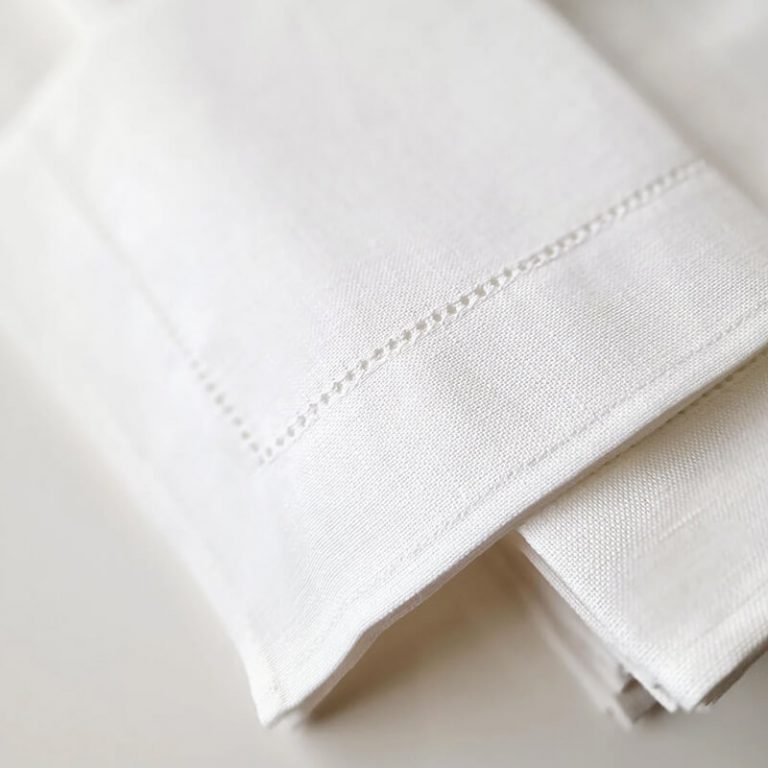
A print carries the pattern and the embroidery carries the name. Do both on one napkin and it stops looking borrowed from the venue’s cupboard.
| Nombre del producto | Linen Printed Napkins with Embroidery and Personalized Monogram – Weddings, Parties, Special Events |
| Nombre de la marca | HSC |
| Material | Lino |
| Técnica | Bordado |
| Patrón | Impreso |
| Forma | Cuadrado |
| Estilo | Europe |
| Característica | Eco-Friendly, Machine Washable, Organic |
| Hechura | 1.0 cm plain hem, or 1.5 cm mitred corner |
| Tamaño | 38 x 38 cm | 45 x 45 cm | custom size (attribute panel lists 60 x 60 cm – see internal notes) |
| Color | White | custom colour (the wider collection runs to more than 50 hand-dyed shades) |
| Personalización | Monogram available at an additional charge; logo / graphic design +US$1 per piece from 100 pieces |
| Solicitud | Home, Airplane, Restaurant; weddings, parties and special events |
| Cantidad mínima de pedido | 100 piezas |
| Muestra | US$20 sample price; current sample 1-3 days, custom sample 7-15 working days |
| Proceso de dar un título | Oeko-Tex 100 | Safe & Sustainable Textiles | In-house QC from raw material to finished pieces |
| Lugar de origen | Shandong, China |
| Embalaje | PVC bag or linen fabric bag + insert card + cardboard; single item 45 x 30 x 10 cm, 0.9 kg |
| Plazo de entrega | 31 days for 1-300 pieces; 45 days for 301-1,000 pieces; over 1,000 to be negotiated |
Not every buyer arrives with finished artwork, so HSC treats the design stage as part of the order.
– Label and packaging design are produced free of charge against your own logo.
– Print and embroidery are handled under one roof, so a printed cloth and its monogramming never have to be reconciled between two suppliers.
– Because both stages are in-house, a reprint or a re-stitch is handled by the same team that produced the original.
– Where no artwork is supplied, the pattern is drawn in-house against the buyer’s market rather than lifted from a stock book.
– Label and packaging files are kept against the buyer s account, so a reorder does not begin from a blank page.
Get the hem right and the design follows; get it wrong and no artwork rescues it. Every napkin here is finished with either a 1.0 cm plain hem or a 1.5 cm mitred corner, and the hem is set before the print is aligned to it, which is the opposite order to how most cheap napkins are assembled. A design sitting on a hem that is not square reads as off-centre however good the artwork is, and a corner that twists takes the print with it. The mitred version is the one that stays square after washing. Two techniques sit on the same cloth: the print carries the pattern and the embroidery carries the name, so the napkin reads as chosen for an event rather than pulled from a venue’s cupboard. Monogramming is quoted as its own line rather than folded into the unit price, so a wedding order pays for the stitching it asks for and a restaurant order does not. Sizes are 38 x 38 cm and 45 x 45 cm, with any custom dimension produced to order.
| Napkin – 38 x 38 cm | Lunch and cocktail service |
| Napkin – 45 x 45 cm | Dinner service |
| Tamaño personalizado | Any dimension produced to order |
| Hechura | 1.0 cm plain hem | 1.5 cm mitred corner |
| Cantidad establecida | Single item (sold individually) |
| Paquete individual | 45 x 30 x 10 cm | 0.9 kg |
Bought for weddings, parties and special events, and by restaurants and hotels that want a printed napkin carrying the venue’s own mark. Custom logo and graphic work starts at 100 pieces at a per-piece supplement, which is what lets a small event business order at the same threshold as a hotel instead of waiting until it has volume. White is the stock shade with custom matching available, and the wider collection runs past fifty hand-dyed shades so a scheme can be followed rather than approximated. Because the print and the embroidery are handled by the same maker, a venue does not have to send a printed cloth to one supplier and its monogramming to another, which is where colour and placement usually drift.
– Wash cool, 30C or below, and wash the napkins from one table together so the shade and the print age at the same rate.
– Turn a monogrammed napkin inside out before washing; it protects the stitching from abrasion in the drum.
– Use a mild liquid detergent. Powder can settle into a printed area and leave a pale patch that reads as a stain.
– No bleach and no optical brighteners, which fade a print before they fade the cloth.
– Tumble dry low, or line dry in the shade. Direct sun fades a printed design faster than any number of washes.
– Iron on the reverse only, and never directly onto embroidery. Heat flattens the stitch and the print together.
– Do not dry clean, as specified. The solvents lift a print at the edges.
– If the napkins are stored flat, fold along the same mitred line each time so the corner stays crisp rather than going soft in the middle.
– For event stock, keep monogrammed and plain pieces counted separately, so a set of four with initials is not split across two tables.
Three decisions, and the first one is the hem. A 1.5 cm mitred corner costs more and stays square after washing; a 1.0 cm plain hem is faster and cheaper, and on a napkin that will be ironed flat before every service it looks much the same. Take the mitred corner if the napkin is going on a table that will be photographed. The second decision is how the two techniques balance: if the print is the design, keep the monogram small and place it where the fold will not cross it; if the name is the point, reduce the print instead, because a busy pattern and a monogram compete for the same attention. The third is size – 38 x 38 cm for lunch and cocktail service, 45 x 45 cm for a dinner where the napkin has to cover a lap – and it is worth settling before the artwork, since the print repeat scales with the cloth.