
RV bedding fits poorly when a buyer sends only maximum length and width for a mattress that has rounded corners, cut corners, wall tapers, hinges, or limited access. The correct approach is to document the full geometry, mattress depth, orientation, nearby obstructions, and how the bedding will be installed. This guide explains the measurement errors that create loose corners, strained zippers, twisted covers, and unusable access in irregular bunks.
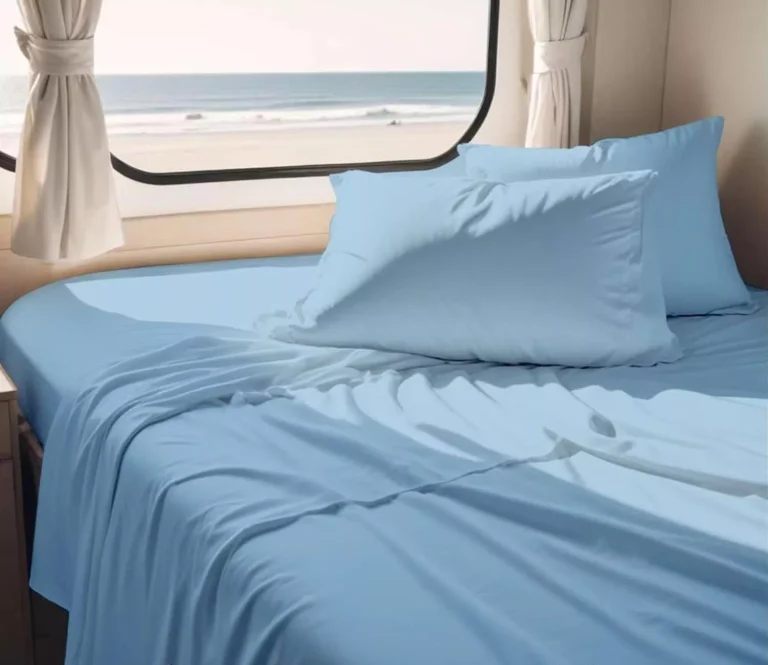
Key Takeaways
- Use a dimensioned top-view drawing, not a size label or two measurements.
- Record every corner radius, cut corner, taper, notch, and mattress depth.
- Mark head, foot, door side, wall side, and zipper direction on the same drawing.
- Approve a sample on the actual bunk before bulk production when geometry is unusual.
Why Standard Bedding Measurements Fail in RV Bunks
A residential mattress is often close to a regular rectangle. An RV mattress may be shaped to clear a cabinet, wheel arch, curved wall, access hatch, or narrow aisle. Even when the mattress itself is rectangular, the bunk opening can restrict how a fitted sheet or zippered cover is pulled into place. A supplier needs both the mattress geometry and the installation environment.
Nominal size names hide real variation
Terms such as RV queen, short queen, bunk, or camper double are useful for shopping, but they are not manufacturing dimensions. The same label can cover different lengths, widths, depths, and corner treatments. Send measured millimeters or inches, state the unit once, and place it on every drawing and order document. Do not rely on a model-year description unless the vehicle maker supplies a controlled drawing for that exact layout.
Soft materials do not erase geometry errors
Fabric can flex, but that does not make a wrong pattern acceptable. Excess material bunches under the sleeper, while a short edge pulls elastic off the corner. A misplaced cutout rotates the fitted piece and moves closures away from the aisle. Waterproof layers and zippers may allow less forgiveness than a plain flat sheet. Fit must come from the pattern, not from stretching the product into place.
Error One Measuring Only the Longest Length and Width
Maximum dimensions describe the bounding rectangle, not the mattress shape. They omit how quickly a corner curves, where an angled edge starts, and whether left and right sides match. Two mattresses can share the same overall length and width while requiring different patterns.
Map the full perimeter
Draw the mattress from above and label head, foot, wall side, and aisle side. Measure each straight segment between changes in direction. For an angled corner, record both setback distances from the theoretical square corner. For a rounded corner, use a radius only if the curve is a true arc; otherwise make a paper or flexible-template trace and add reference dimensions that prevent scaling errors.
Add diagonal checks
Diagonal measurements help reveal an out-of-square mattress or a transcription mistake. They do not replace perimeter dimensions, but they provide a useful cross-check. If a long diagonal does not agree with the drawing, measure again before sampling. For asymmetrical shapes, add diagonals between identifiable points and name those points on the sketch.
Error Two Ignoring Mattress Depth and Compression
Depth controls pocket height, elastic position, closure clearance, and how much fabric can tuck under the mattress. Measure the mattress at several locations without compressing it. Include toppers that will remain in use, but list removable pads separately so the supplier can judge whether one product must accommodate both configurations.
Measure the installed stack
A foam mattress may crown in the center or compress near hinges. Record the typical installed depth and any meaningful variation. Also measure the clearance beneath the mattress. A deep fitted pocket cannot wrap around a platform where the mattress sits inside a tight frame. In such cases, a different closure or split construction may be more practical.
Do not add arbitrary ease
Buyers sometimes add extra centimeters everywhere to be safe. That can create wrinkles and allow the bedding to move. Instead, give the supplier actual dimensions and discuss construction ease separately. The required allowance depends on fabric behavior, elastic design, seam construction, lamination, and intended care. Ask for the finished-product measurement method and tolerance rather than hiding allowance inside the mattress dimensions.
RV Bedding Measurement and Fit Checklist
A drawing package should let a pattern maker reconstruct the mattress and anticipate installation. The checklist below highlights the minimum evidence for an irregular bunk.
| Drawing field | Common mistake | Required check |
| Orientation | No head, foot, wall, or aisle labels | Mark all four directions and vehicle entry side |
| Perimeter | Only maximum length and width | Dimension every straight, angled, curved, and notched segment |
| Depth | Mattress measured without topper or installed frame | Record the complete used stack and under-mattress clearance |
| Closures | Zipper chosen without access review | Show zipper start, end, pull direction, and nearby obstacles |
| Verification | Drawing printed at an unknown scale | Add units, revision, reference dimensions, and diagonal checks |
Error Three Omitting Installation Access and Closure Direction
A cover may match the mattress yet remain difficult to install. RV bunks can sit against three walls, below a low ceiling, or behind a ladder. A zipper on the wall side may be unreachable. An elastic edge may require lifting a mattress that cannot clear the frame.
Document the bunk around the mattress
Photograph the bunk empty and with the mattress installed. Measure wall gaps, frame lips, hinges, straps, ladders, cabinets, and access hatches. Show which side a person can reach and how far the mattress can lift or slide. If the platform opens for storage, record the hinge line and check that bedding does not obstruct the movement.
Choose closures after a motion check
For a zippered set, mark where the user can hold the zipper pull and whether the zipper must turn a corner. Avoid placing a closure where the sleeper will feel a hard slider or where repeated folding creates concentrated stress. Confirm the opening is long enough for the mattress or insert to pass without forcing the seam.
Use a Product Sample to Validate Irregular Geometry
El Custom Color RV Bunk Zippered Cover Set provides a relevant construction reference. Its official page describes a pure cotton RV bedding set with customized color options and either a flat-sheet or fitted-sheet configuration in the regular set. It lists 300T/400T and an MOQ of 100 sets for that page. Buyers should confirm current composition, thread-count meaning, exact set contents, geometry, closure, documentation, and order terms in the quotation.
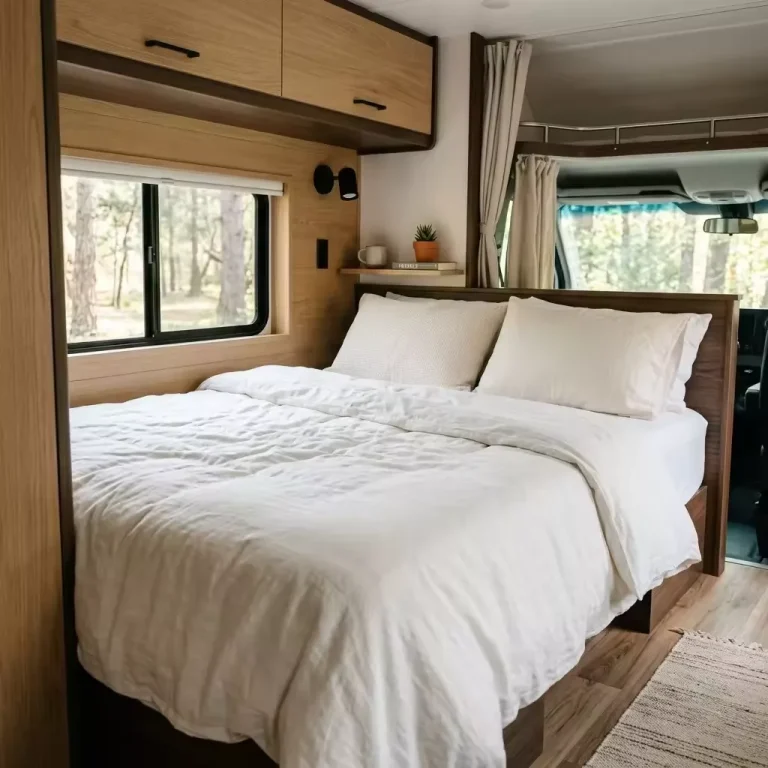
Fit-test the first sample on the actual bunk
According to the customer’s written project response, HSC Textiles can evaluate rounded, cut-corner, angled, and other irregular RV textile dimensions and develop samples from buyer drawings or measurements. That is a capability statement, not a guarantee that every drawing is production-ready. Confirm tolerances, measurement method, construction, sample charge, timing, and fabric behavior for the selected design. Install the sample, sleep on it, remove it, wash it by the agreed method, and reinstall it before approval.
Error Four Approving a Photo Without a Controlled Drawing
Photos show context but cannot control scale. Perspective makes near edges look longer, and bedding can hide the mattress perimeter. A supplier may interpret the shape differently after staff changes or pattern revisions. The controlled drawing should therefore remain the primary record, with photos attached as supporting evidence.
Create a traceable revision package
Give the drawing a style code, vehicle or project reference, revision number, date, unit, and approver. Keep mattress dimensions separate from finished bedding dimensions. Mark any supplier-added ease or seam allowance as a construction value, not a change to the mattress. When a sample is corrected, issue a new revision instead of adding comments to several old files.
Inspect bulk production against the approved sample
Check finished dimensions at named points, closure location, elastic position, seam alignment, labels, and set components. Pull samples across cartons rather than inspecting only one bundle. HSC Textiles offers OEM and ODM support, but the order should still define who measures, how many units are checked, and what happens when a critical fit point falls outside the approved tolerance.
Buyer Action Plan
Before requesting a quote, send a dimensioned top view, side view, depth measurements, orientation labels, obstruction photos, access notes, closure preference, fabric and care requirements, and the quantity by shape. Ask the supplier to return a marked drawing showing any assumptions before pattern work starts. The Preguntas frecuentes sobre textiles de HSC can support initial order questions, and the official Textiles HSC site provides the current contact path. A ten-minute recheck of the mattress, diagonals, and bunk access can prevent a full batch of bedding that fits on paper but fails inside the vehicle.
Preguntas frecuentes
Q1: Are length and width enough for custom RV bedding?
A: No. Irregular bunks also need perimeter segments, corner geometry, depth, orientation, access, and closure information.
Q2: How should a rounded RV mattress corner be measured?
A: Use a verified radius only for a true arc. Otherwise trace the curve and add reference dimensions so the supplier can verify scale.
Q3: Should a mattress topper be included in the depth?
A: Include it when it will remain in normal use, and list removable layers separately.
Q4: Why should buyers mark wall and aisle sides?
A: Orientation controls angled corners, zipper access, label placement, and how the bedding is installed.
Q5: Is a photo enough to approve an irregular shape?
A: No. Use photos for context and a controlled, dimensioned drawing as the manufacturing record.
Acerca de HSC Textiles
Somos un grupo empresarial que integra fabricación y comercio: ULAND GROUP. Nuestras filiales incluyen HSC, Liaocheng Shanlian Textile Co., Ltd., Zhongfei y DDL.