Selecting sleepwear for high-humidity regions requires a balance between textile science and garment construction. We agree that finding pajamas that remain cool in tropical heat is a significant challenge for importers and retail brands. This guide promises to identify specific materials and styles that maximize airflow and thermal regulation. By the end, we will provide the technical data needed to make informed wholesale or design decisions for tropical climate markets.
As an expert in the home textile field, I have spent 20 years observing how fabric weight and weave affect sleep quality in extreme climates. My team and I at HSC operate a 3,200-square-meter facility dedicated to high-end custom manufacturing. We have helped over 3,000 clients in 30 countries refine their sleepwear lines. Whether you are looking for ODM/OEM services or specialized fabrics like GOTS-certified organic cotton, we provide a vertical supply chain that ensures 99% on-time delivery. Our expertise lies in creating “breathable” garments that satisfy the strict OEKO-TEX® Standard 100 requirements for safety and comfort.
Essential Requirements for Tropical Sleepwear Performance
As every sleeping person in a tropical country can attest to, sleepwear works as the body’s own cooling system. The first step in this process is to facilitate heat and sweat dissipation to avoid unpleasant skin sweating and redness. Our high-performance tropical pajamas are based on three core technologies.
Optimized Breathability and Airflow
Air permeability is the most important factor for the coolness at night. The fabric used should be as loose as possible to allow maximum air flow between the fabric and the skin. The ventilation allows no stagnant air layer to form between the fabric and the skin, which can lead to a large temperature increase of the human body core during warm and humid nights.
Superior Moisture-Wicking Properties
If the air is too humid, we simply sweat more. Ideally, our sleepwear should be able to draw the moisture away from the skin, and then transport and spread it out towards the exterior of the material, allowing it to evaporate as quickly as possible. That is exactly why our Pure Cotton Breathable Pajamas are the solution that keeps us from feeling damp and clammy during our sleep.
Lightweight Fabric Construction
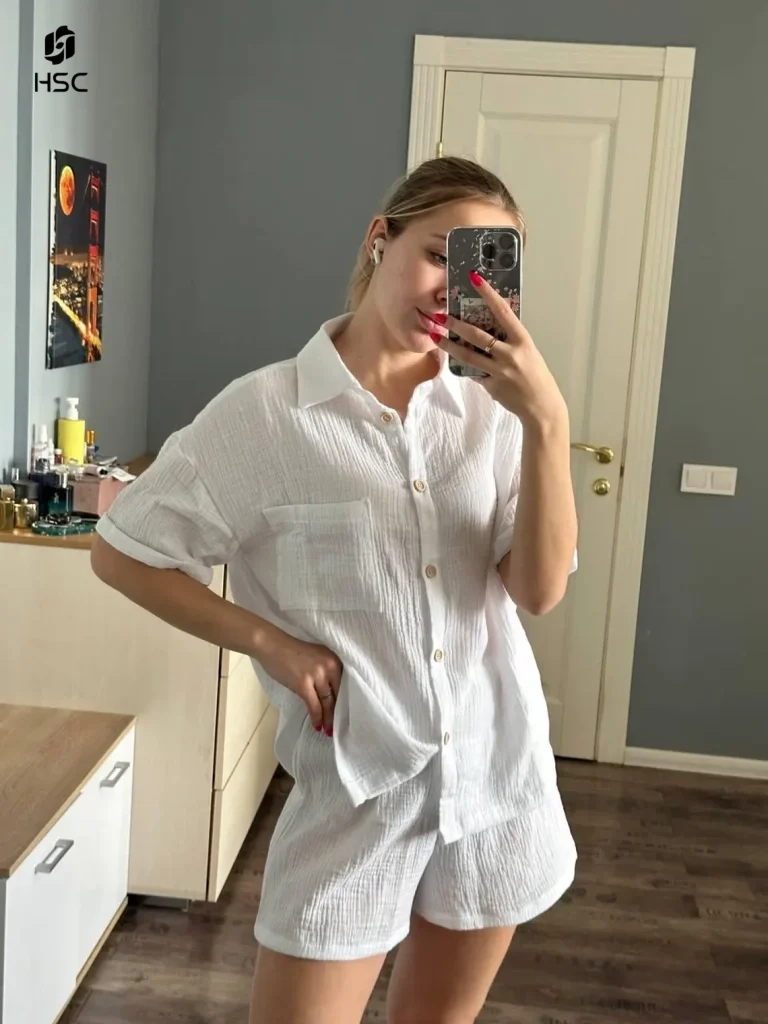
Thicker fabrics will trap more heat and restrict movement. For Tropical countries we would advise fabric weights in the range of 120 – 160 GSM. This allows enough opacity to afford dignity but is light enough to feel virtually weightless against the skin.
Natural Fiber Dominance in High-Humidity Environments
Tropical countries see a lot of man made fibres failures, not surprising when you compare the fibres structure to natural plant based fibres, which have micro voids on the surface and between fibres. Our internal production data also reflects this trend, with cotton and linen being the fibre of choice for many consumers we have in South East Asia and the Middle East.
Pure Cotton Breathable Pajamas for Daily Comfort
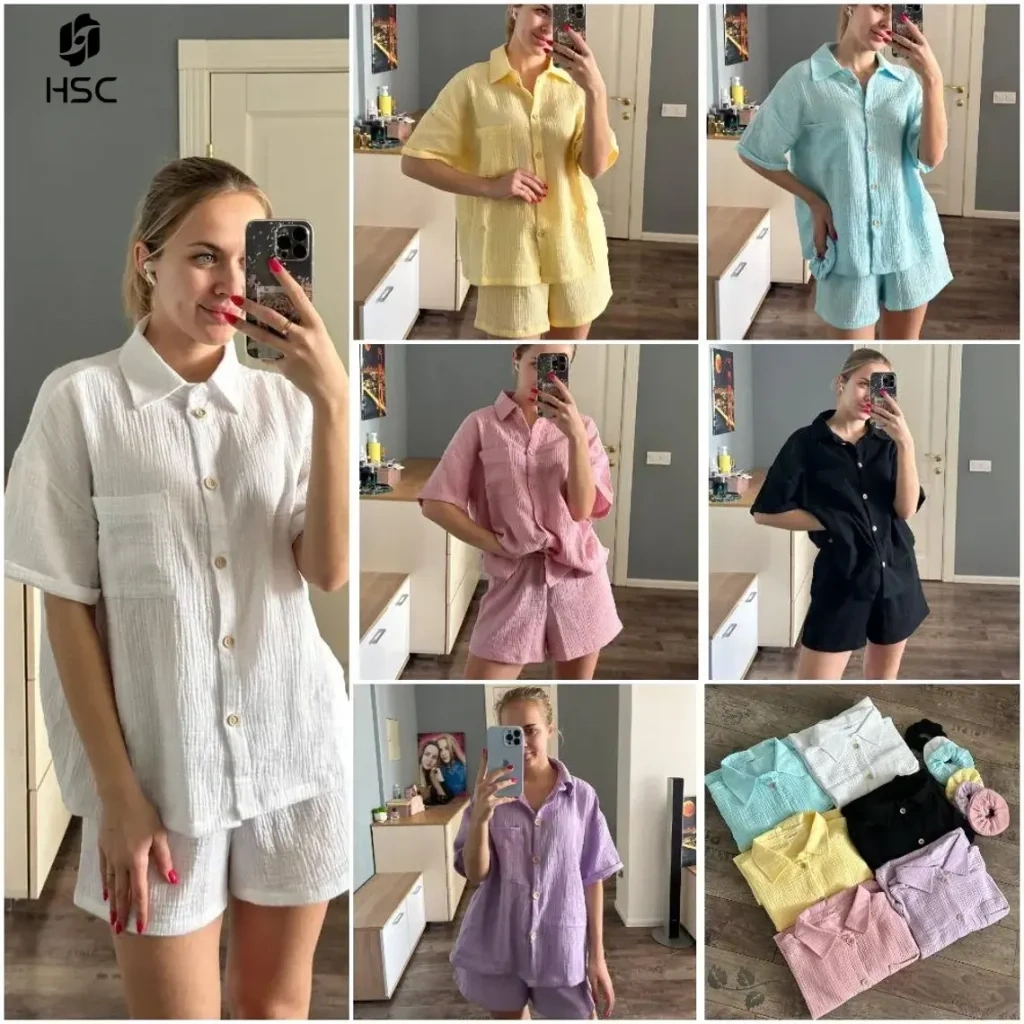
Cotton is a staple fibre for good reason – its fibres have the ability to absorb water that is up to 27 times the weight of the fibres themselves! We use muslin or combed cotton for our tropical blends. These weaves have a more velvety texture than your average cotton weave and are far more absorbent. Your textile will stay drier for longer and remain soft after multiple washes.
Lightweight Organic Linen Women’s Loungewear Advantages
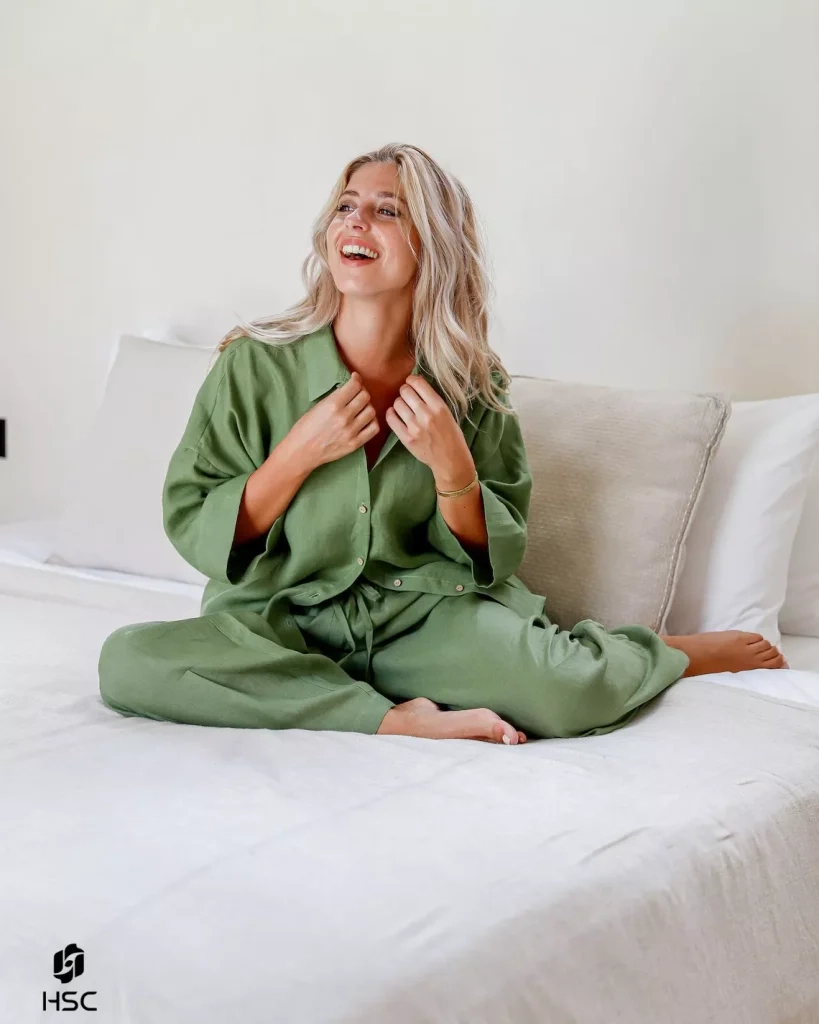
Linen is perhaps the ultimate tropical fabric due to its high pectin content and thick fibers. Our Lightweight Organic Linen Women’s Loungewear Breathable Sleepwear offers a cool-to-the-touch feel. Linen is highly conductive, meaning it sheds heat away from the body faster than almost any other textile.
Critical Material Comparison for Equatorial Regions
To assist you in deciding between natural fibers, we have prepared the comparison table based on our lab tests and manufacturing experience. Fibre selection will depend on the targeted price point and humidity in your market.
Quantitative Breathability Ratings by Textile Type
| Fabric Type | Breathability Score (1-10) | Moisture Absorption | Durability | Skin Feel |
| Organic Linen | 10 | Excellent | High | Crisp/Textured |
| Muslin Cotton | 9 | Excellent | Medium | Very Soft |
| Bamboo Viscose | 8 | Superior | Low | Silky/Cool |
| Silk | 7 | Moderate | Very Low | Smooth |
Comparative Thermal Conductivity Analysis
Linen has the highest thermal conductivity. So for the hottest “dry” tropical seasons, linen would be the smart choice. Cotton is more suitable for “wet” seasons where humidity is a bigger factor. We have seen from our case studies that 100% plant-based materials can reduce the complaint of night sweating by up to 30% as compared to polyester based materials.
Design Specifications for Maximum Cooling Efficiency
The cut of the pajama set is just as important as the fabric choice. Even the best linen will fail to cool the wearer if the garment is too tight or has restrictive seams.
Loose-Fitting Silhouettes and Ventilation
For a tropical climate we recommend considering Shorts Sets or Sleep Shirts. A wide leg opening and a boxy top creates a chimney effect that lifts hot air from the body allowing it to exit through the neck and arm holes.
Industry Benchmarks for Tropical Garment Weight
The Southeast Asian sleepwear market has seen an increase in demand for ultra-lightweight fabrics (under 150 GSM) growing at a rate of 15% YOY. Consumers are starting to view conventional heavy sleepwear as not being casual or appropriate enough as loungewear.
Professional Manufacturing Excellence with HSC Textiles
At HSC, we are not just a garment manufacturing company, we are partners to many international brands and aim to provide the best possible solutions. Please find our FAQ here, showing our high level of quality standards, with on-site verification by SGS Group.
We can do full customization for wholesale order, for example: embroidery for bridal party robes, logo embroidery for hotels etc. We can handle a high volume of product quickly and efficiently, maintaining the quality that your high end customers demand. Using 100% natural fibres and a bespoke tailoring construction, we can create robes that keep your customers cool and comfortable for years to come.
FAQ
Q1: What is the minimum order quantity for custom pajama sets?
A: What is your MOQ for school uniform? Our standard MOQ is 100 sets per style, may be negotiable under different fabric and design conditions.
Q2: Are your fabrics safe for sensitive skin?
A: Yes. All our materials are certified under OEKO-TEX® Standard 100. Which means no harmful chemicals above 100 limits are used in the production of our materials, making them fully hypoallergenic.
Q3: Does linen become softer over time?
A: Yes. Linen is a strong plant fiber. It becomes softer and more comfortable to wear with each washing without suffering from loss of shape or shrinkage.
Q4: Can we add custom branding and logos to the pajamas?
A: Yes, we provide full OEM and ODM services for you, from design custom labels, logo printing and embroidery, to ensure that our products always meet with your brand identity.
Q5: How long does international shipping take?
A: We have several options for delivering your goods. Express delivery is 7-10 business days, air freight is 15-20 business days and sea freight is 30-45 business days depending on the country.
About HSC
We are a group company integrating manufacturing and trade – ULAND GROUP. Our subsidiaries include HSC, Liaocheng Shanlian Textile Co., Ltd., Zhongfei, and DDL.