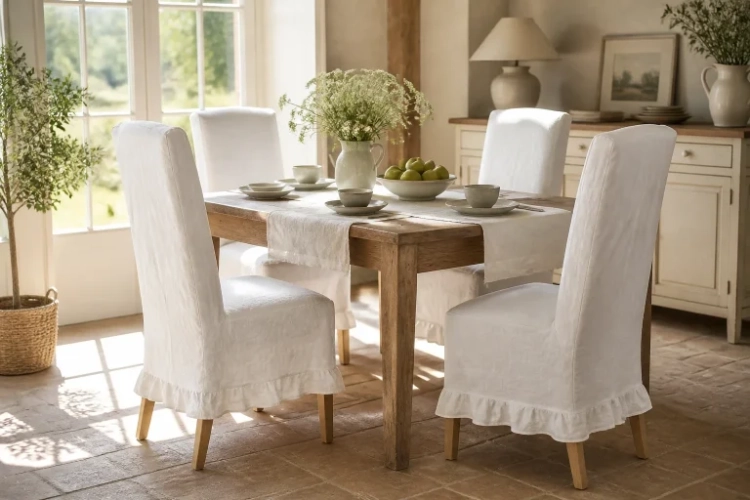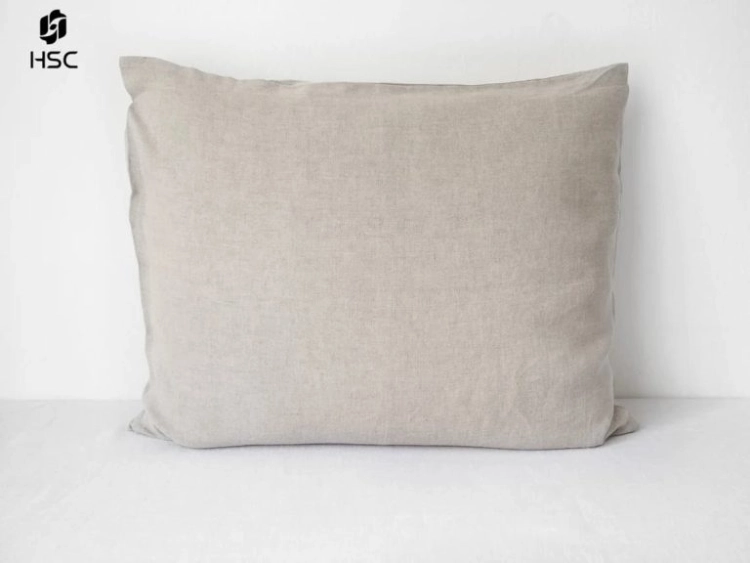
Every spring we get the same phone call. About ten days before the wedding, usually on a Thursday afternoon. The boxes have landed at the venue, someone has opened the first carton, and the cloths are six inches short all the way round. Or four tables near the bar have no covers at all. Or the napkins will not hold the fold the planner promised the bride back in November.
Fixing that ten days out costs real money. Air freight from China eats the margin, and local rental houses rarely have nineteen matching cloths sitting on a shelf in May. We have cut and sewn table linen in our Shandong workshop for twenty years — 3,200 square metres, fifty-five people on the floor, over 3,000 wholesale buyers across thirty countries, 99% on-time delivery, OEKO-TEX Standard 100 on our core lines. Here are the six sizing mistakes we see most on incoming purchase orders, and how to catch each one before the cloth is cut.
Mistake One: Counting Guests Instead of Surfaces
Divide 150 guests by ten and you get fifteen. People write fifteen on a quote sheet and email it over. Two weeks later the hotel sends the room map — and suddenly you need a long top table for the bridal party, a square table for the three-tier cake, two tall bar tables by the terrace doors, and a desk at the entrance for place cards.
Eight Chairs or Ten on a Round Table
Ten dinner plates fit around a 183 cm (72 inch) round if nobody has wide elbows, so fifteen tables handle 150 people on paper. Plenty of older venues refuse to put ten around a table, though — fire aisles and waiter trays mean an eight-chair house rule. Drop from ten seats to eight and those fifteen tables turn into nineteen. That is four extra cloths and four extra centrepieces before anyone has ordered a bottle of wine.
Pushing Banquet Trestles Together
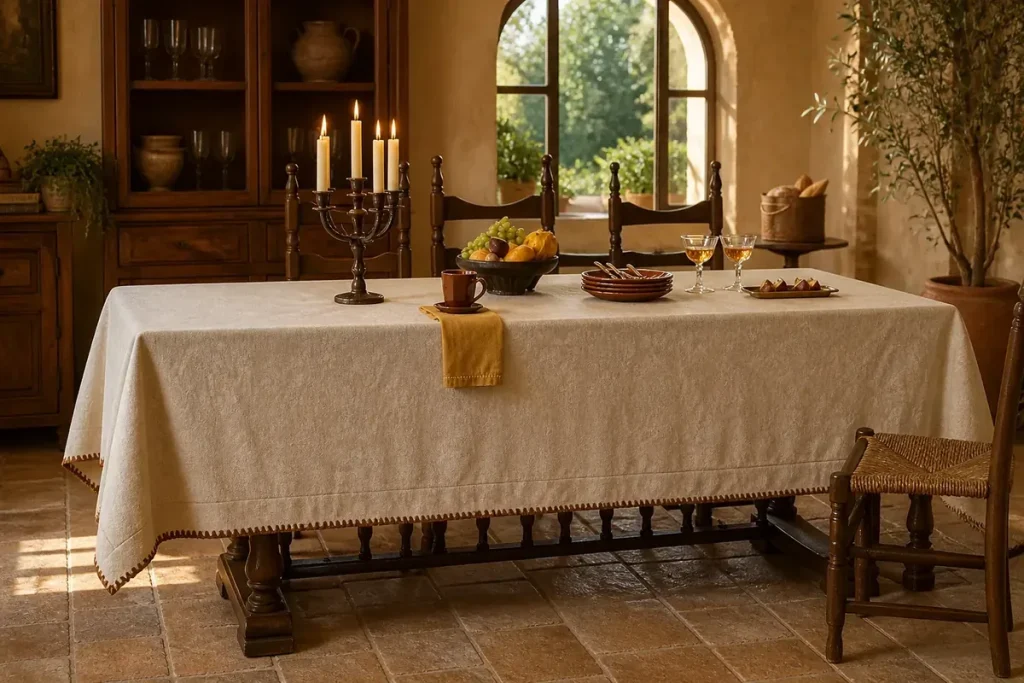
A six-foot banquet trestle is 183 × 76 cm. Six people fit nicely. Eight is a squeeze. Put twelve cousins on one long family run and the banqueting crew will butt two six-footers end to end, giving you 366 cm of wood to cover. Two standard cloths overlapped in the middle always slip apart by dessert. You want one continuous 427 cm or 518 cm piece, or at least a tailored join sitting right on the table seam.
Side Tables Nobody Writes Down
Print the room plan out on paper and mark every single table with a red pen. All evening long, cameras point straight at the bride and groom — so the top table deserves a full drop to the carpet and a heavy weave. The cake table, the gift table by the door, and the DJ booth? Those sit against a wall. Thirty centimetres of drop on the front edge is plenty, and nobody will ever notice the back.
Mistake Two: Expecting a 120-Inch Cloth to Touch the Floor
Nothing ruins reception photos faster than ankle-high tablecloths. Every rental book in the country prints 120 inch (305 cm) as its big round size, so buyers tick that box for their 72 inch (183 cm) tables without a second thought. Hang a 305 cm cloth over a 76 cm tall banquet table and the hem stops 15 cm off the ground — leaving five pairs of folding steel legs and twenty dress shoes in every wide camera shot.
Doing the Drop Sum in Ten Seconds
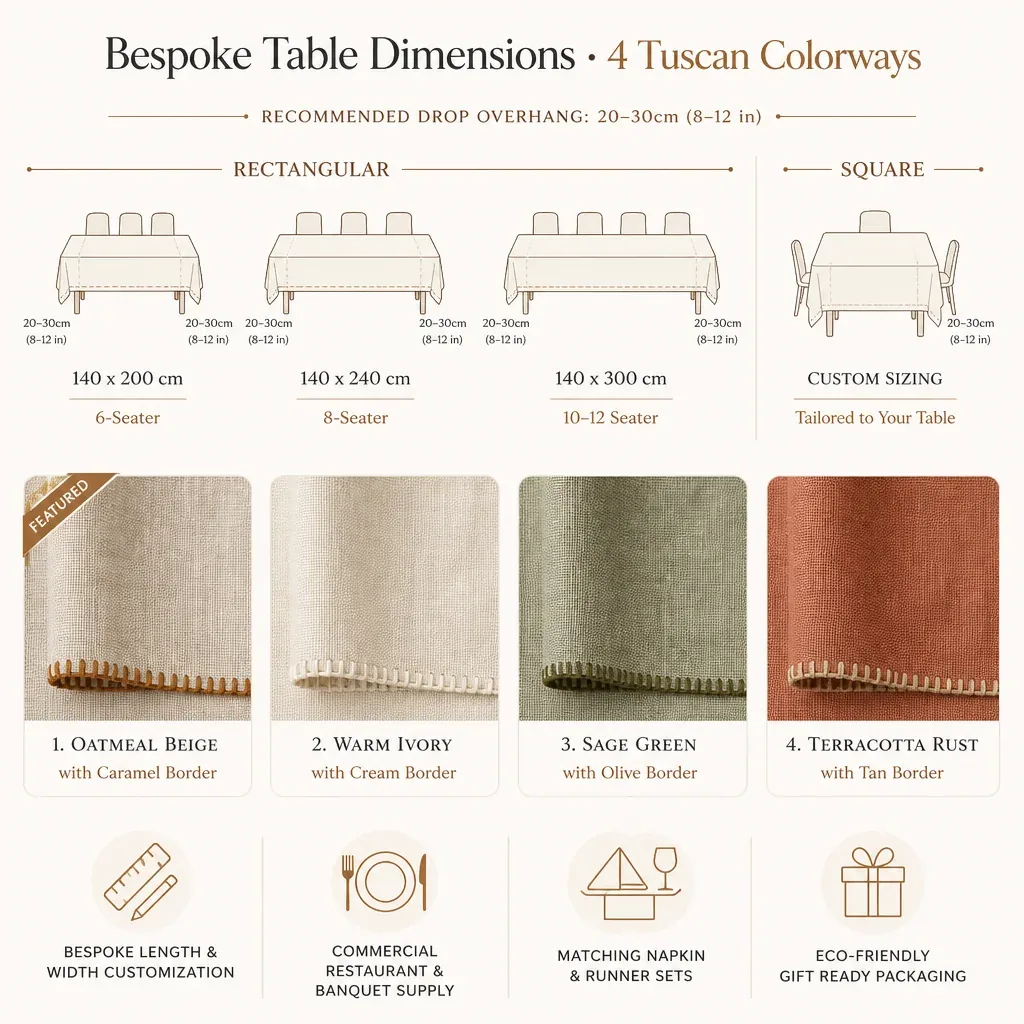
Take the table width. Add the drop you want twice — once for the left, once for the right. On a 183 cm round that stands 76 cm tall, adding 76 twice brings you to 335 cm (132 inches) from hem to hem. Ten seconds on a phone calculator saves three weeks of frantic emails. We broke down every common table shape and hem allowance in how to choose the right tablecloth size for every table shape.
Mid-Length Drops for Marquees and Gardens
Floor length is not always the smart pick. Put a 335 cm cloth in a damp garden marquee and the hem wicks mud up five centimetres before the starters come out. Outdoor dinners and high-turnover hotel buffets work better with a 61 cm (24 inch) drop — that is where the standard 305 cm round on a 183 cm table genuinely shines. It hides the frame, clears the grass, and stays off guests’ shoes.
| Table Type | Seats | Cloth for 30 cm Drop | Cloth for Floor Length | Pieces for 150 Guests | Reference Product |
| Round 152 cm (60 in) | 8 | 213 cm round | 305 cm round | 19 | Custom Linen Wedding Tablecloth |
| Round 183 cm (72 in) | 10 | 244 cm round | 335 cm round | 15 | Custom Linen Wedding Tablecloth |
| Long 183 × 76 cm (6 ft) | 6 | 244 × 137 cm | 335 × 229 cm | 25 | Custom Linen Wedding Tablecloth |
| Joined 366 × 76 cm (12 ft) | 12 | 427 × 137 cm | 518 × 229 cm | 13 pairs | Custom Linen Wedding Tablecloth |
| Cocktail 80 cm round | Standing | 142 cm round | 290 cm round | 2 to 4 | Custom Linen Wedding Tablecloth |
Mistake Three: Specifying Fibre Without Fabric Weight
Two swatches can both say linen on the ticket and behave like completely different fabrics on a table. One is 155 gsm — loose, thin, almost see-through over dark plywood. The other is 210 gsm, dense enough to hang straight when the terrace doors swing open.
Why GSM Matters More Than the Label
Put a 165 gsm cloth under a ballroom chandelier and the dark wood tabletop shows straight through the weave. Every fold line from the carton stays visible, too. Step up to 200 or 300 gsm and the fabric has enough dead weight to pull its own corners down flat. Steaming takes half as long on setup morning, and the hem does not lift every time a waiter walks past.
When to Pick a Blend Over Pure Flax
Nothing beats pure flax for a rustic barn dinner, until twenty people lean their elbows on the table and leave creases that refuse to fall out. Rental crews turning three hundred cloths around between Saturday night and Sunday lunch rarely have time for that. A 55% linen / 45% cotton mix gives you the same flat, matte look under camera flash, yet comes off the roller iron in half the time. We put both fabrics through wash and press tests in linen versus cotton tablecloths for weddings and hotels.
Keeping Seams Off the Middle of the Table
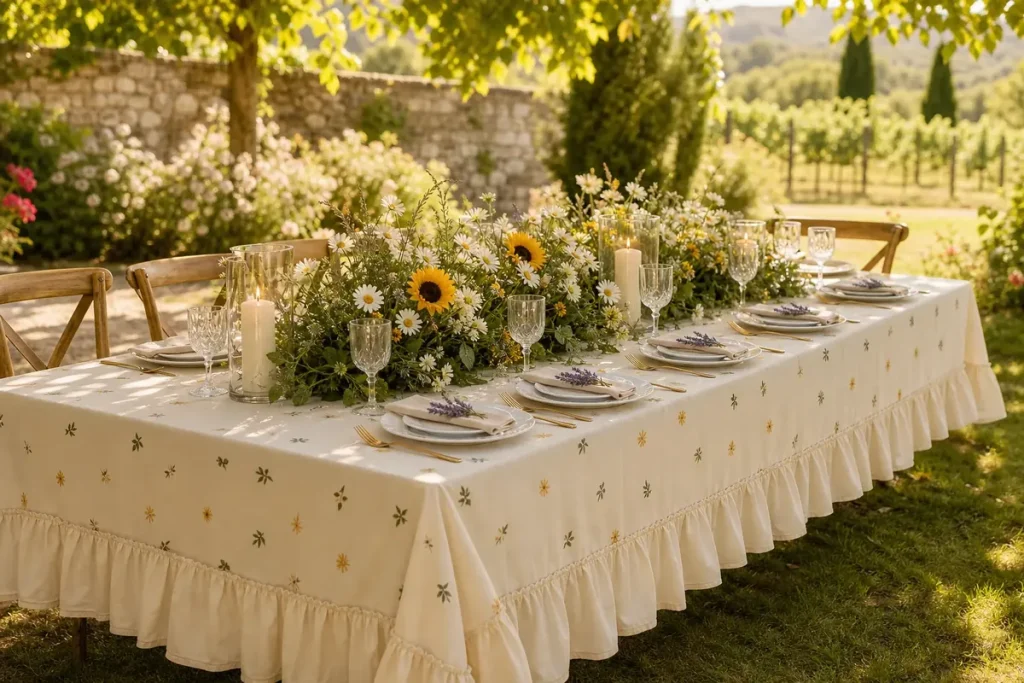
Standard weaving looms stop well short of three metres, so any 335 cm round cloth has to be pieced together. What you never want is a single seam running right down the middle of the table where it puckers after three hot washes. We cut a full-width panel for the centre of the table and add two narrow wings on the drop, finished with a 2 cm double hem.
Mistake Four: Counting Napkins by Guest List Alone
Counting 150 napkins for 150 guests leaves zero margin on the night. Somebody drops one under a chair during the soup course. A waiter grabs three to mop up prosecco by the top table. Four more come out of the carton with a mark from the pressing iron.
Adding Ten Percent Plus the Working Crew
Start by adding fifteen spares onto your 150 — that covers the ones that fall on the floor before the main course. Then remember that your suppliers eat too. Photographers, videographers, the wedding planner, the band, and the banqueting manager usually add another twelve to fifteen plates in the back room. Put 180 napkins on the order and nobody is hunting through laundry bags at nine o’clock.
Picking the Napkin Square for the Fold
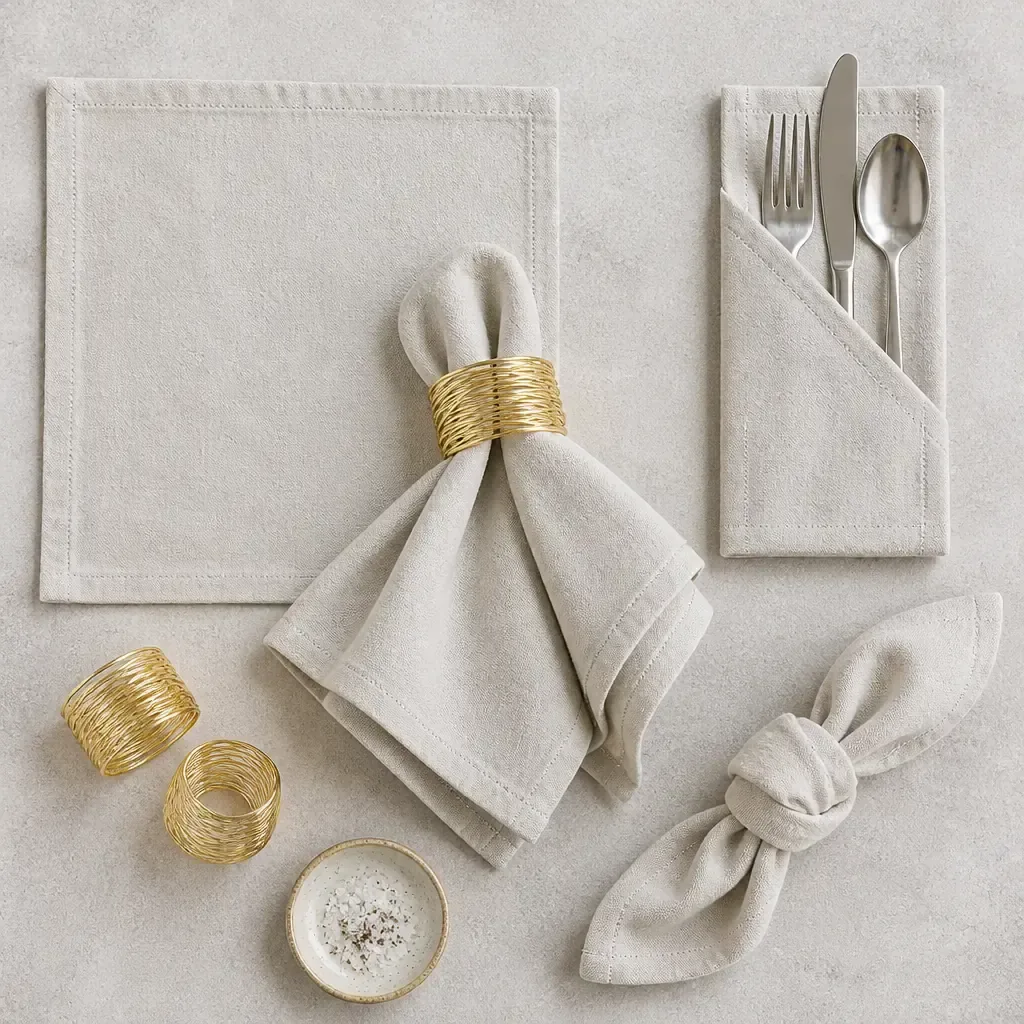
Forty-centimetre squares work on a buffet line. Put a 30 cm charger plate down for a three-course dinner and a small square looks lost beside the forks — you want 45 × 45 cm or 50 × 50 cm so the fold has enough cloth to stand up. Menu pockets and knotted tassels also need true grain-cut squares with mitred corners, otherwise they twist in the dryer. See our 40 × 40 cm linen-cotton napkins and embroidered wedding napkins for standard event specs.
Mistake Five: Forgetting Shrinkage and Dye Lots
Natural fibres move in hot water. Unwashed cotton loses four to five percent across the width over its first three commercial washes. Pre-washed linen shrinks less — two to three percent — yet that still pulls 10 cm off a 335 cm round cloth.
Washing the Sample Three Times First
Measuring a raw sample fresh out of the DHL bag tells you very little. Wash that piece three times at 60°C in your own laundry, run it through the dryer, and put the tape measure back on it. Once you tell us how many centimetres your cycle pulled in, we add that exact allowance into the paper cutting pattern before bulk starts.
Booking Your Season in One Dye Lot
Rain and sun change the raw flax colour slightly from one harvest to the next. Buy fifty sage cloths in January and another fifty in July, and you will spot the shade difference right down the banquet row. Put your whole season’s core colours into one dye lot, and check the lab dip under a warm 2700K bulb — noon office light makes ivory and bone look much cooler than a candlelit room ever will.
Mistake Six: Leaving the Order Until Eight Weeks Out
Nobody keeps three hundred custom-dyed 335 cm rounds sitting on a shelf waiting for a shipping label. Weaving, dyeing, cutting and hemming take real calendar weeks — and container ships do not speed up because a bride changed her colour palette in March.
Counting Backwards From Setup Day
Lab dips and a sewn sample take 7 to 10 days. Bulk sewing runs 25 to 35 days after you approve that sample, and freight takes 7 to 10 days by express courier, 15 to 20 days by air, or 30 to 45 days by sea — so a sea-shipped custom order needs 75 to 90 days on the calendar.
Factory Holidays and First-Email Numbers
Here in Shandong, weaving mills and dye houses shut their gates for two to three weeks over Chinese New Year in late January or February, and it takes another week after the break for sewing lines to hit full speed. If you have May weddings on the books, sign off your samples in December so the cloth is cut before the holiday. When you message our OEM and ODM team, put six details in your first email — table sizes, table height, table counts, target drop, gsm weight, and your warehouse deadline — and we will send back a quote and sampling plan within twenty-four hours.
Frequently Asked Questions
Q1: Why didn’t my 120-inch round tablecloths reach the floor?
A 72 inch (183 cm) round table stands 30 inches (76 cm) off the carpet. Add 76 cm for the left drop and 76 cm for the right drop, and you need 335 cm (132 inches) of cloth to touch the ground. A 120-inch (305 cm) round only gives a 61 cm drop, stopping 15 cm short.
Q2: How many cloths and napkins does a 150-guest wedding take?
Fifteen guest rounds is only the start of the list. Once you add the bridal top table, the cake table, two bar highboys, the welcome desk, and two spare cloths in the storeroom, you are up around 20 to 22 tablecloths. For napkins, writing 175 to 180 pieces on the order covers the 150 guests, fifteen spares for dropped napkins, and hot meals for the band and photographers.
Q3: Should a rental company buy pure linen or a linen-cotton blend?
Save 190 to 220 gsm pure flax for the bridal top table and high-budget garden dinners where everyone is touching the cloth. For week-in, week-out hotel and rental fleet work, a 55% linen / 45% cotton mix is much easier to live with — same flat matte look under camera flash, half the creasing, and a much faster Monday morning on the roller iron.
Q4: How do we stop floor-length cloths from shrinking up after the first wash?
Wash and dry the pre-production sample three times in your own commercial laundry before approving bulk cutting. Cotton pulls in by three to five percent and pre-washed linen by two to three percent; once we know what your machines do to the cloth, we add those extra centimetres straight into the cutting pattern.
Q5: What are the minimum order and lead times at HSC Textiles?
We start custom runs at 100 pieces or sets per style. Lab dips and samples take 7 to 10 days, bulk sewing runs 25 to 35 days after you approve the sample, and freight takes 7 to 10 days by express courier, 15 to 20 days by air, or 30 to 45 days by sea.
About HSC Textiles
We are a group company integrating manufacturing and trade — ULAND GROUP. Our subsidiaries include HSC, Liaocheng Shanlian Textile Co., Ltd., Zhongfei, and DDL. We have spent twenty years in home textiles in Shandong with a 3,200 m² workshop, fifty-five staff, and more than 3,000 wholesale buyers across 30+ countries, backed by OEKO-TEX Standard 100, SGS, BSCI and FSC verification. Send your room layout, table sizes and event date through our contact page or WhatsApp +86 13563566701, and we will come back with a full cloth list, drop specification and sample schedule.