Three samples arrive for the Easter meeting. There is a stone-coloured cushion cover, a cream cloth with a frill, and a pastel swatch that somebody has labelled “spring green.” They look pleasant together. Ten minutes later, the awkward questions begin. Is the cushion filled? Which cloth size is in the photograph? Will any of this still be sellable in April?
That meeting is where a seasonal range becomes real. The rabbit motif is the easy bit. A retail buyer must turn a mood into a small, understandable offer, then decide how much of that offer is truly tied to Easter 2027.
Choose a room before choosing a rabbit
Begin with the customer’s first stop. Is this mainly a dining collection, a living-room refresh, or a set of gifts? The answer sounds obvious, yet it changes almost every sample request.
For dining, a cloth can lead and the smaller pieces follow. For a living-room story, a cushion may carry the first photograph; one dining piece can sit in the background without becoming the main sale. Gifts are different again. A shopper may buy a cushion cover without knowing the recipient’s table diameter.
I would write the range idea in one rather plain sentence: “Quiet spring pieces for a small home gathering, mostly neutral, with one Easter accent.” Keep it beside the sample table. The sentence makes it easier to reject an attractive item that belongs to a louder collection.
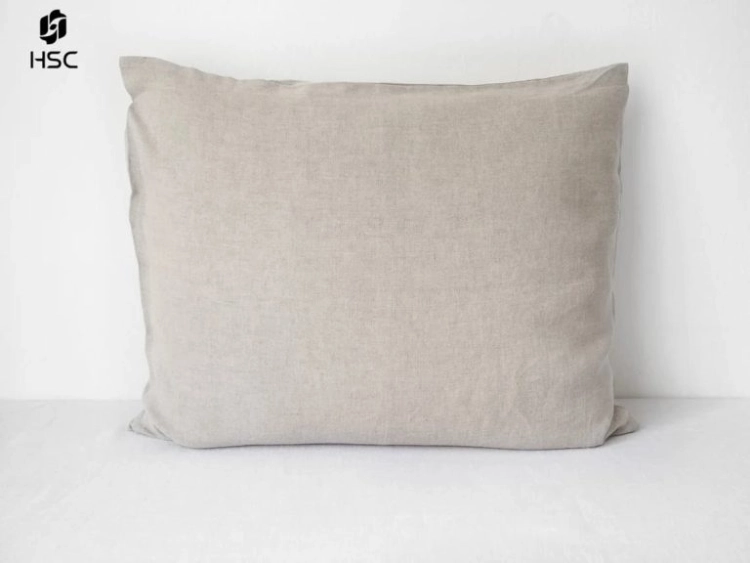
This handmade Easter decorative cushion offers a useful visual starting point. Its neutral face could sit in a spring room without shouting across it. Even so, the buyer has to approve the ordered construction, shade, measurements and pack. The web picture is inspiration, not the specification.
Why is this SKU in the range?
Take the names away from the proposed products and ask a colleague to sort them. If two pieces land in the same pile, at nearly the same selling price, they may be fighting for one job.
Here is the rough note I use at a range review:
| Range job | What the buyer needs from it | Question at the sample table |
| Campaign piece | Hold the first image together | Can a shopper recognise it in a small thumbnail? |
| Supporting piece | Make the room look intentional | Does it relate without becoming a copy? |
| Easy gift | Give the range a simpler entry point | Can someone buy it without furniture measurements? |
| April stock | Have a life after the Easter page closes | Does it still read honestly without the seasonal wrap? |
Four jobs do not mean four compulsory products. An online test could have two. A shop-window story might need several price steps. What matters is that each item has a reason to consume stock money.
Now put the physical samples side by side. “Natural,” “ivory” and “oatmeal” are names, not matching instructions. Under the approval light, perhaps the cloth is warmer than the cushion. That may be fine. Record that the pieces are meant to layer. If a true match is required, say that instead and approve the materials together.
Make the campaign photograph early
This small exercise has saved more than one range: build the intended scene before the order is released. No studio is needed. A phone photograph on the sample table is enough to reveal scale.
A tiny ruffle on a sample card can become a strong line all the way around a dining table. Two delicate embroidered details may compete once they share the frame. Move the pieces, take the planned banner angle and look at the result at thumbnail size. It is cheaper to remove the third decorative idea now than after finished stock arrives.
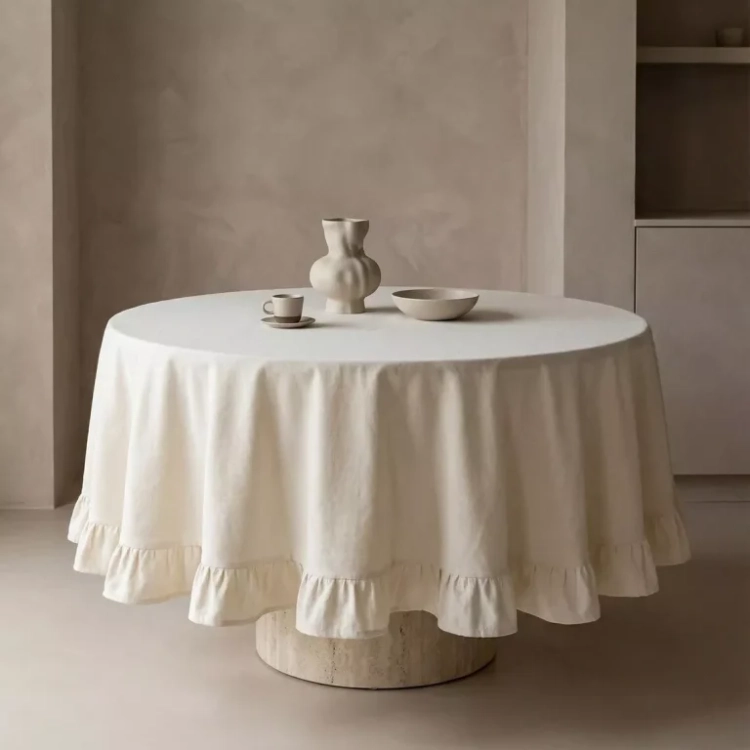
The custom ruffled linen tablecloth demonstrates how an edge can provide much of the room’s character. On the order sheet, however, “like the photo” is not a size. Table shape, tabletop measurement, required drop, finished size and colour still need to be written down.
Look at the photograph as a customer would. If it shows a cushion, cloth and napkins, will shoppers assume they receive the set? The title and first few images must separate a styled scene from the contents of the selling unit. It is a dull clarification until returns begin.
Peel off the Easter layer
Imagine the range on April 5. Remove the printed band, ribbon or campaign card. What is left?
A neutral cushion cover may move back to the ordinary cushion page. A plain ruffled cloth can appear in spring dining photography. A product with a dated message or obvious Easter embroidery cannot make that move honestly. There is nothing wrong with the third item; it simply deserves a tighter seasonal buy.
Put those two groups in the range sheet before quantities are discussed. I label them “core with seasonal pack” and “Easter product.” The wording is less important than the distinction.
Be equally literal with codes. If only the paper band changes, the stock system needs to show where that change lives. If embroidery changes, reusing the old product code invites a warehouse mix-up. Nobody should have to open three clear bags and decide which pale cushion is the 2027 version.
There is also a creative benefit. Once the core pieces are quiet, the genuinely seasonal item can be playful without making every SKU date-sensitive.
Approve what the shopper receives
A fabric cutting answers one question well: “Is this the right cloth?” It says little about a crooked cushion closure, an uneven tablecloth drop or a ruffle crushed inside a narrow bag.
Move through approvals in a sensible order. First comes material and colour. Next comes the finished item in the size being sold. Last comes a packed unit, folded and labelled as it will be delivered.
Attach every comment to a sample code and a dated photograph. “Use the earlier cream” will make sense during today’s call and very little sense a month later.
On a cushion cover, turn the sample over. Open and close it. Note the seam shape and, crucially, whether the listing includes an insert. On the cloth, place it on the intended table shape. Measure the drop at more than one point. When several shapes are offered, look at how the frill joins at curves and corners; a successful round sample does not prove a rectangular one.
Then fold the item as proposed. Does the frill spring back, or does the pack leave a hard crease? Does an unfilled cushion cover look alarmingly flat in a transparent bag after the campaign shows it plump? Packing is part of the customer’s first look, so it belongs in the approval folder.
Put dates on a calendar that can move
Easter Sunday is March 28 in 2027. The retailer’s launch is earlier, and that date differs by market and channel. Start with the day stock must be ready in the destination warehouse. Work backwards from there.
The steps are familiar: inbound transport, inspection, packing, production, final sample, and any artwork or label approval. The missing line on many schedules is buyer response time. If three people need to approve a revised shade, give them a real window rather than half a day on paper.
Planning the range in November leaves useful space for samples and corrections ahead of a spring campaign. It does not create a universal production promise. The actual schedule depends on the confirmed items, quantities, destination and the current plan agreed with the supplier.
When one date slips, rewrite the shared calendar. Do not leave merchandising looking at version two while the product team works from version four. One owner and one live date sheet are enough; five private spreadsheets are not.
Hand the file to somebody new
For the last review, I like a colleague who missed the development calls. Give that person the folder and ask three things: Which item leads the campaign? What exactly is inside each pack? Which stock may return to the ordinary range after Easter?
Any hesitation points to a weak part of the file. Add the approved sample number, dimensions, colour reference, pack, listing contents and image choice where they can be found together. State exclusions too. “Cushion insert not included” is much safer in the file than in somebody’s memory.
HSC Textiles discusses custom development through its OEM and ODM service. A buyer will get more from that discussion by bringing the range roles, desired selling units and approval route. Those notes turn “an Easter collection” into work that can actually be sampled.
Questions retail buyers ask before placing an Easter order
How many colours should an Easter home textile collection include?
There is no fixed total. For a small collection, a base neutral with a supporting tone and one accent is often enough. A larger shop programme may need more. Approve the real fabrics beside one another; a list of colour names cannot show the relationship.
Should Easter cushions be sold with inserts?
Cover-only and filled formats are both possible. Choose one deliberately and make it unmissable in the product title, specification and photographs. The choice affects packing volume as well as what the shopper expects to open.
Can a seasonal tablecloth remain on sale after Easter?
It can when the cloth itself is suitable for general spring dining and most of the Easter message sits in removable packaging or photography. If the decoration is unmistakably tied to the holiday, plan it as seasonal stock from day one.
We are a group company integrating manufacturing and trade – ULAND GROUP. Our subsidiaries include HSC Textiles, Liaocheng Shanlian Textile Co., Ltd., Zhongfei, and DDL.