The chair cover looked right in the supplier’s photograph. At the venue, its skirt stopped above the floor on two chair models and pooled under the legs on a third. The colour was acceptable. The fit was not.
On a mood board, a chair cover is just fabric and colour. At 7 a.m. on setup day, it is one of 180 pieces that have to go onto the correct chairs before the florist arrives. That is why I would leave the colour card closed for the first part of the buying meeting. Put the chairs on the agenda first.
First question – which chairs are actually in the fleet?
“Standard banquet chair” is a phrase to be wary of. So is “ordinary dining chair.” Walk through the venue store and list what is really there. If another property regularly lends thirty chairs at peak dates, add those too.
Give each shape a short code. Three quick photographs—front, side and back—will save a surprising amount of explanation later. Take the tape to these points:
- overall chair height;
- back height, width and thickness;
- seat width and depth;
- distance from seat to floor;
- leg position and any arms or crossbars that affect the cover.
Measure real chairs, including a slightly worn one. Upholstery compresses and timber pieces are not always identical. A cover built around one perfect showroom sample may struggle with the rest of the fleet.
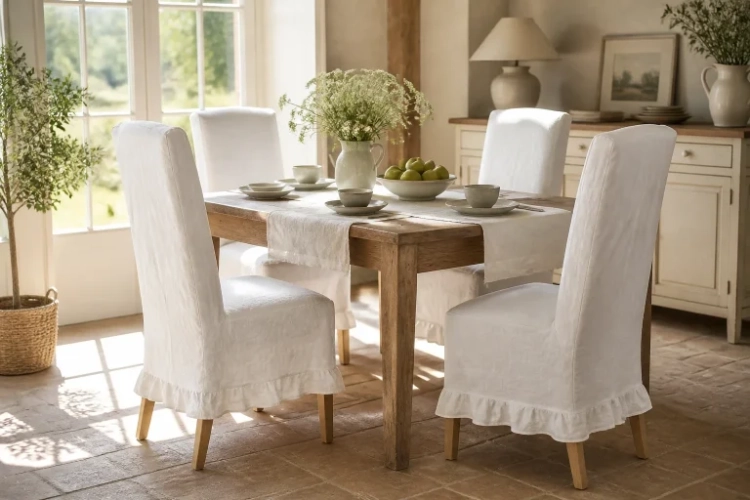
The ruffled linen chair cover shows the intended visual effect of a full slipcover. For an order, the buyer still needs a chair reference, finished cover measurements, opening details and an approved fit sample.
Decide what “good fit” means at the venue
The word “fit” needs a qualifier. Does the designer want a close, straight back, or linen that falls with a few easy wrinkles? Agree on that picture before discussing whether the first pattern is right.
With the tailored version, mark the seam position in the photograph. Sit on the sample; if it drags badly across the back, the still image hid a problem. With a looser linen style, circle the folds the designer likes. “Wrinkled but in a good way” will not travel well from the design call to the sample room.
Measure the gap at the floor as well. A skirt that just brushes the tiles can look generous in a photograph and catch a guest’s shoe in use. Raise it too far and the wooden legs appear in every aisle shot. There is no elegant universal answer; the venue team has to choose its compromise.
Try the sample on every chair model it is meant to cover. Time one installation as well. A tie, zip or close opening can improve appearance and add labour. Multiply a small inconvenience by the chair count and the setup crew notices it immediately.
Build a fit matrix before requesting quantities
Fewer codes are convenient, but one heroic “universal” cover may look poor on half the fleet. The opposite mistake is giving every chair a private size even when two models pass the same fitting trial. Let the trial decide the number of codes.
| Chair code | Cover size | Visual standard | Installation note | Release decision |
| A | Size 1 | Tailored back, clear floor | Fit from rear opening | Approve after venue trial |
| B | Size 1 candidate | Slightly relaxed back | Check seat depth | Hold until cross-fit test |
| C | Size 2 | Full relaxed cover | Longer setup time | Separate SKU |
“Size 1” and “Size 2” in this table are placeholders. They are not dimensions to copy. Each code earns its place only after a finished cover has been tried on the chair beside it.
For near-identical chairs, print a thumbnail on the setup sheet. The crew should not need a ruler halfway through a ballroom. Coloured storage tags help too, although I would add words or a code: navy and black are not friendly labels in a dark storeroom.
The fabric has a job after the photograph
Trace a cover through one event. It leaves a bag, sits on a chair, comes off in a hurry, travels back and waits for cleaning. That route matters. A texture that needs slow preparation before every use may be perfect for the venue’s premium room and exhausting across the whole property.
Pull the pale sample over the darkest chair in stock. Can the upholstery be seen through it? Carry the chair from a window to the warm ballroom light and look again. When new white covers will sit beside an older batch, bring out one old piece. Two whites that match on screen may argue quite loudly in a row.
Turn the sample inside out at the top corners, the seat bend and the opening. Those are the places I would inspect before admiring the hem. After the agreed care trial, fit the piece again. Write down both the measurements and what changed on the chair; sometimes the tape looks reassuring while the seam has visibly shifted.
Do not borrow a care assumption from last year’s fabric. Confirm the information for the material, construction and shade being ordered. Most importantly, the venue or rental operator should put that sample through its own real process before making the larger commitment.
Chair cushions can solve a different problem
A cover changes the chair’s appearance. It does not necessarily change how the seat feels. Keep the two decisions separate.
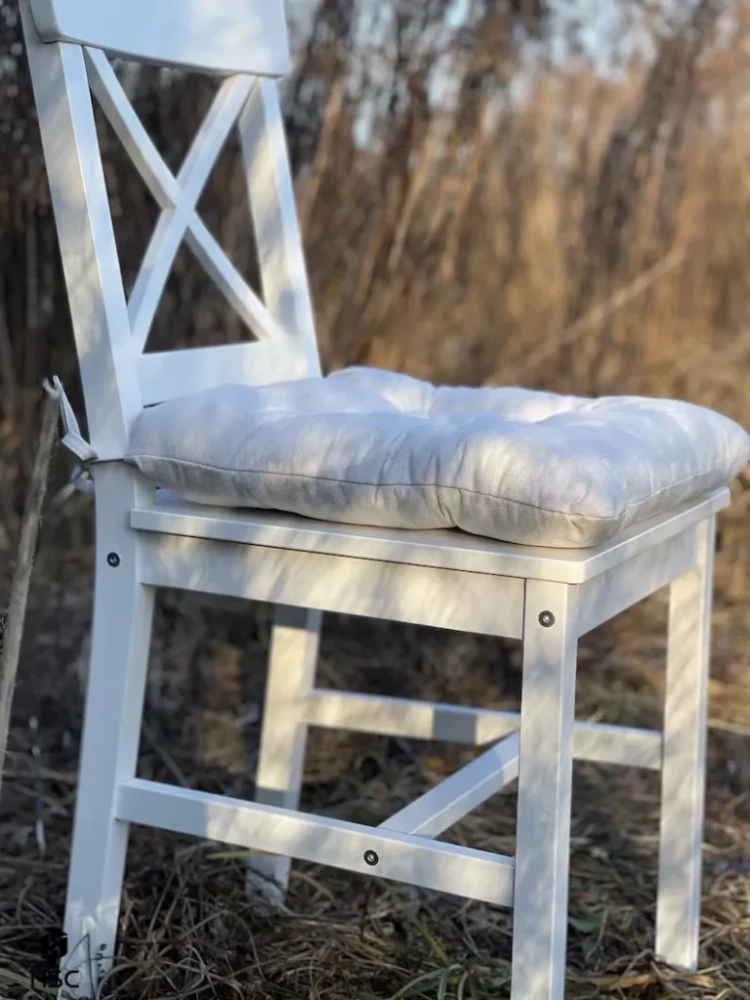
For longer dinners, ceremony seating or outdoor use, an optional pad may become a useful second SKU. The washed linen quilted chair cushion illustrates a tied seat-pad format. Buyers should confirm the finished pad dimensions, attachment points, construction and whether the selected chair allows the ties to sit securely.
Test the cushion and cover together. Ties may pull against the slipcover, disappear underneath it or land where a solid chair back gives them nowhere to fasten. The combined setup also changes storage and laundry sorting. If the cushion is an optional upgrade, give it a separate code and show clearly which chair and cover combinations have been approved.
Do not hide comfort decisions inside decorative language. “Soft” is subjective. A sample sitting trial with the event team is more useful than adding another adjective to the specification.
Run one miniature event before approving the fleet
One immaculate chair in a sample room reveals very little about repeated setup. Build a short row using the actual chairs, covers and any cushions. Ask the crew to unpack, fit, align and remove them.
Watch for three things. First, do the covers still look consistent when several are side by side? Second, does the fitting sequence remain obvious without the buyer standing nearby? Third, where does the crew naturally place the removed pieces?
Count and sorting errors often begin at removal. A simple return bag or trolley label can separate sizes before they reach cleaning or storage. If covers arrive inside out, decide whether that is the correct collection method or extra work for the next setup.
Photograph the accepted row from guest eye level and from the aisle. Keep those images with the fit matrix. The operations photograph may not be polished enough for marketing, but it is the image that answers a future reorder question.
Release the order with a repeatable file
The final file should allow a colleague to reorder the same cover without searching old messages. Include the chair code, approved sample reference, cover dimensions, material and colour reference, construction details, closure, label position, packing method and care information.
Add the approved product image, but keep it separate from the fit-proof photographs. One shows what will be marketed. The others show what passed on the chair fleet.
For custom projects, the HSC Textiles OEM and ODM process provides a starting point for development discussions. The buyer’s own chair inventory and approval matrix remain essential. A supplier cannot confirm cross-fit against chair models it has never received or measured.
Before release, ask one unglamorous question: if a cover is damaged during next season, can the team identify the exact replacement code? If the answer depends on somebody remembering which wedding used which chair, the file is not finished.
Three questions event buyers often ask
Can one wedding chair cover fit several chair models?
Sometimes. The models need compatible controlling dimensions and the same visual fit standard. Cross-fit should be proven with the finished sample on each intended chair, not inferred from a shared category name.
What should be approved before choosing the chair cover colour?
Approve the chair list and intended fit first. Colour matters, but a perfect shade cannot correct the wrong back width or skirt length. Review the chosen colour on the real chair under venue lighting before final release.
Should chair cushions and covers use one product code?
Usually they are easier to control as separate items, especially when the cushion is optional or follows a different cleaning and storage route. The setup guide can still show the approved combination.
We are a group company integrating manufacturing and trade – ULAND GROUP. Our subsidiaries include HSC Textiles, Liaocheng Shanlian Textile Co., Ltd., Zhongfei, and DDL.