Seasonal sleepwear can bring fast sales, but it can also leave small brands with slow-moving sizes, weak gift appeal, and heavy markdown pressure. Custom couple pajamas give small brands a cleaner way to test holiday stock because the product has a clear use case, a giftable story, and flexible design space. In this guide, we explain how to reduce seasonal buying risk through fabric choice, MOQ planning, size control, OEM/ODM customization, quality checks, and delivery timing.
Why Are Custom Couple Pajamas a Low-Risk Seasonal Stock Choice?
Small brands need products that can sell across more than one occasion. Couple pajamas work well because they are not limited to sleepwear. They can also fit holiday gifting, anniversary gifts, wedding gifts, family loungewear, and homewear collections. This wider sales angle helps reduce the risk of one short seasonal window.
How Do Industry Data and Seasonal Search Trends Support This Category?
Holiday pajama demand is no longer only a small Christmas category. Market research on seasonal sleepwear shows strong buyer interest in family pajamas, matching pajamas, and gift-ready loungewear during the fourth quarter. Search interest for Christmas pajamas often starts rising before November, so small brands should not wait until the peak sales week to confirm samples, colors, packaging, and product pages.
My sourcing takeaway is simple. A low-risk seasonal plan should start before the search peak begins. We should confirm fabric, sample fit, color, logo position, care label, packaging, and delivery route early enough to support photography, listing upload, and pre-sale promotion.
Why Does a Giftable Product Lower Inventory Pressure?
A plain pajama set depends mainly on comfort and price. A couple pajama set adds emotional value. Buyers can purchase it for partners, bridal parties, anniversaries, holidays, and family homewear. This gives one SKU more sales paths.
A pajama set is a matching top and bottom, while lounge sets can serve sleeping and relaxed home activities. That means custom couple pajamas can be positioned as sleepwear, matching loungewear, and gift stock at the same time.
Which Low-Risk Stock Factors Should Small Brands Check First?
|
Buying Factor |
Risk if Ignored |
Better Sourcing Choice |
|
MOQ |
Too much cash locked in stock |
Start with 100pcs or small batch testing |
|
Fabric |
Bad reviews due to heat or rough touch |
Use breathable cotton muslin |
|
Size Range |
Returns from poor fit |
Offer M to XXL and clear size advice |
|
Logo |
Weak brand memory |
Add custom logo or embroidery |
|
Packaging |
Lower gift value |
Use OPP bag, fabric bag, insert card, or custom pack |
|
Delivery Plan |
Missed holiday window |
Match express, air, or sea shipping with launch date |
How Does 100% Cotton Muslin Help Small Brands Sell Comfort and Value?
Fabric is the first trust signal in sleepwear. If the fabric feels rough, traps heat, or shrinks without notice, customers notice it quickly. Cotton muslin gives small brands a safer message because it is familiar, breathable, skin-friendly, and easy to explain online.
Why Is Cotton Muslin Easier to Sell Than Trend-Only Fabric?
Cotton is widely used for nightwear because it is soft, breathable, easy to care for, machine washable, and suitable for sensitive skin. HSC Textiles product information also describes cotton products as comfortable, durable, and hypoallergenic.
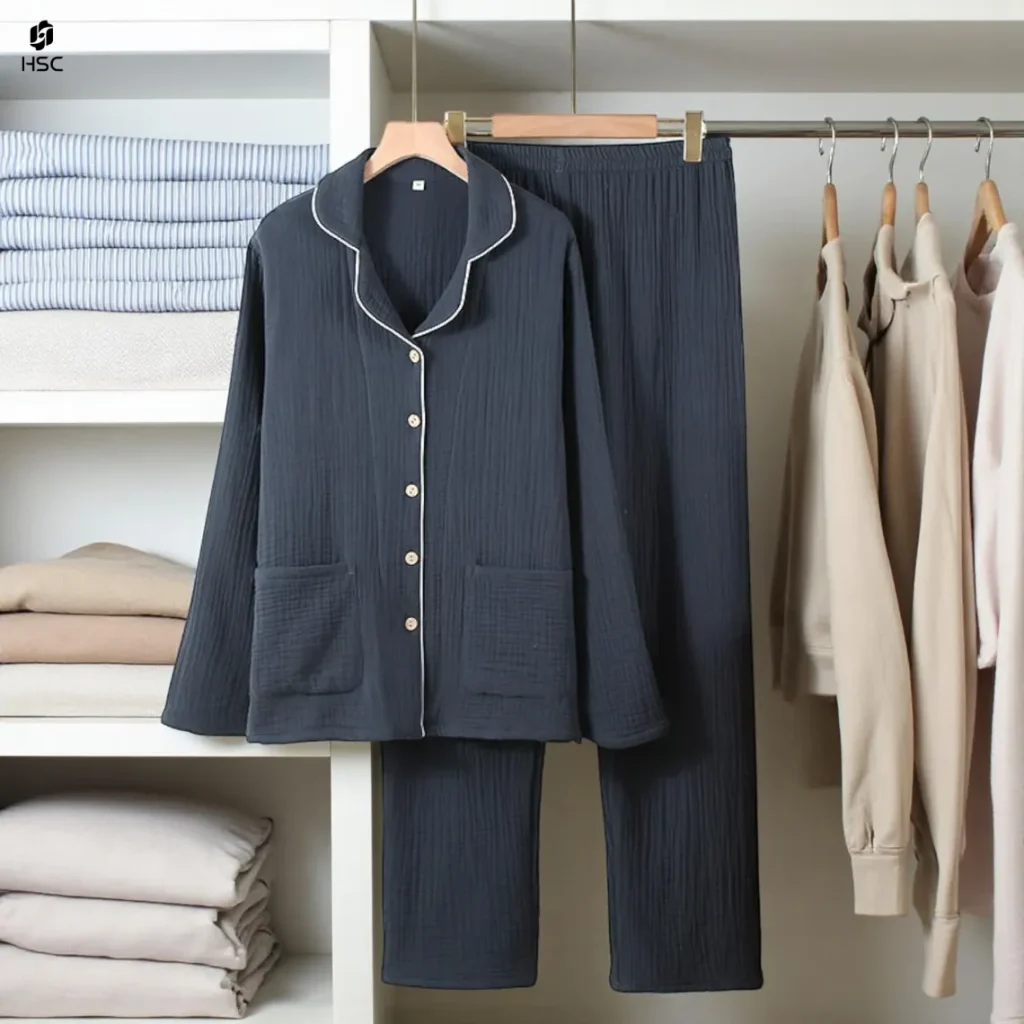
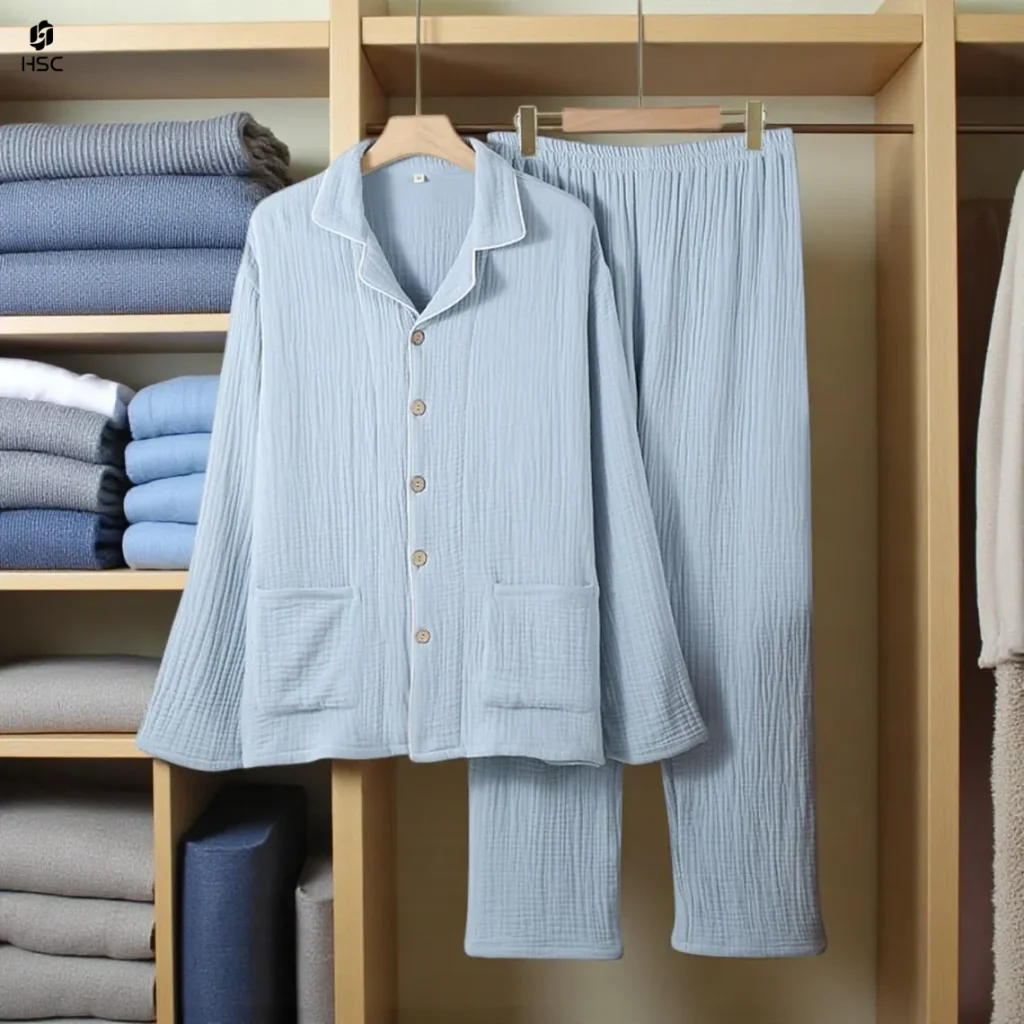
The Muslin Couple Pajamas Set 100% Cotton Button Down Pjs Matching Loungewear and Sleepwear uses 100% cotton, supports customized logo, has many colors available, and starts from MOQ 100pcs. The product also lists 1pc/OPP bag, plus-size features, and a leisure style suitable for summer.
Why Does Button-Down Design Raise Perceived Value?
A button-down pajama set looks more complete than a basic sleep shirt. Professional sleepwear terms also help buyers describe the product clearly. A button-up front gives easy wearing. A shirt collar adds a classic look. Piped trim adds a neat edge detail. A patch pocket gives practical daily use. An elastic waistband improves comfort.
For small brands, these details matter because product pages need specific language. “Soft pajama” is weak. “100% cotton muslin couple pajama set with shirt collar, front buttons, piped trim, patch pocket, and elastic waist pants” is easier for customers to trust.
How Should Brands Handle Cotton Shrinkage Before Reviews Become a Problem?
The featured cotton pajama set notes that 100% cotton may shrink after washing, and it recommends cold washing, no tumble drying, and choosing one size larger before washing.
We should not hide this detail. We should turn it into a care guide. A small brand can add a product card that says:
- Wash cold before first wear
- Air dry to protect shape
- Choose one size up for a relaxed fit
- Allow 1 to 3 cm difference due to manual cutting
This reduces returns and makes the brand look more professional.
How Should Small Brands Customize Couple Pajamas Without Overbuying?
Customization creates brand value, but too much customization can also increase risk. The best approach is to move from light customization to deeper product development only after a first seasonal test.
Why Should Logo and Color Come Before Full Fabric Development?
HSC Textiles is a custom textile manufacturer with 20 years of textile experience, a 3,200 square meter factory, 55 employees, more than 3,000 clients across 30 plus countries, and a 99% order fulfillment performance. Its supply scope covers home textiles and sleepwear, with OEM/ODM services, minor customization, drawing-based customization, and quality control from raw material traceability to finished product inspection.
For a first seasonal drop, I would start with logo customization, color selection, and size adjustment rather than full fabric development. The HSC Textiles ODM/OEM page shows a practical process: original sample, lab dips, sample confirmation, quotation confirmation, and contract details such as quality standards, delivery time, and quantity. It also lists logo customization, small batch OEM/ODM, style customization, and fabric customization options.
How Can Size Planning Reduce Returns?
The muslin couple pajama set supports separate men’s and women’s sizes from M to XXL. The product information also gives different body ranges for men and women, plus custom sizes for wholesale orders.
For small brands, I suggest three rules:
- Keep a simple M to XXL range for the first order
- Add a size-up note for relaxed fit
- Track which size sells out first before the second order
This is safer than launching too many sizes before real sales data arrives.
What Packaging Should Small Brands Use for Seasonal Gift Sales?
HSC Textiles service information lists common packing choices such as PVC bag, fabric bag, insert card, and cardboard. The featured muslin couple pajama set lists 1pc/OPP bag as a standard packing option.
A practical first order can use OPP bag for cost control. A holiday gift order can add an insert card, fabric bag, or custom label. This keeps the first order lean while still giving room for gift positioning.
What Procurement Workflow Keeps Seasonal Stock Under Control?
Small brands often lose money not because the product is wrong, but because the order process starts too late. A controlled workflow protects cash flow, delivery timing, product quality, and customer reviews.
How Should the Sample-to-Bulk Process Work?
HSC Textiles customer service information gives a clear order process: product introduction, order confirmation, order production, first sample confirmation, batch production, and shipping after completion. It also confirms wholesale, retail, agency, and OEM/ODM cooperation models.
The best low-risk workflow is:
- Select fabric, color, logo, and size range
- Confirm sample or counter sample
- Check shrinkage, stitching, button quality, waistband, and packaging
- Confirm bulk order
- Prepare product page, care guide, and seasonal listing before delivery
Which Delivery Method Fits a Seasonal Launch?
Shipping should match the sales calendar. HSC Textiles service information lists express delivery at 7 to 10 days, air delivery at 15 to 20 days, and sea delivery at 30 to 45 days. Shipping cost depends on weight, freight cost, inland charges, and customs clearance fees.
Small brands should use sea shipping for planned seasonal stock, air shipping for replenishment, and express delivery for urgent samples. HSC Textiles also provides order tracking, delivery follow-up, quality complaint handling, and long-term technical support through its HSC Textiles Service support.
Why Does Quality Control Protect Seasonal Reviews?
Quality is not only a factory issue. It affects the first customer reviews that decide whether a new seasonal SKU keeps selling. HSC Textiles applies raw material identification, traceability, finished product inspection, and onsite verification. Its product information also includes OEKO-TEX® Standard 100 and GOTS certification references.
For published content, I would add original close-up media showing the collar, button line, piped trim, elastic waistband, pocket, inner seam, packaging, and fabric after cold washing. These real details help customers check the product before buying.
What Is the Final Buying Rule for Small Brands?
Custom couple pajamas are a good low-risk seasonal stock choice when the product has a clear fabric story, stable fit, flexible branding, sample confirmation, realistic delivery planning, and after-sales support. The goal is not to buy the largest quantity. The goal is to test a sellable design and leave room for reorder.
My Practical Action Guide
I would use this buying rule: choose 100% cotton muslin couple pajamas if the brand needs breathable comfort, emotional gift value, custom logo options, and a manageable first order.
Start with 100pcs, choose two or three safe colors, keep M to XXL sizing, add a care card, confirm one sample, and prepare the product page before the shipment arrives. For supplier checks, review HSC Textiles official website, its About Us information, and its FAQ before placing the first order.
Author’s Sourcing Note: I write from a B2B textile sourcing and product content perspective. When I evaluate seasonal pajamas, I do not only check fabric names. I check shrinkage notes, size range, MOQ, customization level, packaging, sample process, shipping time, and after-sales support because these details decide whether a small brand can sell the product without taking unnecessary stock risk.
FAQ
Q1: Why are custom couple pajamas suitable for small seasonal brands?
A: They combine sleepwear, loungewear, gift, holiday, and couple-use scenarios in one product. This gives small brands more selling angles and reduces the risk of depending on one narrow occasion.
Q2: Is 100% cotton muslin good for couple pajamas?
A: Yes. Cotton muslin is breathable, soft, familiar to customers, and easier to care for than many delicate fabrics. It also works well for warm-weather sleepwear and daily home loungewear.
Q3: What MOQ is suitable for a first custom pajama order?
A: For the featured muslin couple pajama set, MOQ starts at 100pcs. This is more manageable for small brands that want to test seasonal demand before scaling.
Q4: What customization should small brands choose first?
A: Small brands should start with logo, color, size, packaging, and simple embroidery. Full fabric development should come later after the first product sells well.
Q5: How can small brands reduce pajama returns?
A: They should provide a clear size chart, mention possible cotton shrinkage, recommend cold washing and air drying, and suggest one size up for a relaxed fit.
We are a group company integrating manufacturing and trade – ULAND GROUP. Our subsidiaries include HSC, Liaocheng Shanlian Textile Co., Ltd., Zhongfei, and DDL.