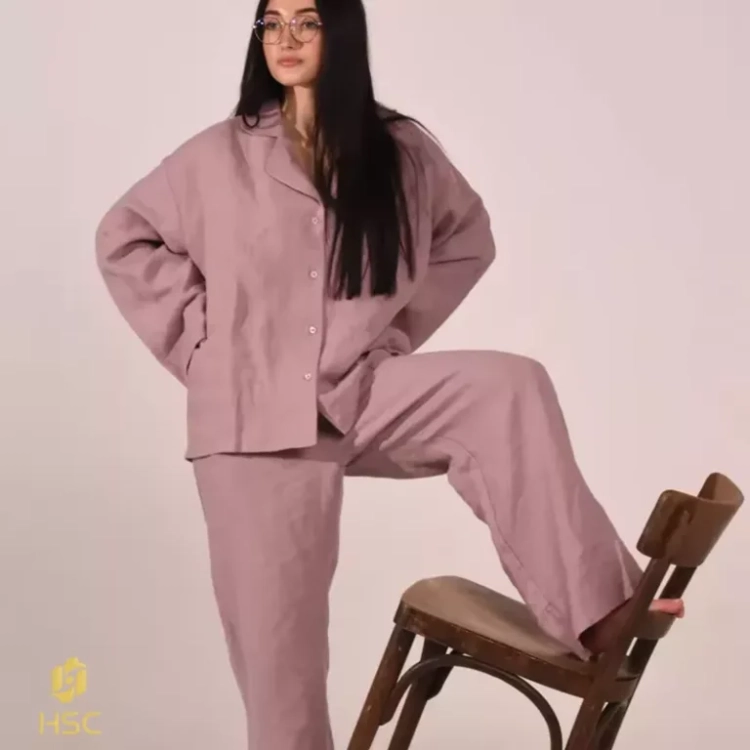
Let’s be real about holiday pajamas. People buy them for the print, but they judge them on the fabric. A cute reindeer or a classic plaid is what gets that first click. But what makes a customer come back next December, leave a five-star review, or return the set in January? It’s how those pajamas feel and hold up after the novelty wears off.
This guide is for brands, retailers, and gift buyers who are sourcing bamboo Christmas pajamas for the upcoming season. We’ll cover which fabric actually works for a winter holiday garment, how prints interact with that fabric, what usually breaks after December, and how to time your order so stock arrives before the rush.
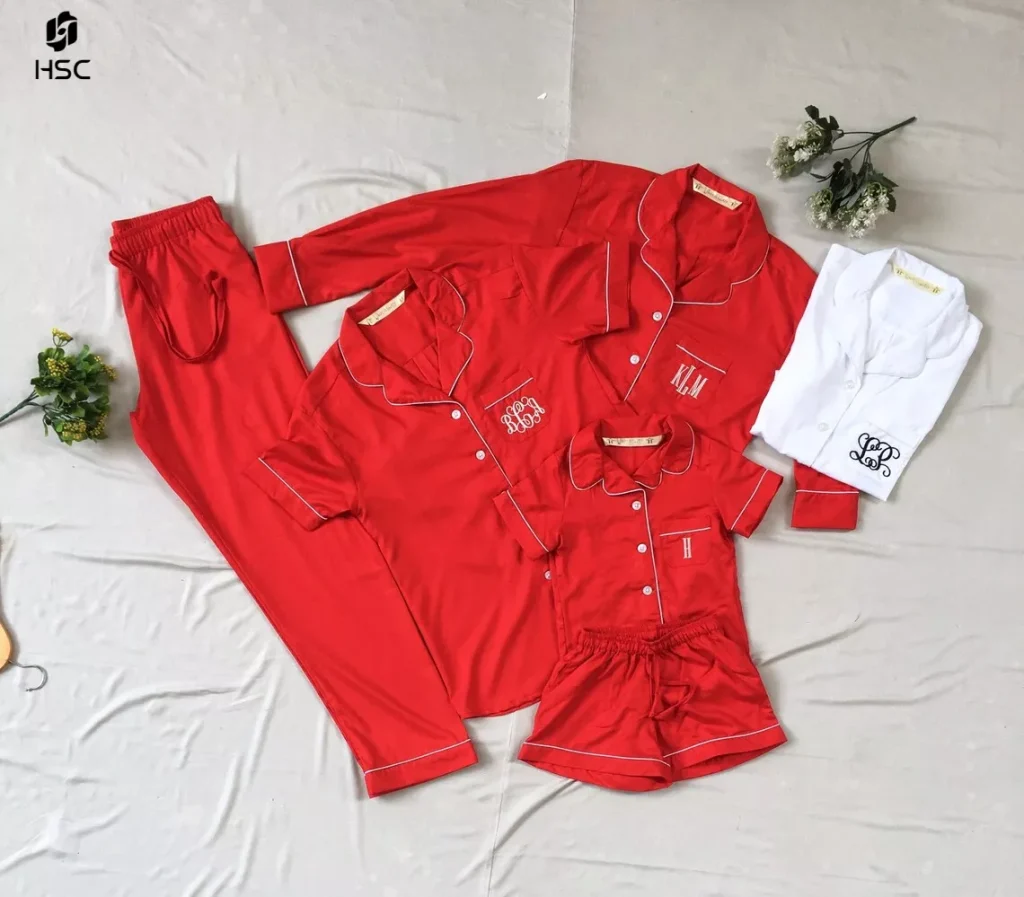
The Print Sells the First Order. The Fabric Sells the Second.
Christmas pajamas have a short, intense selling window and a long memory. If you look at returns data for holiday sleepwear, two issues keep popping up:
- The print cracks, peels, or turns chalky after a few washes. This usually happens when you use a heavy surface print on a fabric that just isn’t a good match.
- The fabric pills, shrinks, or loses its shape. By the time the family photos roll around, the set doesn’t look like the product photo anymore.
Honestly, both of these come down to fabric decisions. You can redraw a novelty print in an afternoon. But your fabric choice locks in comfort, shrinkage, wash behavior, and how the print sits on the surface for the entire order.
Choose the Fabric for the Wearer, Not the Label
“Christmas pajamas” is a broad term. People wear them in totally different conditions: a heated apartment in December, a freezing farmhouse bedroom, or a 32°C Christmas Day in Sydney. You have to start there.

Bamboo Lyocell: The Best-Selling Holiday Fabric for a Reason
Bamboo lyocell has a smooth, cool hand feel and wicks moisture really well. That matters more than buyers expect. Think about Christmas morning: you’re in a warm room with the heat blasting, wearing pajamas for photos, breakfast, and opening gifts. A heavy fabric will have everyone overheating within an hour.
Bamboo lyocell stays comfortable, drapes beautifully for photos, and takes vivid print colors. But here’s the thing: it’s a slippery, soft fabric, so print orientation is key. Always confirm which side is the face before printing and cutting. Bamboo is one of the fabrics most often printed on the wrong side in first samples.
Cotton and Cotton Knit: The Classic Christmas Morning Fabric
A cotton knit jersey pajama is the traditional Christmas set. It’s soft, slightly stretchy, easy to wash, and familiar to family buyers. It suits colder rooms and works great for matching parent-and-child sets because the stretch tolerates a wider fit range.
Organic cotton adds a claim that matters to family shoppers: no residue on a garment kids are sleeping in. If this is your first holiday launch, cotton or organic cotton is your safest base. Let the print and packaging carry the seasonal story.
Muslin, Gauze and Lightweight Options for Southern-Hemisphere Christmas
Remember, December is summer in Australia, New Zealand, South Africa, and Brazil. Buyers in those markets want a Christmas print on a lightweight, breathable base like cotton muslin or gauze, not a winter set.
If your store ships to both hemispheres, you can run the same print on two fabric weights. This helps spread the design cost across more units.
Silk for Gifting, Not for Sleeping in a Warm Room
Silk is your premium gift-set option. Think bridesmaids, hostess gifts, or December birthdays. It’s a different price tier and a totally different care conversation. Keep it as a separate SKU rather than a base fabric for family sets.
| Fabric | Feel and warmth | Best market | Print behavior |
| Bamboo lyocell | Smooth, cool, moisture-wicking | Heated homes, gift sets, year-round | Takes vivid color; check face side before printing |
| Cotton knit jersey | Soft, slightly stretchy | Cold bedrooms, family matching sets | Stretch tolerates printing; simple designs hold best |
| Organic cotton woven | Crisp, breathable | Family sets, eco-positioned brands | Clean flat surface for larger prints |
| Cotton muslin / gauze | Light and airy | Southern-hemisphere summer Christmas | Soft surface, delicate detail holds less sharply |
| Silk | Luxurious, temperature-neutral | Gift sets, bridal | Rich color, needs gentler care guidance |
How Print Methods Behave on Bamboo and Cotton
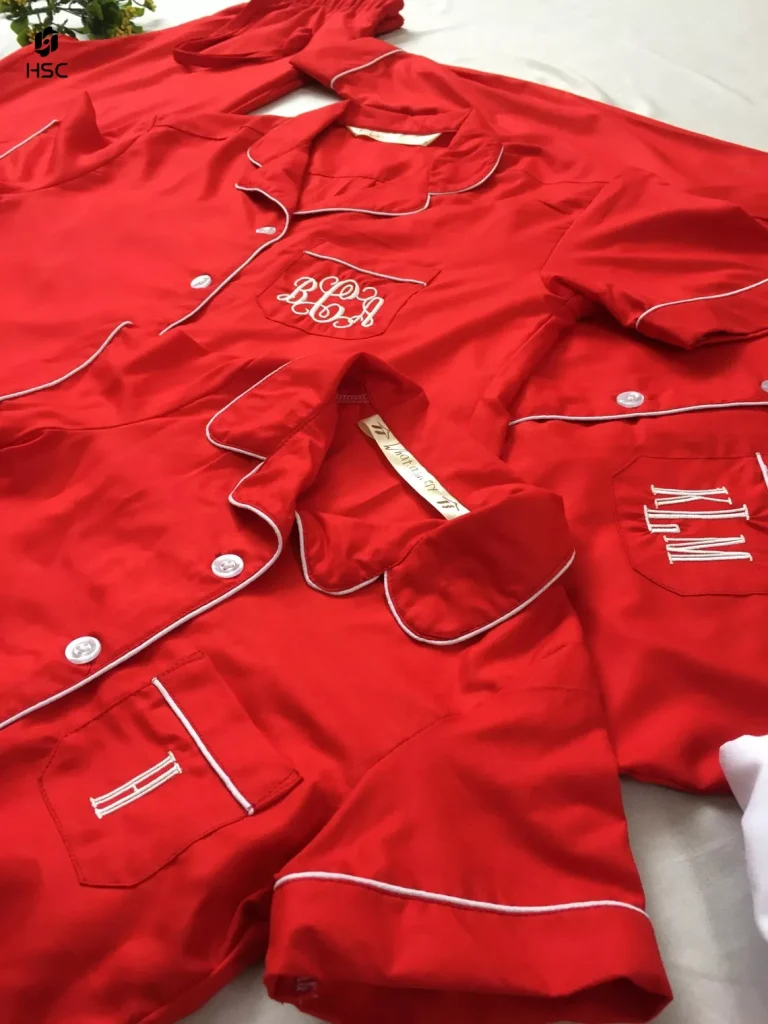
Not every print method suits every fabric, and not every method survives a hot wash. This is where most holiday orders get it wrong.
| Print method | How it looks | How it wears | Where it fits |
| Screen print on cut pieces | Solid graphic shapes, clean flat color | Thick layers can crack when stretched; matching required on checks and stripes | Simple holiday graphics, larger runs |
| Digital print | Gradients, photos, unlimited colors, no plates | Soft hand, fine detail holds well | Complex holiday artwork, small-to-mid runs |
| Foam / raised print | Textured, three-dimensional motif | Depends on pressing temperature — too hot and it bloats, too cool and it never rises | Novelty motifs, small areas |
| Gold foil or flock | Metallic or velvet surface detail | Decorative only, avoid high-friction areas | Accents, gift packaging pieces |
| Reactive printed yardage | Deepest, softest all-over coverage | Excellent wash durability after proper fixation | All-over prints, longer runs |
| Pigment print on yardage | Flat, clean color across the roll | Works on almost any base, including washed cotton | Fast programs, wide fabric range |
Two practical rules come out of this. First, the fabric restricts the method. Print processes that need pre-treatment can’t run on washed or sand-washed cotton. So, a washed-cotton holiday set has to use a print route that actually fits it.
Second, printed yardage requires pattern direction and matching to be confirmed before cutting. On checks, stripes, and directional prints, mismatched panels increase fabric consumption. It’s also a common reason a festive set looks cheap once it’s on.
What Actually Fails After December
Ask a supplier how each of these is controlled, and you’ll separate a real holiday program from a drop-shipped one:
- Print cracking: Check the print on a stretched panel, not just a flat one.
- White base showing through: Heavy all-over prints can expose the base at lint or knots in the fabric.
- Edge-to-center shade difference: Wide fabric can vary across the width, so approve the full width, not a small swatch.
- Shrinkage: Pre-shrunk fabric should stay within roughly 5% after washing. Fitted pieces are where this shows first.
- Color shift after processing: Printed color can move during fixation and drying. The sample you approve should be a finished, fully processed print, not a loose swatch.
- Wrong-way panels: Direction mistakes are the invisible defect that ruins a festive print.
Sizing and Packaging Are Part of the Product
Matching family sets sell on emotion and fail on sizing. A missing child size or a weak adult size breaks the set. If a buyer can’t complete the family photo, they aren’t reordering.
- Confirm the size chart and grading before bulk cutting. Validate it on a sample set, not just a single piece.
- Keep one print, then extend across adult and child sizes. Don’t introduce a second print until the first proves itself.
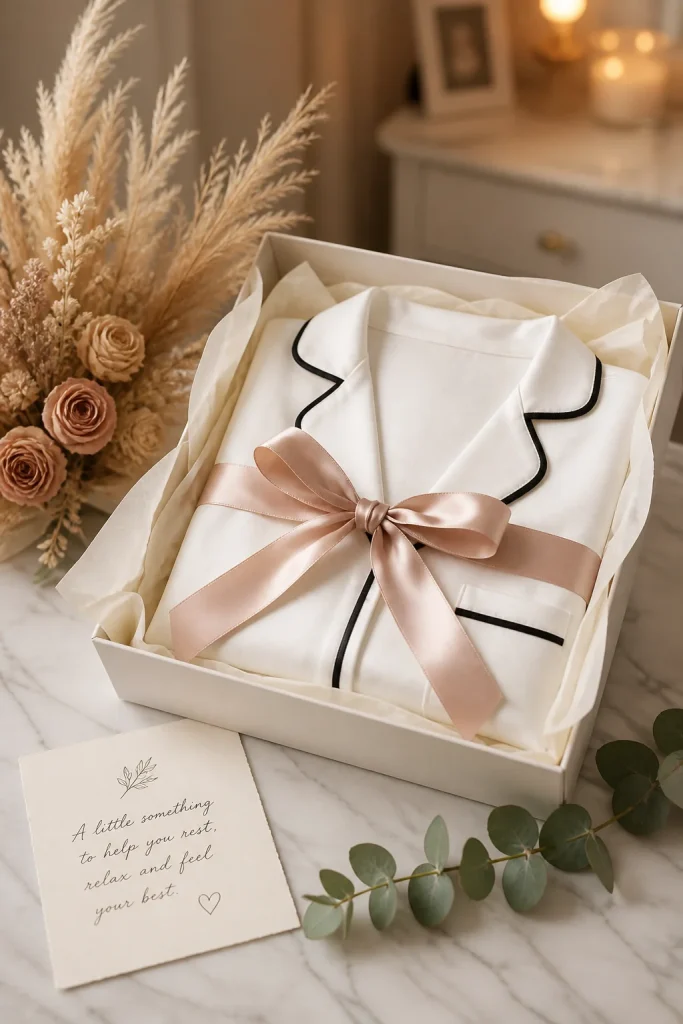
- For gift positioning, packaging does half the work. Think a mailer box with a size sticker, a fabric bag, and a printed insert card. When one carton holds several sizes, the size label on the individual box makes packing and picking practical on your end, too.
Timeline: When Holiday Pajamas Have to Be Ordered
Holiday sleepwear is a deadline product. You have to work backwards:
| Stage | What happens | Planning note |
| Sample approval | Fabric, print color, size grading, packaging | Approve a finished printed sample, not a raw swatch |
| Bulk production | Cutting, printing, stitching, inspection | Pigment printing moves in one to two weeks; reactive printing needs a longer run and several weeks |
| Shipping | Sea, air or express | Sea 30–45 days, air 15–20 days, express 7–10 days |
For November and December retail, samples need to be settled well before the season. Shipping has to be chosen against the shelf date, not the factory finishing date. Orders placed now for holiday 2026 sit comfortably inside the window. Orders placed in November usually do not.

Bamboo Christmas Pajamas From HSC Textile
HSC Textile is a group company integrating manufacturing and trade under ULAND GROUP. We’ve got 20 years in home textiles, a 3,200 square meter factory, and 55 employees, serving clients in 30+ countries. Pajama production runs in-house, from fabric and printing through cutting, stitching, and packing, with OEKO-TEX STANDARD 100 certified programs.
Our holiday range covers what a Christmas program needs:
- Short-sleeve bamboo lyocell women’s pajama set — the vivid-print, photograph-friendly base.
- Organic cotton family and parent-child pajama sets — built for matching family sets in custom sizes and colors.
- Cotton knit women’s pajama set — jersey comfort for colder rooms.
- Organic cotton family sleepwear in multiple shapes and colors — a flexible base for several holiday SKUs.
- Modal linen pajamas with custom logo — for gift-set positioning.
Browse the full pajama collection or go straight to bamboo lyocell pajamas, cotton pajamas, and family pajamas. Custom printing, labels, size grading, and packaging run through the ODM/OEM program, with orders from 100 sets per design. For reference on how the holiday assortment has been built in previous seasons, see our earlier notes on bamboo fiber Christmas pajamas and matching pajamas for family occasions.
Frequently Asked Questions
Q1: Are bamboo Christmas pajamas warm enough for winter? A: They are comfortable in heated indoor conditions, which is where most Christmas mornings are spent, because the fabric wicks moisture instead of trapping it. For cold bedrooms, choose a cotton knit jersey set or layer the bamboo set. For a southern-hemisphere Christmas, bamboo lyocell and cotton muslin are the right weight.
Q2: Will the holiday print crack or fade after washing? A: It depends on the print method and the fabric it sits on. Heavy surface prints crack when stretched; properly fixed reactive prints wash well. Approve a finished printed sample, wash it, and check the result before bulk production.
Q3: What is the minimum order for custom Christmas pajamas? A: Custom orders start at 100 sets per design. Family programs can combine adult and child sizes inside the same order, which keeps a first holiday test small without breaking the size range.
Q4: When should we order holiday pajamas for November and December retail? A: Approve samples first, then allow production, then shipping: sea 30–45 days, air 15–20 days, express 7–10 days. For a November shelf date, orders should be placed well before autumn ends.
Q5: Can we use our own print, labels and packaging? A: Yes. Print artwork, brand labels, care labels, hangtags, and gift packaging are all part of the ODM/OEM program. Size grading can also be validated against your own size chart before bulk cutting.
About HSC Textiles
We are a group company integrating manufacturing and trade under ULAND GROUP. Our subsidiaries include HSC, Liaocheng Shanlian Textile Co., Ltd., and Zhongfei. For holiday sleepwear programs, share your target market, fabric direction, print concept, size range, and delivery date. The team will come back with fabric options, print methods, and a sampling plan.