Let’s be honest — Easter lunch is basically the one meal of the year where your table setup is the real star. Grandmas, parents, kids — everyone’s at the same table. Photos get snapped before anyone touches their food. And your tablecloth? It’s got to look put together without screaming ‘formal dinner party.’ Yeah, that’s a lot to ask.
If you’re in retail, event styling, or hospitality buying — Easter is a quick, intense selling window. Your products need to scream ‘spring!’ the second someone sees them. They need to stack flat, launder without fuss, and look great in photos. This guide breaks down what’s shaping Easter table linens right now — and how to build a collection that actually moves, instead of gathering dust until next summer.
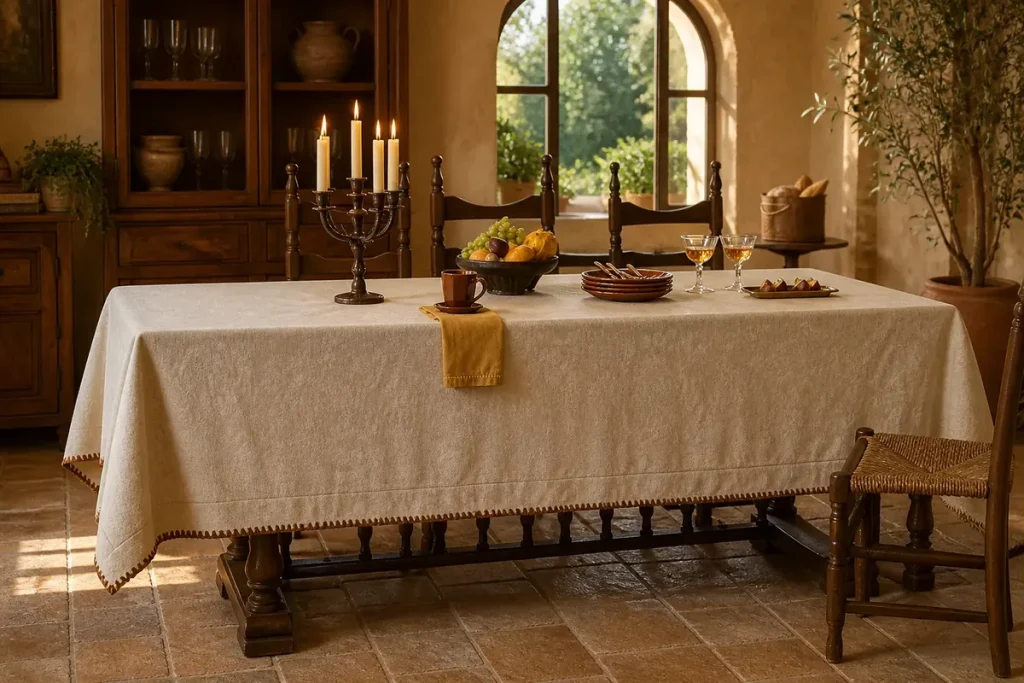
Trend 1: Spring Colour on Natural Cloth
Forget neon pastels. The best Easter tables start with natural linen or linen-cotton blends. Then they add colour — but muted, softened by grey: think sage green, butter yellow, dusty rose, sky blue, warm ivory. That’s the palette that works.
Why this palette sells
Here’s why it sells: undyed or lightly dyed linen looks richer and more expensive than bright cotton. It photographs beautifully — no glare, whether you’re shooting in daylight or under warm restaurant lights. And for buyers? These colours travel well into summer. A sage napkin sells in April, then again in September. That’s two sales from one item.
Pro tip: always request lab dips against your actual reference swatch, not screen colours. Sage and dusty rose look completely different under cool versus warm light. Don’t guess — see the real thing.
Trend 2: Texture Instead of Print
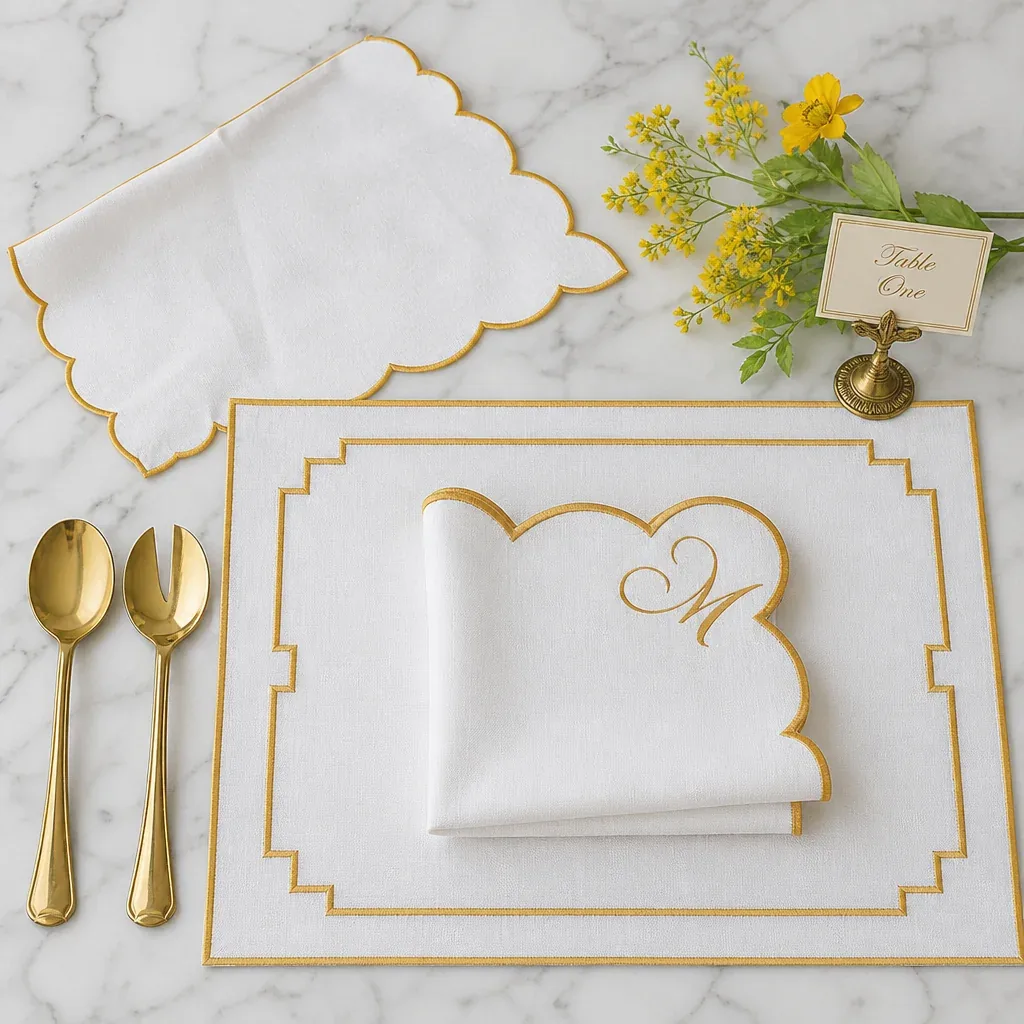
Easter prints are easy to mess up. Eggs, bunnies, chicks — it can get tacky fast. Smart buyers? They’re going with texture instead. Think white-on-white embroidery, hemstitch borders, scalloped edges, delicate ruffles, tone-on-tone stitching. That’s what moves product right now.
Which finishes hold up
Texture wins for three reasons. One: it looks premium in photos. Two: it never goes out of style. Three: it hides minor wrinkles after washing. A plain white linen cloth with scalloped edges and matching napkins will outsell any novelty print set in most stores. Plus, you can re-merchandise it for weddings and summer entertaining later.
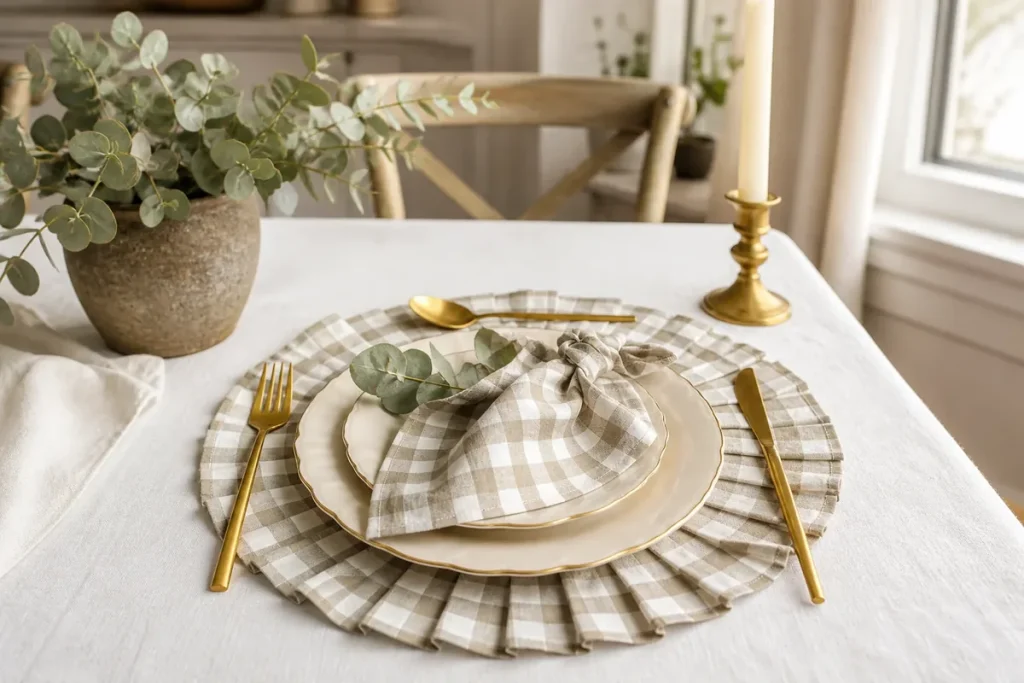
Trend 3: Gingham and Small Checks
Gingham and small checks keep coming back. Why? Because that’s how people actually eat at Easter — casual, often outside if the weather’s nice, with shared plates down the middle of the table.
Small checks read quieter than big ones. They work best as an accent, not covering the whole table. Try a checked placemat under a plain napkin, or a gingham napkin on an ivory cloth. You get pattern without visual chaos. For buyers, gingham is a low-risk way to add colour without betting the whole range on it.
Trend 4: Layering, Not Matching
Right now, the hottest Easter tables aren’t about matching sets. They’re about mixing pieces. A plain cloth. A runner with a neat edge. A placemat in a different texture. A napkin that pops with accent colour. That’s the formula.
The two-texture rule
There’s a simple rule that keeps layering looking intentional: two textures, one pattern, three colours max. Linen cloth + cotton-linen runner + scalloped napkin? Perfect. Four different prints? That’s a mess.
Layering’s a lifesaver for hospitality buyers too. A runner and placemats protect your main cloth from spills. When one piece gets stained, you replace just that piece — not the whole set. Smarter, cheaper.
Trend 5: Personalisation and Gifting
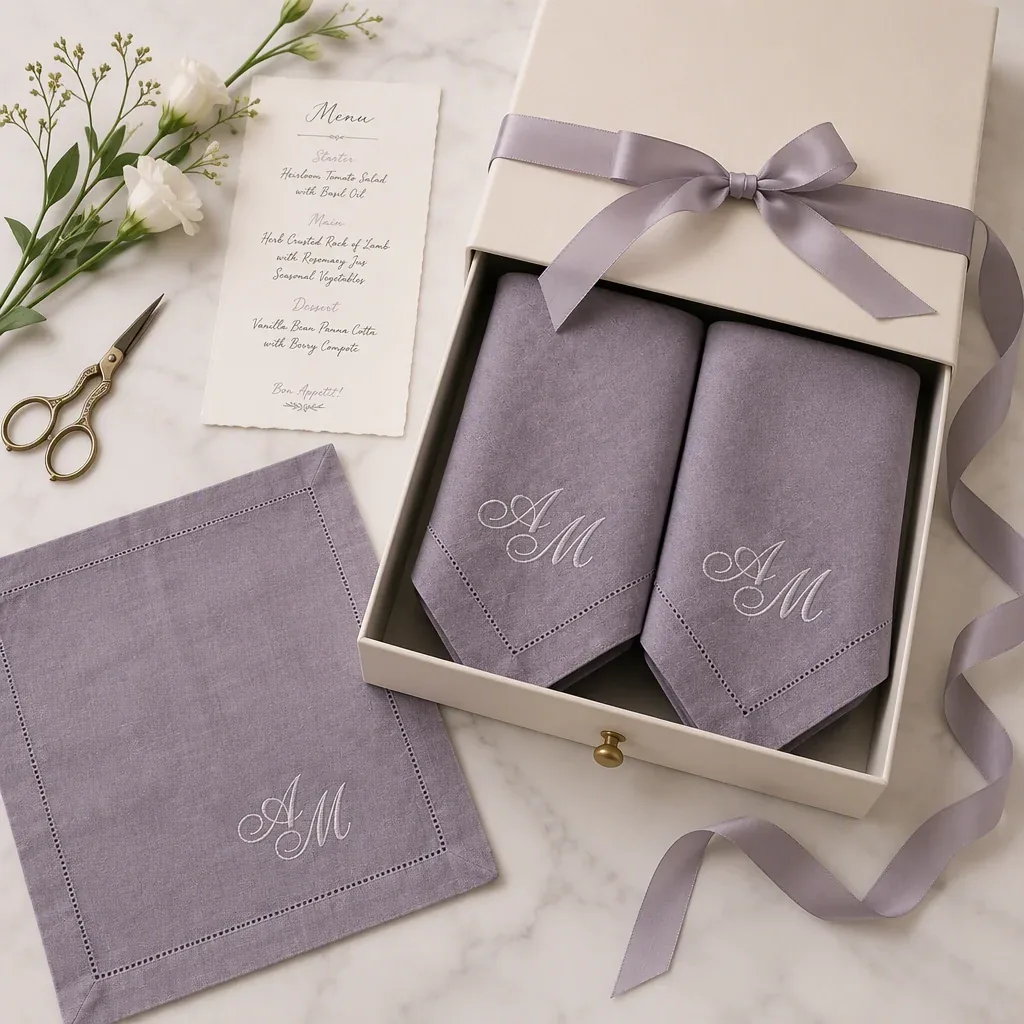
Personalised linens are blowing up. Monograms, embroidered motifs, little gift sets — this is the fastest-growing segment. Why? Two reasons. First, Easter lunch is usually hosted by the same person year after year, so they love personalized touches. Second, custom linen makes a gift that feels expensive but doesn’t cost much. People actually want it.
Keep it simple: initials or a name on a napkin. A small embroidered motif — spring flower, wheat stalk, simple egg outline. Or a napkin-and-runner set packed in a cute fabric bag. And here’s the key — keep designs simple. Fine lines stitch cleanly. Big filled shapes? They look messy.
Trend 6: Easy-Care Finishes for Family Lunches
Let’s face it — Easter lunch means gravy spills, chocolate smears, and kids being kids. The linens that get reordered? The ones that actually survive that chaos.
Before you commit to a range, check three things: pre-shrunk fabric (so it doesn’t shrink after washing), colourfastness data for darker shades, and care labels that match how real people actually wash their linens. Pro tip: linen-cotton blends are more practical for busy family tables. Pure linen looks and feels amazing, but it’s higher maintenance.
The Trends at a Glance
| Trend | What buyers see | Fabric and finish | Best fit |
| Spring colour | Sage, butter, dusty rose, sky | Linen, linen-cotton, garment-dyed | Retail and hospitality |
| Texture over print | Scalloped edges, hemstitch, ruffles | White and ivory linen, tone-on-tone embroidery | Premium retail, gifting |
| Gingham and checks | Small checks as accents | Cotton and linen-cotton | Casual retail, garden events |
| Layering | Cloth, runner, placemat, napkin mixed | Two textures, one pattern | Hospitality, stylists |
| Personalisation | Monograms, small motifs, gift sets | Linen and linen-cotton, embroidery | Gifting, hospitality |
| Easy care | Pre-shrunk, colourfast, washable | Blends for volume; pure linen for premium | All channels |
Building the Easter Range: SKUs and Quantities
You don’t need a huge SKU count for Easter. Most ranges work with just five items:
| Item | Typical sizes | Colour logic | Notes |
| Tablecloth | Four-, six- and eight-seat sizes, plus custom | One neutral, one accent | Runners extend a table without a second cloth |
| Napkins | 40 × 40 cm and 45 × 45 cm | Match or contrast the cloth | The item guests actually touch |
| Runner | Standard and custom lengths | One accent colour | Good for long tables and buffets |
| Placemat | Standard and custom | Second texture or a small check | Protects the cloth and adds layering |
| Gift set | Napkin pair or napkin-and-runner | Neutral with embroidery | Packaging carries the value |
Custom orders usually start at 100 pieces or sets. That’s enough to test your colour story across different sizes before going all-in on a full season run. Fabric swatches? Free. Finished sample sets? There’s a sample charge for those.
Production and Shipping Timing
Easter inventory needs to hit shelves weeks before the holiday — not the week of. Start from your retail date and work backwards: approve samples → run production → inspect → ship.
| Method | Typical transit | Use it for |
| Express | 7–10 days | Sample top-ups and late colour additions |
| Air | 15–20 days | Mid-size orders with a fixed landing date |
| Sea | 30–45 days | The bulk of the range and full containers |
If the Easter range includes bedding as well as table linen, the same production calendar applies — our guide to preparing Easter bedding orders for February arrival covers the bedding side in detail.
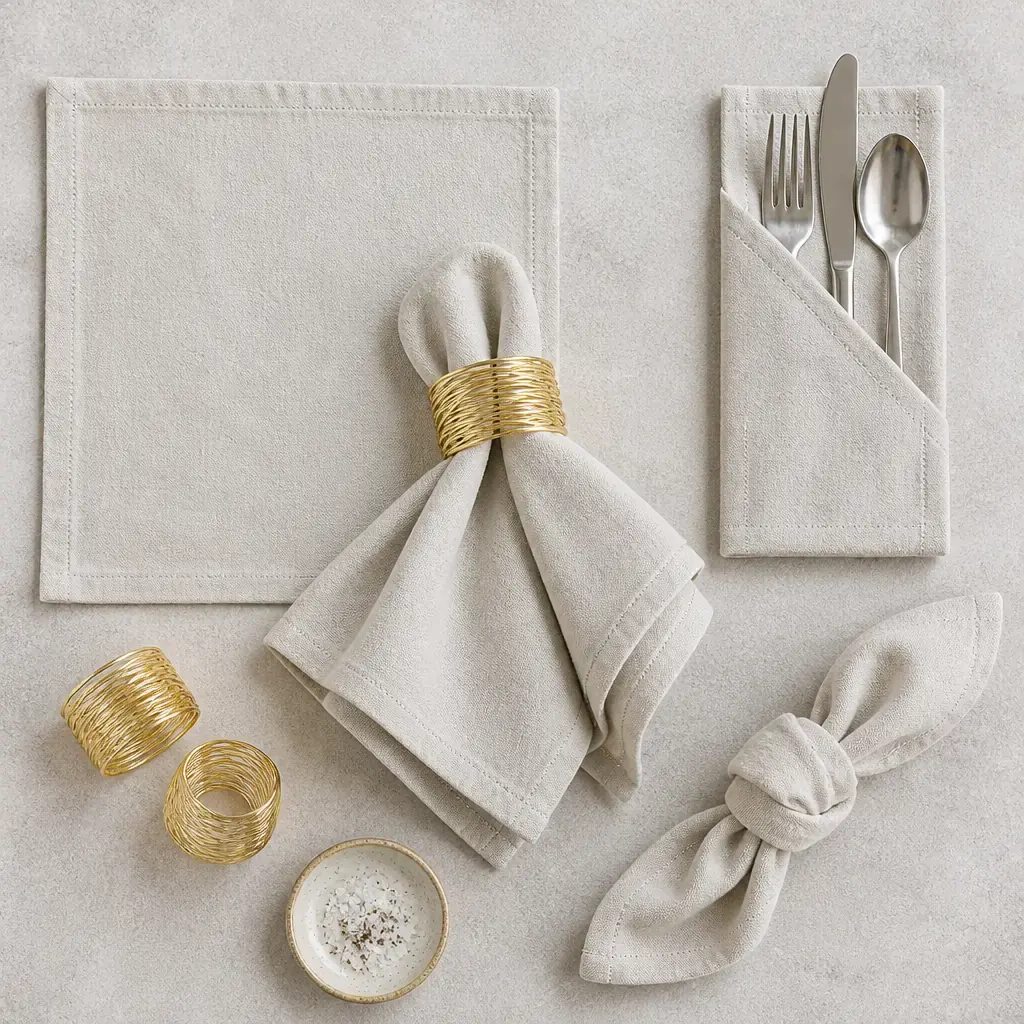
Easter Table Linen Picks From HSC Textile
HSC Textile is part of the ULAND GROUP. Twenty years in home textiles. A 3,200 sqm factory. 55 people on staff. They serve 3,000+ clients across 30+ countries and boast a 99% order fulfilment rate. Everything — table linen, bedding, robes — is made in-house.
- Plain-dyed linen tablecloth, custom sizes — a versatile neutral base for any spring palette.
- Ruffled linen napkins and placemats, 38 × 38 cm — all texture, zero print.
- Gold-embroidered linen napkin set — festive enough for Easter but still reads as real linen.
- Gingham ruffled placemat — the checked accent piece for the range.
- Printed linen napkins with shell embroidery — use this as a template for motif and monogram programs.
- Soft linen tablecloth with ruffles, off-white — the romantic, soft end of the range.
You can browse the full collections under tablecloths, napkins and placemats/runners. Want private label? Their ODM/OEM service handles custom sizes, colours, embroidery, labels, and packaging. To request samples: [email protected] or WhatsApp +86 13563566701.
Frequently Asked Questions
Q1: What colours sell best for Easter table linens?
Go with muted spring shades — sage, butter yellow, dusty rose, soft sky blue — on natural linen or ivory. They photograph beautifully and transition right into summer, unlike those bright saturated pastels that look cheap.
Q2: Is print or texture better for an Easter range?
Texture, hands down. Scalloped edges, hemstitch, ruffles, tone-on-tone embroidery — these details age gracefully, hide wrinkles, and can be re-styled for weddings and summer dining long after Easter.
Q3: What is the minimum order for custom Easter table linens?
Custom table linen orders typically start at 100 pieces or sets. That lets you test your colour story across sizes before committing to a full run. Fabric swatches are on the house; finished samples do carry a charge.
Q4: How early should Easter table linen stock be ordered?
Start from your retail date and count backwards. Sea freight runs 30–45 days, air is 15–20 days, express is 7–10 days. So you need production and inspection wrapped up well before the holiday hits.
Q5: Can napkins be personalised for gifting?
Absolutely. You can embroider monograms, names, or small motifs. Napkin pairs or napkin-and-runner sets pack nicely into fabric bags — perfect for gifts.
About HSC Textiles
We’re the ULAND GROUP — a manufacturing-and-trade integrated company. Our subsidiaries include HSC, Liaocheng Shanlian Textile Co., Ltd., Zhongfei, and DDL. Send over your Easter range plan — items, sizes, colours, quantities — and our team will get back to you with fabric options, swatches, and a sampling timeline.