Choosing the right fabric weight for linen pajama sets can be tricky. While heavier fabrics have their advantages, they are not always better. Also, lighter weight fabrics are not always cooler. The correct weight of the fabric depends on a variety of factors such as breathability, opacity, drape, durability, shipping, etc. and the retailer’s target market. This guide will help you to compare different linen GSM weights, assess samples, manage quality risks, and turn a fabric specification into a commercial pajama set collection.
Why Does Fabric Weight Matter for Linen Pajama Sets?
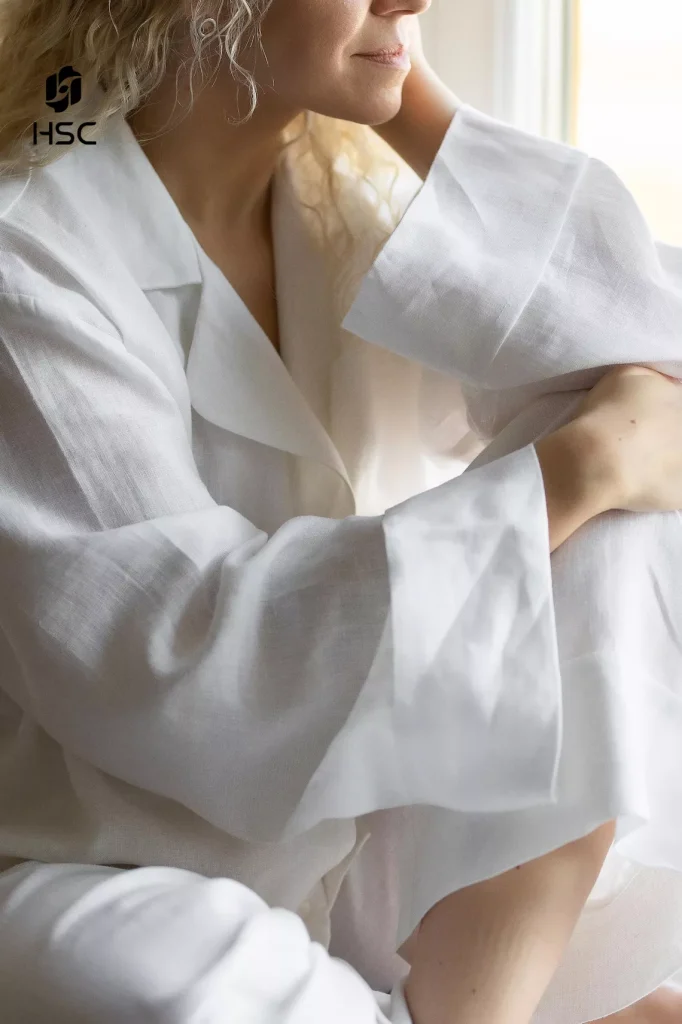
The weight of a fabric influences almost every aspect of the resulting garment. The feel of pajamas against your skin, how they are to be wrapped around the body, how much light will go through the fabric and how pajamas will hold up to washing depend on the weight of the fabric.
Linen garments are already breathable, manage moisture and regulate temperature well. Also after washing linen becomes softer and softer. However the sensation of this fiber can be totally different when it is woven up in different weights of fibers.
What Does GSM Tell a Retail Buyer?
GSM means grams per square meter. It measures the weight of one square meter of fabric.
For pajama sourcing, GSM gives retailers a practical starting point for comparing:
- Fabric density
- Drape and structure
- Expected opacity
- Seasonal suitability
- Packing and freight weight
- Possible durability after washing
GSM is not a complete quality indicator. Two different fabrics of the same weight can have very different properties. The thickness of the yarn, the density of the weave, finishing treatments, washing treatments and the fiber quality all play a large role in determining the overall properties of a fabric.
Retailers should therefore request both the GSM specification and a physical sample.
Why Is GSM More Useful Than Thread Count?
Thread count measures the number of threads within a defined fabric area. It is often used for bedding, but it does not fully explain how linen sleepwear will feel or perform.
For linen pajamas, retailers should focus more on:
l GSM
l Yarn thickness
l Weave construction
l Air permeability
l Surface softness
l Dimensional stability
l Colorfastness
l Finished garment weight
A high thread count can still produce a fabric that feels too dense for warm-weather sleepwear. In contrast, a well-finished medium-weight linen may provide better airflow, softness, and coverage.
For buyers who need help translating these variables into production specifications, HSC Textiles provides fabric selection, size development, color customization, and OEM or ODM manufacturing.
Which Fabric Weight Should Retailers Choose?
There is no single GSM that suits every market. Climate, selling season, retail price, garment fit, and customer preference must guide the final choice.
The following ranges are practical purchasing guidelines rather than universal standards. Retailers should approve the actual fabric after washing and fitting tests.
Fabric Weight Decision Chart
|
Linen Fabric Weight |
Typical Performance |
Best Application |
Main Buying Risk |
|
110–130 GSM |
Very light, airy, fast drying |
Hot climates, summer capsules, travel sleepwear |
May appear sheer or lose shape |
|
130–150 GSM |
Light, breathable, softer drape |
Summer pajama sets and warm indoor environments |
Light colors may need opacity testing |
|
150–175 GSM |
Balanced coverage, airflow, and durability |
Core year-round pajama collections |
May feel warm in very humid markets |
|
175–210 GSM |
More structure, coverage, and premium weight |
Cooler climates and loungewear-led collections |
Higher unit and freight costs |
|
Above 210 GSM |
Dense and substantial |
Robes, overshirts, or structured homewear |
Often too heavy for sleep-focused pajamas |
For most retailers, 140–170 GSM linen offers the safest balance. It normally gives better coverage than ultra-light fabric while retaining the breathable character expected from linen.
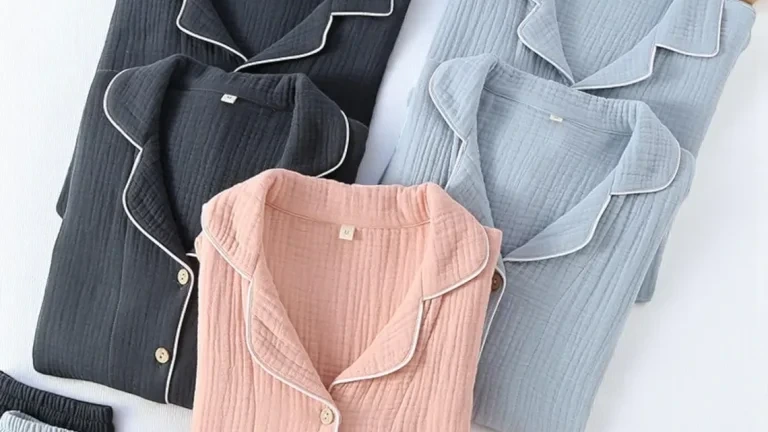
The Wholesales and Customizes Multi-size Color Handmade Linen Loungewear Pajama Sets Including Loose-fitting Shirts Pants Pajamas provides a useful base format for weight evaluation. Its loose-fitting shirt and pants design allows retailers to assess drape, sleeve movement, waistband comfort, and fabric transparency across several sizes and colors.

What Industry and Supplier Data Should Guide the Order?
Retailers need more than a fabric swatch. Lead time, MOQ, sampling, color availability, and logistics all affect whether a linen pajama program remains profitable.
HSC Textiles provides more than 400 color options and supports size, pattern, embroidery, logo, packaging, and fabric customization. Its production process covers weaving, dyeing, cutting, sewing, inspection, ironing, and packing.
Useful planning figures include:
MOQ: 100 pieces for the referenced ordering program
Existing sample lead time: approximately 7–9 days
Custom sample lead time: approximately 10–15 working days
Express shipping: approximately 7–10 day
Air shipping: approximately 15–20 days
Sea shipping: approximately 30–45 days
These figures are supplier-side planning references, not universal industry averages. Final timing depends on quantity, fabric availability, customization, destination, and seasonal capacity.
How Should Retailers Test Linen Pajama Samples?
A fabric may be very appealing in a small sample cut from a piece of fabric but very unsatisfying as a complete pajama garment. To accurately test the performance of the fabric, it is recommended that you test the complete pajama garment, i.e. the seams, collar, waistband, pockets, and garment size.
A reliable sample review should combine hand-feel assessment, garment measurement, wash testing, and wearer feedback.
Evaluate the Fabric Before Fitting
Before approving the sample, check:
Opacity: Hold each color against light, especially white and pale shades.
Drape: Confirm that the shirt falls cleanly without looking stiff.
Surface: Check for slubs, loose yarns, uneven dyeing, or excessive fuzz.
Recovery: Compress the fabric and observe whether it remains badly creased.
Comfort: Examine collar edges, waistbands, cuffs, and inner seams.
Consistency: Compare GSM and color between sample pieces.
Natural slubs and wrinkles are normal features of linen. However, inconsistent weaving, severe color variation, and unstable dimensions should not be accepted as natural characteristics.
Test the Finished Garment After Washing
Linen becomes softer through repeated washing, so a pre-wash review gives only part of the result. The knowledge base recommends cold machine washing, mild detergent, and low-temperature drying to protect linen quality.
Retailers should measure the garment before washing and again after at least three agreed wash cycles. Record:
- Chest width
- Body length
- Sleeve length
- Waist measurement
- Inseam
- Side-seam twisting
- Color change
- Fabric distortion
Set the acceptable shrinkage tolerance in the purchase specification. Do not rely on a verbal promise.
How Can Customization Reduce Buying Risk?
Customization creates value only when it solves a clear retail need. Too many colors, weights, and trims can increase sampling costs and leave retailers with fragmented inventory.
A better approach is to start with one core fabric weight, then build controlled variations for climate, price tier, and selling season.
Match Fabric Weight to the Target Market
Use customer conditions rather than personal preference:
- Select lighter linen for tropical markets, summer launches, and customers who sleep hot.
- Select medium-weight linen for broad year-round sales.
- Select heavier linen when the product will be promoted mainly as premium loungewear.
- Test pale colors separately because they may require more density than dark colors.
- Keep the fit loose enough for airflow but controlled enough to avoid an oversized appearance.
Through its OEM and ODM service, HSC Textiles can adjust fabric, sizing, colors, embroidery, labels, and packaging. Retailers should limit the first order to proven combinations before expanding the range.
Build Quality Control Into the Order
The safest order process is not inspection at the end. It is quality control at each stage.
HSC Textiles follows raw-material identification, traceability, finished-product inspection, first-sample confirmation, and bulk production approval. Its stated management approach favors pre-inspection rather than correcting avoidable problems after production.
Include these items in the purchase agreement:
- Confirmed GSM tolerance
- Approved color standard
- Measurement chart and size tolerance
- Wash-care method
- Shrinkage requirement
- Stitch and seam standard
- Label and packaging artwork
- Inspection method
- Defect handling procedure
The company’s service process can support product confirmation, sampling, bulk production, shipment planning, and after-sales guidance.
What Is the Safest Buying Strategy?
The best fabric weight for linen pajama sets is the lightest option that still delivers acceptable opacity, shape, durability, and customer confidence.
We recommend this four-step plan:
Choose the market first. Define climate, season, price point, and customer expectations.
Shortlist two GSM ranges. For example, compare 135–150 GSM with 155–170 GSM.
Approve washed garments. Review fit, softness, shrinkage, opacity, and color after repeated washing.
Start with a controlled order. Use a focused color and size assortment, then expand from sales data.
Retailers can also review HSC Textiles’ production cases before confirming a custom program. A properly tested medium-weight linen is usually the lowest-risk choice for a first collection, while lighter or heavier options should serve a defined climate or loungewear position.
FAQ
Q1: What GSM is best for summer linen pajamas?
A: A range of about 120–150 GSM is often suitable for warm climates. HSC Textiles recommends testing opacity, drape, and shrinkage before approving bulk production.
Q2: Is heavier linen always more durable?
A: Not always. Durability also depends on fiber quality, yarn construction, weave, finishing, stitching, and washing care.
Q3: Should light and dark pajama colors use the same GSM?
A: Not automatically. Pale colors may need a slightly denser fabric to provide suitable coverage, while dark colors can appear more opaque at the same weight.
Q4: How many fabric weights should a new retailer launch?
A: One core weight is usually enough for the first collection. HSC Textiles can then develop lighter or heavier versions after the retailer reviews sales and customer feedback.
Q5: Can linen pajama sizes, colors, labels, and packaging be customized?
A: Yes. HSC Textiles supports fabric, size, color, pattern, embroidery, logo, label, and packaging customization through wholesale and OEM or ODM cooperation.
About HSC Textiles
We are a group company integrating manufacturing and trade – ULAND GROUP. Our subsidiaries include HSC, Liaocheng Shanlian Textile Co., Ltd., Zhongfei, and DDL.