Pocket depth secures the mattress stack; elastic recovery keeps corners fitted after movement, laundering, and housekeeping. A fitted sheet can feel soft and cool on the first night and still fail when the mattress is deep, the corners are rounded, or the fabric changes size after washing. Pocket depth and elastic recovery are practical fit controls. They determine whether the sheet stays under the mattress, pulls loose during sleep, or creates wrinkles that change comfort and appearance.
Bamboo lyocell adds a smooth hand and fluid drape, but the finished fitted sheet must be judged as a cut-and-sewn product. Fabric weight, knit or woven structure, shrinkage, mattress height, corner construction, elastic width, and laundering all affect the final fit. A flat fabric sample cannot answer the full bedding question.
Measure the Mattress Before Choosing Pocket Depth
Record mattress length, width, nominal height, topper thickness, pad thickness, and the distance the sheet must travel under the mattress. A label such as deep pocket is not a universal measurement. The same sheet may fit a thin mattress securely and pull off a tall mattress when the corner allowance is consumed. Include mattress, topper, protector, under-tuck, shrinkage, and tolerance in the pocket-depth calculation.
Allow for Compression and Mattress Movement
Foam mattresses compress differently from spring mattresses. A topper can add height but collapse at the corner. Movement during sleep pulls the sheet diagonally, so a corner that passes a static test can release when the mattress is loaded and rotated. Test each corner, then check the center of the long and short sides after repeated movement.
The pocket seam should not sit directly on a sharp mattress edge if that position concentrates stress. Extra fabric can improve coverage, but too much depth may create loose folds under the mattress. The target is secure tension with the smallest practical amount of excess material.
Elastic Recovery Keeps the Corner in Place
Elastic stretches during fitting and returns force while the sheet is in use. Recovery depends on elastic type, width, stitch method, seam allowance, heat, laundering, and time under extension. A band that feels strong when new may lose tension after repeated washing or remain too tight and distort the corner.
Test New and Laundered Samples
Measure the elastic length at rest, under a defined extension, and after release. Repeat the extension cycle, then launder and condition the sheet before measuring again. Record corner retention, seam puckering, fabric distortion, and the force needed to fit the sheet on the mattress. A recovery result without a fit observation is incomplete. Fit new and laundered samples to rigid blocks at minimum and maximum depths.
Elastic should be secured at corners and transitions without creating a hard ridge against the sleeper. Stitch density and thread tension can affect both recovery and appearance. Inspect the inner corner because a clean outer view can hide broken stitches or an elastic edge that has shifted inside the seam.
Control Bamboo Lyocell Dimensional Change
Washing and drying can change length and width by different amounts. Fabric direction, finishing, moisture, temperature, and tumble action all contribute. Condition samples under an agreed atmosphere before measuring. Use the same wash recipe for fabric approval, garment or bedding approval, and later bulk inspection so the numbers remain comparable.
Pilling and snagging also affect a fitted sheet because the fabric rubs against the sleeper, mattress cover, and washing equipment. Inspect high-contact areas after repeated laundering. Softness should remain a benefit, not become a loose surface that catches on hardware or produces visible fuzz.
Use a Finished Bedding Set for Approval
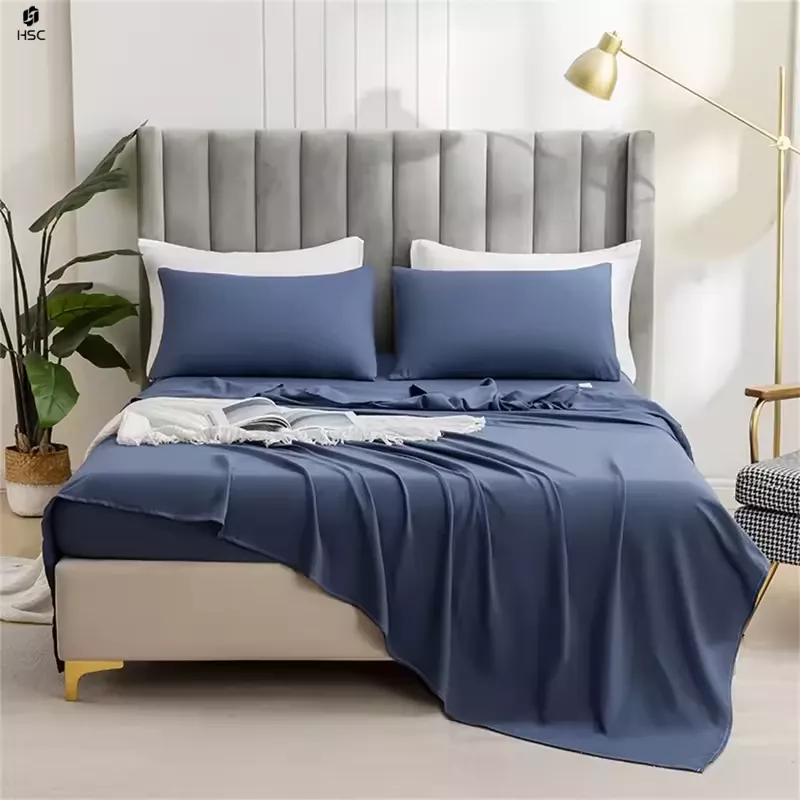
The Organic Lyocell Bamboo Fitted Sheet Set can be evaluated on the intended mattress sizes for pocket depth, elastic recovery, cooling hand, color, shrinkage, pilling, seams, labels, and packaging. Approve the fitted corner after laundering, not only the fabric before cutting.
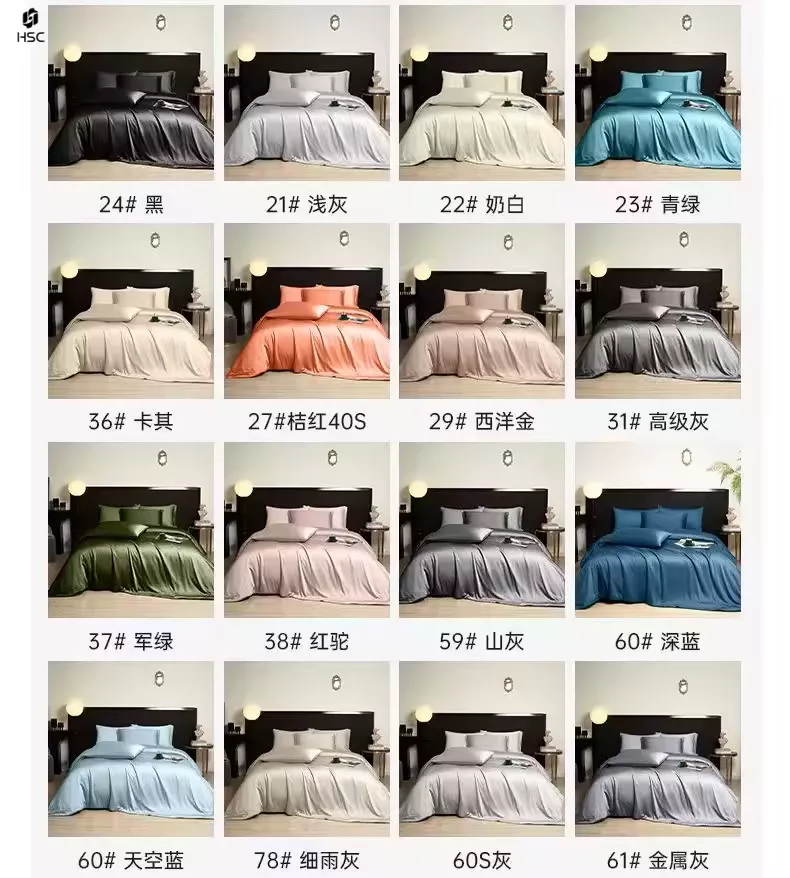
HSC Textiles supplies bamboo lyocell bedding for home and hotel programs. A custom specification should state mattress dimensions, pocket depth, elastic construction, fabric weight, color standard, care label, package count, folding, and tolerances. The About HSC Textiles page provides company context after the technical requirements are clear.
Check Packaging and Hotel Handling
A fitted sheet packed tightly can lose corner shape or develop set creases. Open samples from the top, middle, and bottom of cartons after storage. Fit them to the mattress, measure the corner after removal, and inspect whether the elastic returns. Hotels also need folding and labeling that help housekeeping identify size quickly without unfolding every set.
The approval record should retain a washed reference set, color standard, measurement method, mattress test block, elastic result, pilling observation, and packaging condition. When production uses another fabric lot or elastic code, repeat the tests that control fit. Visual similarity cannot confirm the same recovery.
Use a Mattress Block for Repeatable Fit Testing
A production mattress can vary in softness and edge shape. A rigid or controlled test block with the approved length, width, corner radius, and pocket height makes sample comparison more repeatable. Fit the sheet, mark corner position, apply a defined movement, and record how far the elastic shifts. Repeat after laundering and conditioning.
Test the upper and lower size tolerance. A sheet may fit the nominal mattress and fail a slightly larger permitted size. The size chart should state the mattress range rather than only the sheet’s flat dimensions. This also helps hotel staff identify which fitted sheet belongs to each mattress family.
Inspect Color and Hand After the Fit Test
Tension can make color look lighter at corners and expose seam or fabric defects. Inspect shade, seam grin, pilling, and surface sheen while the sheet is fitted, then again after removal. A soft bamboo lyocell hand should remain consistent after the laundering and stretching that create the real use condition.
Control Sewing Feed Around the Corner
The fabric and elastic move at different rates during sewing. Uneven feed can gather one corner more tightly than another or stretch the fabric permanently before the sheet is fitted. Mark corner positions, compare elastic length between seams, and inspect symmetry after laundering. A size problem may originate in sewing rather than the pattern.
Needle and thread should avoid holes, skipped stitches, and hard ridges in the lyocell fabric. Test seam strength dry and damp. If elastic is enclosed, inspect whether it twists inside the casing. If it is exposed, confirm that the edge remains comfortable and does not abrade the mattress cover.
Hotel laundering may use higher temperature and stronger mechanical action than domestic care. When the target market includes hotels, test that adopted cycle and record fit after repeated washes. A domestic wash result should not be used automatically for an industrial laundry claim.
FAQ
Q1: How is fitted-sheet pocket depth selected?
A: Measure mattress height, topper or pad thickness, the under-mattress tuck, corner construction, and the movement allowance needed during use.
Q2: Why can a sheet fit a mattress at first and later come loose?
A: Shrinkage, elastic fatigue, laundering, corner movement, or a changed mattress height can reduce the original retention.
Q3: How should elastic recovery be tested?
A: Measure rest length, defined extension, repeated cycles, post-laundry recovery, corner retention, seam condition, and fitting force.
Q4: Does soft bamboo lyocell fabric need a different fit review?
A: Its drape and dimensional response can differ from other fabrics, so the finished bedding must be checked after the approved care cycle.
Q5: What should a wholesale bedding specification include?
A: Include mattress sizes, pocket depth, fabric and weight, elastic, color, shrinkage, pilling, care labels, packaging, tolerances, and the washed reference standard.
About HSC Textiles
We are a group company integrating manufacturing and trade – ULAND GROUP. Our subsidiaries include HSC, Liaocheng Shanlian Textile Co., Ltd., Zhongfei, and DDL.